Posts mit dem Label Filme über Fotografen werden angezeigt. Alle Posts anzeigen

Freitag, 12. Juni 2009

Filme über Fotografen (1): Zwischen Ansel Adams und den Black Panther liegt Pirkle Jones (1914 – 2009)

Film-Nr.: 541
Vorführungstermin: Sonntag, 16. August 2009, 16 Uhr (Erster Film) [VN54]
Themenschwerpunkt: Filme über Fotografen (1) | Yes we can! — Obamas Amerika (11) | Würdigungen (2)

Englischer Titel: Pirkle Jones: Seven Decades Photographed
Originaltitel: Pirkle Jones: Seven Decades Photographed
Deutscher Titel: Der Fotograf Pirkle Jones: sieben Jahrzehnte im Sucher
Herkunft: USA 2008
Laufzeit: 28 min.
Sprachfassung: Englische Originalfassung

Regie: Jane Reed
Produzent: Jane Reed, Sandra Phillips
Schnitt: James Reed, Nathaniel Dorsky, Gina Leibrecht, Robert Berke (sound)
Kamera: James Reed
Musik:
Produktion:

Premierenstatus: Europäische Erstaufführung
Bisherige Aufführungen: Santa Cruz Film Festival, Santa Cruz (Kalifornien) USA; California Independent Film Festival, Livermore (Kalifornien) USA; San Francisco Museum of Modern Art, San Francisco (Kalifornien) USA;


Kurzinhalt: Der Fotograf Pirkle Jones hat seine Kunst stets als einen "politischen Akt" verstanden und als Schüler von Ansel Adams die beiden Traditionslinien der Fotokunst aus dem Buchtgebiet von San Francisco mit-definiert: die elegante Landschafts-Fotographie und die beißenden, sozialkritischen Dokumentationen, wie man sie in seinen Bilder der Black Panther Bewegung erkennen kann. Bedauerlicherweise verstarb Pirkle Jones am 15. März diesen Jahres in hohem Alter; diese Vorführung beim Globians Doc Fest Berlin ist seinem Gedenken gewidmet.

Trailervideo: http://blip.tv/file/2252998 + http://www.youtube.com/watch?v=FaX0t9Hok4g

Englische Synopsis: “Pirkle Jones: Seven Decades Photographed”, a film by Jane Levy Reed, profiles a photographer for whom taking a photograph was always a political act, and whose collaborations with artists such as Ansel Adams, Dorothea Lange, and his wife, Ruth-Marion Baruch, helped define the San Francisco Bay Area’s dual photographic traditions of elegant landscape imagery and biting social documentation as seen in his iconic images of the Black Panther Party. Sadly, Pirke Jones passed away this year on March, 15th. This screening at Globians Doc Fest Berlin is dedicated to his memory.

Pirkle Jones: Seven Decades Photographed (USA 2008) photo: Pirkle Jones

Englische Werkbeschreibung: Pirkle Jones’s seven decades of involvement in photography have helped define the San Francisco Bay Area’s dual photographic traditions of elegant landscape imagery and biting social documentation. Jane Reed has created a rare and exciting film about photographer Pirkle Jones. Good filmmaking is good story telling and Jones says it best in his own words at 95. Through his photographs and interviews spanning seven decades Pirkle tells the tale of his life and the evolution of his photographing. From his collaboration with artist such as Ansel Adams and Dorothea Lange to his iconic images of the Black Panther Party, Jones draws us into a world of rich black and white images reminding us that for him taking a photograph was always a political act. The film follows the photographer through a series of photographic projects. In 1956, Jones and Oakland photographer Dorothea Lange were commissioned by Life magazine to document the last year of the Berryessa Valley, northeast of San Francisco, which was to be flooded by a new dam constructed to quench the thirst of California’s growing population. Although the “Death of a Valley” project was not published at the time, its completion confirmed Jones’s understanding that the simple act of taking a photograph is political; his images, carefully composed from corner to corner, have a somber tone that acknowledges the import of the facts they depict. That they consistently involve the viewer in the social circumstances of their making underlines the strength of Jones’s vision. The approach Jones established with Lange continued through two collaborative projects he undertook with his wife, Ruth-Marion Baruch. “Walnut Grove: Portrait of a Town” (completed in 1964), documented a small agricultural community in the Sacramento River Delta and its inhabitants. The second resulted in a photo essay on the Black Panther Party in 1968. In the film, Jones talks about the tenseness he felt in the crowds he and Ruth-Marion photographed at Black Panther political rallies the apprehension they felt about taking the pictures, and the decision to continue. Ms. Cleaver reminds us that the Black Panther Party was an advocate for social justice programs. Our slogan was “power to the people”, “serve the people” Pirkle knew how to get this threw in his photographs they showed the humane side of the movement. After following Jones through a series of personal projects, including two striking images of the same oak tree on a hillside in Marin County—composed identically yet taken twenty-five years apart depicting the parched hillside—the film ends with a kaleidoscope of photographs spanning seven decades. “Pirkle Jones: Seven Decades Photographed” adds a new dimension to the public’s appreciation of these engaging images by providing the context of the photographer’s commentary and reminiscences about his life in photography. Director and producer Jane Levy Reed is active internationally as a filmmaker, curator, critic, and historian of photography. Her first film was released in 1978. She most recently directed and produced the acclaimed 2006 film “My Eyes Were Fresh: The Life and Photographs of John Gutmann.” Sadly, Pirke Jones passed away this year on March, 15th. This screening at Globians Doc Fest Berlin is dedicated to his memory.

Pirkle Jones: Seven Decades Photographed (USA 2008) photo: Pirkle Jones>Pirkle Jones: Seven Decades Photographed (USA 2008) photo: Pirkle Jones>Pirkle Jones: Seven Decades Photographed (USA 2008) photo: Pirkle Jones

Das 3. Globians Doc Fest 2007 zeigte bereits im August 2007 einen früheren Dokumentarfilm von Jane Reed, nämlich “My Eyes Were Fresh: The Life and Photographs of John Gutmann” über den aus Berlin nach San Francisco emigrierten Fotografen John Gutmann.

Dieser Film aus dem Programm des Globians Doc Fest wird wiederholt und zwar am 09. Dezember 2009 um 18.00 Uhr im Eiffelturm-Kino Berlin (im Centre Français de Berlin), Müllerstr. 74, U-Bahnhof Rehberge/Afrikanische Straße.

GLOBIANS DOC FEST BERLIN
August 12 - 17, 2009
Kino Toni, Antonplatz

Filme über Fotografen (2) | Unglaubliche Geschichten aus Russland (1):
Der "Cartier-Bresson" der russischen Provinz, Evgeny Kashirin (1949 - 2007)

Film-Nr.: 542
Vorführungstermin: Sonntag, 16. August 2009, 16 Uhr (Zweiter Film) [VN54]
Themenschwerpunkt: Unglaubliche Geschichten aus Russland (1) | Filme über Fotografen (2) | Würdigungen (3)

Englischer Titel: The Photographer
Originaltitel: Fotograf
Deutscher Titel: Der Fotograf
Herkunft: Kanada 2008
Laufzeit: 60 min
Sprachfassung: Russische Originalfassung mit englischen Untertiteln

Regie: Thomas Lahusen, Alexander Gershtein, Tracy McDonald
Produzent: Thomas Lahusen, Sergei Kapterev,
Schnitt: Thomas Lahusen
Kamera: Alexander Gershtein
Musik:
Produktion: Chemodan Films, Toronto

URL Film-Homepage: http://www.chemodanfilms.com
Premierenstatus: Europäische Erstaufführung
Bisherige Aufführungen:


Kurzinhalt: Er wurde der "Cartier-Bresson der russischen Provinz" genannt: Evgeny Kashirin (1949 - 2007) war der Chronist einer visuellen, sozialen und kulturellen Geschichte seiner Zeit und seiner Orte, der inzwischen drei Generationen junger Leute dahin gehend inspiriert hat, wie man Schönheit und Bedeutung in seiner Umwelt erkennen kann.

Trailervideo: http://blip.tv/file/2253003 + http://www.youtube.com/watch?v=9Y_CYSqGMh4

Englische Synopsis: A film about Riazan photographer Evgeny Kashirin (1949 - 2007), who recorded a poignant visual, social, and cultural history of his time and place, and who inspired three generations of young people to see meaning and beauty in the world around them.

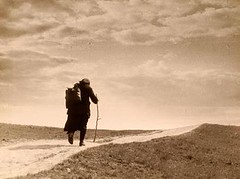
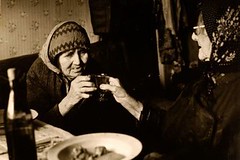
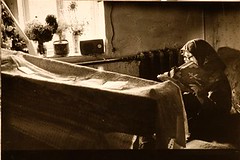
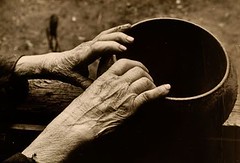
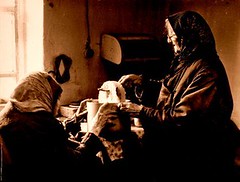
The Photographer (CANADA 2008) photo © Evgeny Kashirin>The Photographer (CANADA 2008) photo © Evgeny Kashirin>The Photographer (CANADA 2008) photo © Evgeny Kashirin

Englische Werkbeschreibung: The Photographer is Evgeny Kashirin (1949 - 2007). From the age of 19, Kashirin captured his time and place, the central Russian province of Riazan, through the lens of his black and white camera. Our film tells (t)his story through the words of his students and acquaintances, his photographs, and footage of the photographer’s own projected film compilations accompanied by his haunting blank verse. Together they take the form of a triptych: a dying rural life, a train, and the story of a man who traded his wife for a marble statue of Judith. In the film’s prelude, Kashirin visits the remains of the church and the cemetery of his childhood home in the village of Zatishe on a cold autumn afternoon. Zatishe is difficult to translate into English, the closest approximation is “Lull.” Despite the grey day Kashirin is alive and energetic as he lopes through the high grass. A young man speaks of the ways in which Kashirin opened up a world for him in a dark room in a dreary Soviet city. A city and a world that Kashirin helped him see in a new way. The photographer shepherded three generations of young people in a dilapidated centre for youth technical arts in downtown Riazan. He defended this coveted space in a city and a country where space was always at a premium. Kashirin’s photographs blatantly contradict the views of some “specialists,” according to whom Kashirin was not a “true historian”. But his massive archive of photographs is a vivid and poignant visual social and cultural history of his times. It is a history that is alive in its very rawness and beauty. The first panel of the triptych is “Lull.”

The Photographer (CANADA 2008) photo © Evgeny Kashirin>The Photographer (CANADA 2008) photo © Evgeny Kashirin>The Photographer (CANADA 2008) photo © Evgeny Kashirin

It is the story of Kashirin’s “grandmothers,” Klava and Frosia, one an abandoned orphan and the other the wife of a priest, both on the margins of official Soviet society. They lived, worked, and survived together for fifty years. Eternal, peasant Russia? Yet when the two old women reluctantly accept a television, pressed on them by their grandson, it is the May Day parade they like best. The second panel is “Movement.” People on a slow train that crawls from town to town passing the villages of Riazan along the way. Again, life is unfolding, captured in stills showing a Russia that not many foreigners ever see, while the haunting voice of the photographer closes upon the last image: “And again children, again a dream, again movement, glances…” The third part of the Triptych is “The Stone Woman.” A man travels to Leningrad to buy furniture, and comes back with a marble woman. In disgust his wife leaves him but she is easily replaced as he paints for his sculpture, he buys her companions, and celebrates her birthday on the 8th of March. “The Stone Woman” is the photographer’s own journey, “away from the light of the banal Riazan streets” because “everyone wants to live in beauty.” The Epilogue revisits the same ruined church of Zatishe, the graves of Klava and Frosia, now overgrown with weeds. The scenes were shot a few days after Kashirin’s death. The black and white photographs have been replaced by the intense and almost suffocating colors of summer. The score for The Photographer was composed by the virtuoso of the Russian seven-string guitar Oleg Timofeyev and interperted by the Timofeyev Ensemble. Shooting started in the fall of 2005. A second round of filming took place in June and July 2007. Evgeny Kashirin died on June 29, 2007. We were able to say goodbye to him.

Das Globians Doc Fest zeigte bereits zwei frühere Produktionen der kanadischen Chemodan Films, nämlich "Komsomolsk mon amour" (2008) über alternatives Theater in Komsomolsk (Amur) sowie "The Province of Lost Films" (2006) zu den Überbleibseln der Cinefizierung unter Stalin; Chemodan Films in Toronto besteht aus dem Filmemachertrio um Thomas Lahusen, Alexander Gershtein und Tracy McDonald.

Dieser Film aus dem Programm des Globians Doc Fest wird wiederholt und zwar am 09. Dezember 2009 um 18.00 Uhr im Eiffelturm-Kino Berlin (im Centre Français de Berlin), Müllerstr. 74, U-Bahnhof Rehberge/Afrikanische Straße.

GLOBIANS DOC FEST BERLIN
August 12 - 17, 2009
Kino Toni, Antonplatz