Posts mit dem Label Langzeit-Traumata werden angezeigt. Alle Posts anzeigen

Freitag, 12. Juni 2009

Belonging to Earth versus Ownership of Land:
Wem gehört die Terra Australis?
Australischer Kulturraum (1) | Langzeit-Traumata (1)

Film-Nr.: 611
Vorführungstermin: Montag, 17. August 2009, 13 Uhr (Erster Film) [VN61]
Themenschwerpunkt: Australischer Kulturraum (1) | Langzeit-Traumata (1) | Vom Überleben lokaler Kulturen (4)

Englischer Titel: We Belong To This Country
Originaltitel: Ngali Na Mala Jugun
Deutscher Titel: Wir gehören zu diesem Land
Herkunft: Australien 2007
Laufzeit: 12 min.
Sprachfassung: Englische Originalfassung

Regie: Alison Leonard
Produzent: Alison Leonard
Schnitt: Alison Leonard
Kamera: Alison Leonard, Chris Leonard, David Warth, Richard Todd, Steve Atkin,
Musik: Simon Mullumby
Produktion: Sideways Films, Palm Beach (Queensland)

URL Film-Homepage:
Premierenstatus: Deutsche Erstaufführung
Bisherige Aufführungen: Byron Bay Film Festival, Australien; Planet in Focus, Toronto, Kanada; Focus Film Festival, Australien; Newtown Flicks, Australien;


Kurzinhalt: Die Ureinwohner Australien folgen dem Gefühl, dass sie zu ihrem Land gehören; die Zuwanderer hingegen glauben, dass das Land ihnen gehört. Dieser Besitzglaube statt dem Zugehörigkeitsgefühl hat einen zerstörerischen Effekt auf die Mitwelt.

Englische Synopsis: Indigenous Australians inherently feel that they belong to their land. Non-Indigenous Australians inherently feel that the land belongs to them. The actions derived from a sense of ownership rather than belonging are having a devastating effect on our environment.

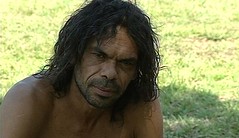
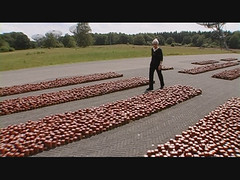
We Belong to this Country (Australia 2007)

Englische Werkbeschreibung: Ngali Na Mala Jugun is a beautiful cinematic journey exploring the Indigenous Australian's sense of belonging to the earth opposing the sense of owning the earth. Anthony Gordon (Tulebume) and John Roberts (Goongi), from the Bundjalung Tribe of Northern NSW, guide this journey with eloquence and grace. We see the specific to the general, starting with discussions of the spiritual significance of Mt Warning (Wollumbin) then broadening to a larger view that encompasses all of Australia. With footage contributed by Greenpeace and The Wilderness Society amongst other independent filmmakers, Ngali Na Mala Jugun will inspire people to take a closer look at how much they respect the world we are lucky enough to live in.

We Belong to this Country (Australia 2007) Director Alison Leonard

GLOBIANS DOC FEST BERLIN
August 12 - 17, 2009
Kino Toni, Antonplatz

Langzeit-Traumata (2) Indonesien |
Heilung als kultureller und sozialer Prozess (4):
40 Jahre nach dem Massenmord durch das Suharto-Regime

Film-Nr.: 631
Vorführungstermin: Montag, 17. August 2009, 16 Uhr [VN63]
Themenschwerpunkt: Langzeit-Traumata (2) Indonesien | Archäologie - Anthropologie - Ethnologie (7) | Heilung als kultureller und sozialer Prozess (4)

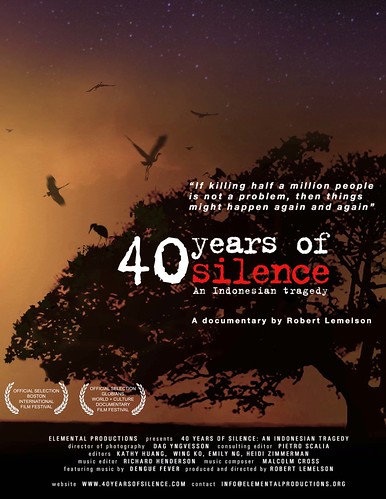
Englischer Titel: 40 Years of Silence: An Indonesian Tragedy
Originaltitel: 40 Years of Silence: An Indonesian Tragedy
Deutscher Titel: 40 Jahre Schweigen: eine indonesische Tragödie
Herkunft: USA 2008
Laufzeit: 96 min.
Sprachfassung: Indonesisch-balinesisch-englische Originalfassung mit englischen Untertiteln

Regie: Robert Lemelson
Produzent: Robert Lemelson
Kamera: Dag Yngvesson
Schnitt: Dag Yngvesson, Emily Ng, Heidi Zimmerman, Kathy Huang, Wing Ko, Richard Henderson (sound)
Musik: Malcolm Cross
Produktion: Elemental Productions, Pacific Palisades (Kalifornien)

URL Film-Homepage: http://www.elementalproductions.org
Premierenstatus: Internationale Premiere
Bisherige Aufführungen: Boston International Film Festival, Boston (Massachusetts) USA;


Kurzinhalt: Es ist einer der größten Massenmorde des 20. Jahrhunderts, kaum bekannt und noch weniger erinnert: Im Machtspiel des Kalten Kriegs lässt General Suharto in Indonesien zwischen 500.000 und 1.000.000 Menschen als angebliche "Kommunisten" ermorden und zwar in einem extrem komplexen Folge von Ereignissen, die im Herbst 1965 beginnen. Das Suharto-Regime kann dadurch seine militärische Herrschaft und letztlich auch die Machtergreifung von Suharto als Staatsoberhauptes von Indonesien durchsetzen und für Jahrzehnte festigen. Wie auch bei der Schreckensherrschaft der Roten Khmer in Kambodscha haben die südost-asiatischen Kulturen erhebliche Schwierigkeiten bei der Aufarbeitung von Leiden, Schuld und Sühne. Die Anthropologe und Psychotherapeut Robert Lemelson versucht in dieser Langzeitstudie Wege der Aufarbeitung und Heilung für die überlebenden Opfer und ihre Familien aufzuzeigen: ein bewegender und erschütternder Film.

Videos:
Teaser: http://blip.tv/file/2236913 + http://www.youtube.com/watch?v=EpppIAv-bV0&feature=channel_page
Trailer: http://blip.tv/file/2237350 + http://www.youtube.com/watch?v=bQAlqcV1QW0&feature=channel_page
Director's Statement: http://blip.tv/file/2237015

Englische Synopsis: In one of the largest unknown mass-killings of the 20th century, an estimated 500,000 to 1,000,000 people were secretly and systematically killed in 1965 when General Suharto launched a bloody purge of suspected “communists” in Indonesia through a complex and highly contested series of events through which he ultimately gained power and the presidency. During Suharto's authoritarian rule, any discussion or memorializing of the killings that differs from the official state narrative has been suppressed. '40 Years of Silence: An Indonesian Tragedy' follows the brave testimonies of four individuals and their families through a multi-generational perspective as they break the silence and reflect upon how the long-term, traumatic effects of the 1965 mass-killings has reverberated painfully in their lives till the present day

40 Years of Silence: An Indonesian Tragedy (USA 2008) Poster

Englische Werkbeschreibung: Directed by documentary filmmaker and world renowned-psychological anthropologist Robert Lemelson, “40 Years of Silence: An Indonesian Tragedy” is the moving feature length documentary film about one of the most horrific chapters in Indonesia’s history. In one of the largest unknown mass-killings of the 20th century, an estimated 500,000 to 1,000,000 people were secretly and systematically killed in 1965, when General Suharto began a bloody purge of suspected “communists” throughout Indonesia. Wielding his growing influence through a complex and highly contested series of events to install his New Order regime, Suharto ultimately gained power and the presidency of the country. Under his authoritarian rule, any discussion, recognition or memorializing of the mass killings that differed from the Suharto’s official state narrative was quickly suppressed. “40 Years of Silence: An Indonesian Tragedy” follows the compelling testimonies of four individuals and their families from Central Java and Bali, two regions heavily affected by the purge. As they break their silence publicly for the first time, each family provides an intimate and frightening look at what it was like for survivors of the mass-killings. In chilling detail, they describe the events of 1965 through their own experiences, re-living and reflecting upon the stigmatization and brutalization they continue to endure on both the village and state levels. Over time, the survivors and their families attempt to find ways to deal with a tragedy that was, and is still not, openly recognized by their neighbors, government or the world. Through their stories, the audience will come to understand modern-day Indonesia’s potential for retribution, rehabilitation and reconciliation within this troubled historical context. “40 Years of Silence: An Indonesian Tragedy” was produced by Lemelson’s Elemental Productions. Based in Los Angeles, Elemental Productions is dedicated to the production of ethnographic documentaries focusing on the relationship between culture, psychology and personal experience in Indonesia and the United States. For more information on “40 Years of Silence: An Indonesian Tragedy,” Elemental Productions and other films from the company, please visit www.elementalproductions.org.

40 Years of Silence: An Indonesian Tragedy (USA 2008) Director Robert Lemelson

Dieser Film aus dem Programm des Globians Doc Fest wird wiederholt und zwar am 25.November 2009 um 18.30 Uhr im Eiffelturm-Kino Berlin (im Centre Français de Berlin), Müllerstr. 74, U-Bahnhof Rehberge/Afrikanische Straße.

GLOBIANS DOC FEST BERLIN
August 12 - 17, 2009
Kino Toni, Antonplatz

Langzeit-Traumata (3) Holocaust |
Heilung als kultureller und sozialer Prozess (5):
Die Klassenkameraden von Anne Frank

Film-Nr.: 641
Vorführungstermin: Montag, 17. August 2009, 17.45 Uhr [VN64]
Themenschwerpunkt: Langzeit-Traumata (3) Holocaust | Heilung als kultureller und sozialer Prozessw (5)

Englischer Titel: Classmates of Anne Frank
Originaltitel: Classmates of Anne Frank
Deutscher Titel: Die Klassenkameraden von Anne Frank
Herkunft: Israel 2008
Laufzeit: 58 min.
Sprachfassung: Niederländisch-hebräisch-englische Originalfassung mit englischen Untertiteln

Regie: Eyal Boers
Produzenten: Eyal Boers, Ora Coster, Theo Coster
Drehbuch: Eyal Boers, Ora Coster
Schnitt: Hilla Haramatti, Michael Goorevich (sound)
Kamera: Uri Ackerman
Produktion: Theora Design, Tel-Aviv
Weltvertrieb: JMT Films Distribution and Worldwide Sales, Tel-Aviv, Israel
Vertriebsbeauftragte: Michael Treves, Aliza Coster

URL Film-Homepage: http://www.jmtfilms.com/document.htm#annefrank
Premierenstatus: Deutsche Erstaufführung
Bisherige Aufführungen: Palm Beach International Film Festival, Palm Beach (Florida) USA; Los Angeles Jewish Film Festival, Los Angeles (Kalifornien) USA; Las Vegas International Film Festival, Las Vegas (Nevada) USA; European Independent Film Festival, Paris, Frankreich; Jerusalem Jewish Film Festival, Jerusalem, Israel, DaKINO International Film Festival, Bukarest, Rumänien;


Kurzinhalt: Ein Erfinder von Gesellschaftsspielen aus Israel kehrt in die Nachbarschaft seiner Kindheit in den Niederlanden zurück, um ein Wiedersehen mit fünf seiner und Anne Franks Klassenkameraden zu ermöglichen. Dabei entdeckt er eine überraschende Wahrheit über das Dorf, in dem er sich während des Zweiten Weltkriegs versteckt hielt.

Trailervideo: http://blip.tv/file/2267932 + http://www.youtube.com/watch?v=QNHxvgOzJsc&feature=PlayList&p=4B4FE5E49176D406&index=29
Film intro excerpt: http://blip.tv/file/2267947 + http://www.youtube.com/watch?v=1VZP2TlOSnM&feature=PlayList&p=4B4FE5E49176D406&index=30


Englische Synopsis: A game inventor from Israel returns to his childhood neighbourhood in Holland to reunite with five of his and Anne Frank's former classmates, only to discover a surprising truth about the village where he was hiding during World War Two.

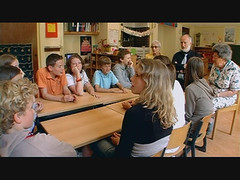
Englische Werkbeschreibung: To comprehend fully the events in the life of Anne Frank, one must listen to the voices of the children who were there with her, of those who remember her. Theo (Maurice) Coster, a famous games' creator from Israel, renews contact with six of his and Anne Frank's former classmates, only to discover an astonishing and confusing truth about the village where he was hiding during World War Two. Set against their childhood locations in Amsterdam, Westerbork Transit Camp and their current homes in Holland and Israel, these former classmates discuss their relationships with Anne and how they survived the war. Through these discussions, the film takes a bold and illuminating look at the different Dutch attitudes towards the war years in The Netherlands and towards the Holocaust. Anna Frank's Diary confirms the tragedy of the Holocaust and continues to debunk Holocaust deniers. The documentation of Anna's classmates, now in their eighties, strengthens the impact the Diary has on the world. The story of Anna's classmates is not only illustrated through interviews and discussions between the classmates themselves, but also through photographs, archival footage, personal scrapbooks and letters and other new resources.

Classmates of Anne Frank (Israel 2008)>Classmates of Anne Frank (Israel 2008)

Director's Bio: Eyal Boers is a creative film professional with experience in writing, directing, producing, research and camera. Eyal has a B.A. Degree from Tel Aviv University in Philosophy and Political Science and an M.F.A. degree from Tel Aviv University in Film and Television Studies. As part of his film studies, Eyal produced, directed and wrote two short dramas: "Chayal Boded"[A Lone Soldier], which won the award for best cinemtography at the 2007 Ashdod International Film Festival; and "What Matters", which won the bronze bear award at the 2005 Festival of Nations in Austria. Eyal has also worked as a cameraman for the Israeli and Dutch Television and as a Cinema teacher and lecturer at various Israeli colleges. He is a member of the Israeli Documentary Filmmakers Forum.

Classmates of Anne Frank (Israel 2008) Director Eyal Boers

Anne Frank wäre heute, am 12. Juni 2009, 80 Jahre alt geworden. Es ist uns eine Ehre, diesen Film von Eyal Boers am heutigen Tag als Teil des Festival-Programms des Globians Doc Fest Berlin ankündigen zu können. Die Website des Anne-Frank-Zentrums in Berlin für weitere Informationen: http://www.annefrank.de/

Dieser Film aus dem Programm des Globians Doc Fest wird wiederholt und zwar am 25. November 2009 um 21.00 Uhr im Eiffelturm-Kino Berlin (im Centre Français de Berlin), Müllerstr. 74, U-Bahnhof Rehberge/Afrikanische Straße.

GLOBIANS DOC FEST BERLIN
August 12 - 17, 2009
Kino Toni, Antonplatz

ISRAEL | Deutsche im Ausland (3) | Langzeit-Traumata (4):
Meine Liebe Dein Land

Film-Nr.: 651
Vorführungstermin: Montag, 17. August 2009, 19 Uhr [VN65]
Themenschwerpunkt: Deutsche im Ausland (3) | Langzeit-Traumata (4) Israel | Heilung als kultureller und sozialer Prozess (6)

Englischer Titel: My Love Your Land
Originaltitel: Meine Liebe Dein Land
Deutscher Titel: Meine Liebe Dein Land
Herkunft: Deutschland 2009
Laufzeit: 60 min.
Sprachfassung: Deutsch-hebräisch-englische Originalfassung mit englischen Untertiteln

Regie: Gerhard Schick
Produzent: Gerhard Schick
Drehbuch: Miriam Jakobs
Schnitt: Heinz Kraft, Gerhard Schick
Kamera: Gerhard Schick
Produktion: Schick Films, Köln (Cologne)

Website: http://gerhardschick.de
Premierenstatus: Weltpremiere


Kurzinhalt: Als Sven aus Deutschland Orly aus Israel traf, war er 19 und sie 33. Obwohl Orly schon zwei Kinder hatte, waren die beiden als Paar unzertrennlich. Orlys Eltern waren über diese neue Beziehung ihrer Tochter gar nicht glücklich, viele Familienmitglieder wurden im Holocaust umgebracht. Aber bald zog Sven nach Tel Aviv um und das ungleiche Paar heiratete. Ihre Geschichte reflektiert das gesamte Spektrum sozialer und politischer Probleme von Israel im kleinen Universum einer Familie.

Trailervideo: http://blip.tv/file/2358706 + http://www.youtube.com/watch?v=N7GaQBQHSfI

Englische Synopsis: When Sven from Germany was 19, he met Orly from Israel, who was 33. Although she already had two children, they became inseparable. Orly’s parents were not happy about their daughter’s new relationship – many family members were murdered during the holocaust. But soon Sven moved to Tel Aviv and the unequal couple got married. Their story is never just a private love affaire — it reflects all critical social and political Israeli issues in the small universe of a family.
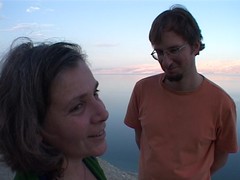
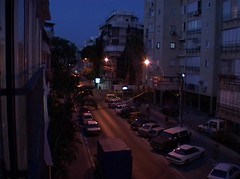
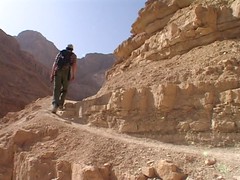
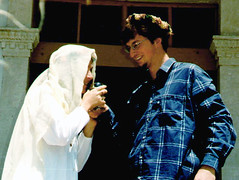
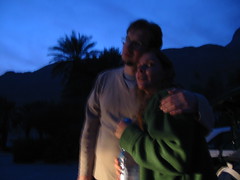
Meine Liebe Dein Land (Germany 2009) still>Meine Liebe Dein Land (Germany 2009) still>Meine Liebe Dein Land (Germany 2009) still

Englische Werkbeschreibung: I met my best friend Sven on a plane to Israel. We were both in the twelfth grade and on our way to a student exchange with Tel Aviv. We immediately fell in love with this strange and peculiar country, and for two naive pacifists we coped surprisingly quickly with the ever-present military. Then Sven met Orly. Although Orly had two children from her first marriage, and although she was 14 years older than Sven, they became inseparable. All the facts spoke against them: the German boy and the Israeli woman, the down-to-earth physicist and the emotional musician, the boy from provincial Cologne in the turbulences of the Middle East. Moreover, Orly’s parents were not happy about their daughter’s new relationship. Many family members were murdered during the holocaust. A German son-in-law was unthinkable for them. But the unequal couple seemed to defy the odds. A year after they had first met, Sven moved to Tel Aviv. Orly’s son Amos and her daughter Anat live partly with their natural father and partly with Orly and Sven. When Sven entered their life, they were only five and six years old. For them it became normal to have a German as a second father. On some days, especially on the Holocaust Memorial Day, this normality is challenged, though. Besides, the ongoing crisis makes a normal life in Israel look like a far away dream. On one evening a suicide attack occurs only a few hundred meters from Sven and Orly’s house. So their story is never just a private love affaire – it reflects all critical social and political issues in the small universe of a family.
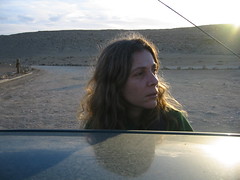
Meine Liebe Dein Land (Germany 2009)>Meine Liebe Dein Land (Germany 2009)>Meine Liebe Dein Land (Germany 2009)

Von Gerhard Schick zeigte das Globians Doc Fest 2008 bereits im August 2008 die Produktion "Tanz und Tabu in Sao Paulo" über die Choreographin Gerda König.
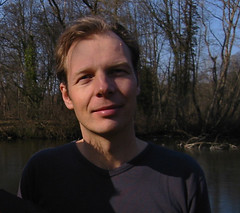
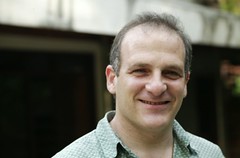
Meine Liebe Dein Land (Germany 2009) director Gerhard Schick

Director‘s Bio: Gerhard Schick. Geboren 1970. Studium der Theater-, Film- und Fernsehwissenschaft, Deutschen Philologie und Geschichte in Köln und Tel Aviv. Seit 1999 Autor von Dokumentarfilmen. Arbeiten unter anderem für die 3sat-Redaktion des WDR Köln, ZDF/arte, NDR/arte und das Goethe-Institut. Lehraufträge an der Hochschule für Fernsehen und Film (HFF) München und der Universität Regensburg.

Filmographie (Auszüge)
2009: Aus der Waagerechten in die Senkrechte.
Montage der Skulptur Standortmitte, 60’
Raus aus dem Zauberwald, 45’
2008: Der Klang der Worte, 74’
Meine Liebe Dein Land, 60’
2007: Der andere Körper. Tanz und Tabu in Sao Paulo 60‘
Requiem für einen Punk, 80’
2006: Einladung zum Tanz, 90’
2005: Das Monster in uns, 60’
Zwischen Himmel und Erde, 5x30’
1999: Pirambu - Wege aus der Armut, 45’
1996: Shalom Alaaf – Erinnerungen Kölner Juden, 45’

Dieser Film aus dem Programm des Globians Doc Fest wird wiederholt und zwar am 25. November 2009 um 21.00 Uhr im Eiffelturm-Kino Berlin (im Centre Français de Berlin), Müllerstr. 74, U-Bahnhof Rehberge/Afrikanische Straße.

GLOBIANS DOC FEST BERLIN
August 12 - 17, 2009
Kino Toni, Antonplatz