Posts mit dem Label Unglaubliche Geschichten aus Russland werden angezeigt. Alle Posts anzeigen

Freitag, 12. Juni 2009

Filme über Fotografen (2) | Unglaubliche Geschichten aus Russland (1):
Der "Cartier-Bresson" der russischen Provinz, Evgeny Kashirin (1949 - 2007)

Film-Nr.: 542
Vorführungstermin: Sonntag, 16. August 2009, 16 Uhr (Zweiter Film) [VN54]
Themenschwerpunkt: Unglaubliche Geschichten aus Russland (1) | Filme über Fotografen (2) | Würdigungen (3)

Englischer Titel: The Photographer
Originaltitel: Fotograf
Deutscher Titel: Der Fotograf
Herkunft: Kanada 2008
Laufzeit: 60 min
Sprachfassung: Russische Originalfassung mit englischen Untertiteln

Regie: Thomas Lahusen, Alexander Gershtein, Tracy McDonald
Produzent: Thomas Lahusen, Sergei Kapterev,
Schnitt: Thomas Lahusen
Kamera: Alexander Gershtein
Musik:
Produktion: Chemodan Films, Toronto

URL Film-Homepage: http://www.chemodanfilms.com
Premierenstatus: Europäische Erstaufführung
Bisherige Aufführungen:


Kurzinhalt: Er wurde der "Cartier-Bresson der russischen Provinz" genannt: Evgeny Kashirin (1949 - 2007) war der Chronist einer visuellen, sozialen und kulturellen Geschichte seiner Zeit und seiner Orte, der inzwischen drei Generationen junger Leute dahin gehend inspiriert hat, wie man Schönheit und Bedeutung in seiner Umwelt erkennen kann.

Trailervideo: http://blip.tv/file/2253003 + http://www.youtube.com/watch?v=9Y_CYSqGMh4

Englische Synopsis: A film about Riazan photographer Evgeny Kashirin (1949 - 2007), who recorded a poignant visual, social, and cultural history of his time and place, and who inspired three generations of young people to see meaning and beauty in the world around them.

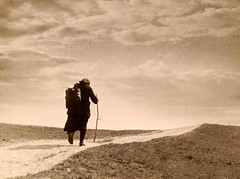
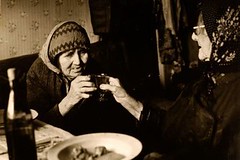
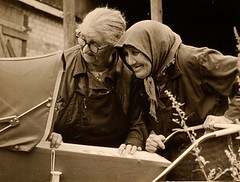
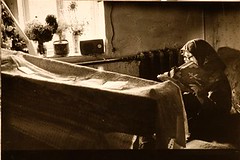
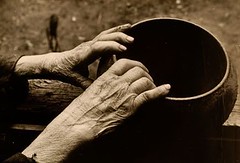
The Photographer (CANADA 2008) photo © Evgeny Kashirin>The Photographer (CANADA 2008) photo © Evgeny Kashirin>The Photographer (CANADA 2008) photo © Evgeny Kashirin

Englische Werkbeschreibung: The Photographer is Evgeny Kashirin (1949 - 2007). From the age of 19, Kashirin captured his time and place, the central Russian province of Riazan, through the lens of his black and white camera. Our film tells (t)his story through the words of his students and acquaintances, his photographs, and footage of the photographer’s own projected film compilations accompanied by his haunting blank verse. Together they take the form of a triptych: a dying rural life, a train, and the story of a man who traded his wife for a marble statue of Judith. In the film’s prelude, Kashirin visits the remains of the church and the cemetery of his childhood home in the village of Zatishe on a cold autumn afternoon. Zatishe is difficult to translate into English, the closest approximation is “Lull.” Despite the grey day Kashirin is alive and energetic as he lopes through the high grass. A young man speaks of the ways in which Kashirin opened up a world for him in a dark room in a dreary Soviet city. A city and a world that Kashirin helped him see in a new way. The photographer shepherded three generations of young people in a dilapidated centre for youth technical arts in downtown Riazan. He defended this coveted space in a city and a country where space was always at a premium. Kashirin’s photographs blatantly contradict the views of some “specialists,” according to whom Kashirin was not a “true historian”. But his massive archive of photographs is a vivid and poignant visual social and cultural history of his times. It is a history that is alive in its very rawness and beauty. The first panel of the triptych is “Lull.”

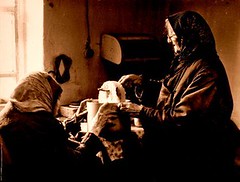
The Photographer (CANADA 2008) photo © Evgeny Kashirin>The Photographer (CANADA 2008) photo © Evgeny Kashirin>The Photographer (CANADA 2008) photo © Evgeny Kashirin

It is the story of Kashirin’s “grandmothers,” Klava and Frosia, one an abandoned orphan and the other the wife of a priest, both on the margins of official Soviet society. They lived, worked, and survived together for fifty years. Eternal, peasant Russia? Yet when the two old women reluctantly accept a television, pressed on them by their grandson, it is the May Day parade they like best. The second panel is “Movement.” People on a slow train that crawls from town to town passing the villages of Riazan along the way. Again, life is unfolding, captured in stills showing a Russia that not many foreigners ever see, while the haunting voice of the photographer closes upon the last image: “And again children, again a dream, again movement, glances…” The third part of the Triptych is “The Stone Woman.” A man travels to Leningrad to buy furniture, and comes back with a marble woman. In disgust his wife leaves him but she is easily replaced as he paints for his sculpture, he buys her companions, and celebrates her birthday on the 8th of March. “The Stone Woman” is the photographer’s own journey, “away from the light of the banal Riazan streets” because “everyone wants to live in beauty.” The Epilogue revisits the same ruined church of Zatishe, the graves of Klava and Frosia, now overgrown with weeds. The scenes were shot a few days after Kashirin’s death. The black and white photographs have been replaced by the intense and almost suffocating colors of summer. The score for The Photographer was composed by the virtuoso of the Russian seven-string guitar Oleg Timofeyev and interperted by the Timofeyev Ensemble. Shooting started in the fall of 2005. A second round of filming took place in June and July 2007. Evgeny Kashirin died on June 29, 2007. We were able to say goodbye to him.

Das Globians Doc Fest zeigte bereits zwei frühere Produktionen der kanadischen Chemodan Films, nämlich "Komsomolsk mon amour" (2008) über alternatives Theater in Komsomolsk (Amur) sowie "The Province of Lost Films" (2006) zu den Überbleibseln der Cinefizierung unter Stalin; Chemodan Films in Toronto besteht aus dem Filmemachertrio um Thomas Lahusen, Alexander Gershtein und Tracy McDonald.

Dieser Film aus dem Programm des Globians Doc Fest wird wiederholt und zwar am 09. Dezember 2009 um 18.00 Uhr im Eiffelturm-Kino Berlin (im Centre Français de Berlin), Müllerstr. 74, U-Bahnhof Rehberge/Afrikanische Straße.

GLOBIANS DOC FEST BERLIN
August 12 - 17, 2009
Kino Toni, Antonplatz

Unglaubliche Geschichten aus Russland (2) | MusikMusik! (2):
Unglaublich russische Namen wie "Frautschi"

Film-Nr.: 551
Vorführungstermin: Sonntag, 16. August 2009, 18 Uhr [VN55]
Themenschwerpunkt: Unglaubliche Geschichten aus Russland (2) | MusikMusik! (2) | Würdigungen (4)

Englischer Titel: FRAUTSCHI
Originaltitel: FRAUTSCHI
Deutscher Titel: Frautschi
Herkunft: USA 2008
Laufzeit: 49 min
Sprachfassung: Russische Originalfassung mit englischen Untertiteln

Regie: Oleg Timofeyev
Produzent: Sabine Gölz
Schnitt: Kenneth Casey Swoyer, Christopher Renaud (sound)
Kamera: Sabine Gölz, Liam Dale
Musik: Kamill Frautschi, Alexander Frautschi
Produktion: ArbatFilm
in Kooperation mit der University of Iowa, Dept. of Cinema and Comparative Literature

URL Film-Homepage: http://www.arbatfilm.com
Premierenstatus: Europäische Erstaufführung
Bisherige Aufführungen: NXNE Toronto, Kanada; The Accolade Competition, Award of Merit, Santa Monica (Kalifornien) USA;


Kurzinhalt: Wie der ur-russische Familienname FRAUTSCHI bereits verrät, handelt es hier um eine besonders unglaubliche Lebensgeschichte aus Russland, nämlich die des einflussreichen Gitarrenpädagen, Kamill Frautschi (1921 - 1997), und die seines Sohns, Alexander Frautschi (1956 - 2008).

Trailervideo: http://blip.tv/file/2253014 + http://www.youtube.com/watch?v=1KlHZnytj-Y + http://www.imdb.com/video/wab/vi3743220505/

Englische Synopsis: FRAUTSCHI is the intimate portrait of one of the most influential (and most unknown) guitar pedagogues in Russia: Kamill Frautschi (1921-1997). A violinist himself, Kamill taught his son Alexander Frautschi (1956-2008) to play guitar. Alexander became the first guitarist from the Soviet Union to achieve international fame. The Frautschis were Swiss émigrés in Russia. Kamill's father Arthur Frautschi ('Artuzov'), a top-ranking officer of the NKVD (later: KGB), fell victim to Stalinist purges in 1937. Kamill therefore spent his youth in the Gulag. That experience was profoundly formative. Through interviews with students, family documents, home videos, and an audio tape he recorded late in his life, this documentary brings Frautschi's profound ideas on music teaching and performance to any audiences interested in music and art.

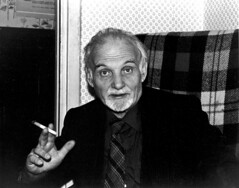
FRAUTSCHI (USA 2008) still

Englische Werkbeschreibung: Frautschi is a 50-minute-long documentary video about Moscow’s legendary underground guitar teacher Kamill Arturovich Frautschi, whose impact on Russian guitar pedagogy has been profound, but whose legacy so far remains unrecognized. This obscurity is due to no small degree to the fact that Frautschi insisted on keeping his distance from the conservatoires and other official teaching institutions, and taught only privately. Nevertheless, a large number of conservatoire students took regular lessons from him in his private studio and considered him their main musical influence. Originally a violinist trained in Moscow by the highly influential violin professor Elena Fabianovna Gnessina, Frautschi responded to his son Alexander’s decision to study guitar by developing his highly original teaching methodology for that instrument. Frautschi’s teaching principles offer a generalized approach to music making that addresses the whole gamut of the physical, intellectual, social, and emotional dimensions of musical performance, and are ultimately applicable to any instrument. Crucial to his philosophy are his (somewhat Nietzschean) concepts of the “memory of power” and the “memory of slavery.” Designed to aid the practical aspects of music making, however, his philosophy remains entirely concrete. He especially emphasized the performer’s physical comfort and even pleasure. These are strikingly un-Soviet concepts: individual empowerment and the pursuit of pleasure came close to blasphemy in the context of Soviet collectivist ideology. Frautschi’s independence of spirit can be understood in light of the tragic history of the Frautschi family. Kamill’s grandfather Christian Frautschi (1856-?) had moved from the Swiss village of Lauenen to the Tver’ Region around 1890 to manufacture cheese. Christian’s son Arthur Frautschi (1891-1937) got involved in the 1917 Bolshevik Revolution. He later (under the code name “Artuzov”) became a senior officer of the ChK (predecessor of the KGB) and was the main architect of the early Soviet counterespionage system. In 1937, Artuzov fell victim to Stalin’s repressions and was shot. His 15-year-old son Kamill was sent to the Gulag, where he spent nine years, surviving only because, as a violinist, he was chosen to perform in the camp’s orchestra. However terrible that whole experience must have been, all of our interviewees agree that Frautschi valued his memory of those Gulag years surprisingly highly: many of his fellow prisoners were Russian intellectuals and aristocrats, and he credited them with having been his most important educators. The Gulag memories, combined with several other stories about Frautschi’s childhood and youth as the son of a high-ranking Bolshevik, often connect surprisingly directly to his musical teachings. Since he never wrote his ideas down, Frautschi’s legacy is mostly oral. Fortunately, through the last year of his life, when he was already almost blind, Frautschi attempted to preserve some key ideas in audio recordings. We received these invaluable recordings from one of his last students and collaborator, Anna Toncheva. Although it is not very long, the audio recording gives a glimpse of the astonishingly concentrated complexity and depth of Frautschi’s thinking. It serves as an indispensable capstone in the architecture of the film. Russian classical music and ballet enjoyed unquestionable authority around the world throughout the 20th century. For a variety of reasons, guitar performance did not have a share in this glory. Until the very end of the 20th century, guitar was generally not offered at the conservatory level, and Soviet guitarists were unknown to and isolated from the West. Kamill Frautschi brought the same high standards of Russian violin performance to an instrument to which they had not been applied before. His son Alexander Frautschi was the first Soviet guitarist to tour abroad and to win an international competition. It is generally unknown that the father of this outstanding guitarist was also his most important teacher. Alexander Frautschi went on to become a highly influential teacher himself, and after his untimely death in 2008, the Frautschi legacy still lives on in a great number of other Russian guitarists active today. As both scholars and professional artists, we bring together pedagogy, philosophy, music, and video. We strive to develop a filmic language that does justice to all aspects of this project in a documentary of high artistic value that we hope will be as illuminating for an educated general audience to watch as it has been for us to make it.

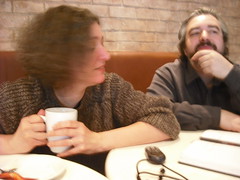
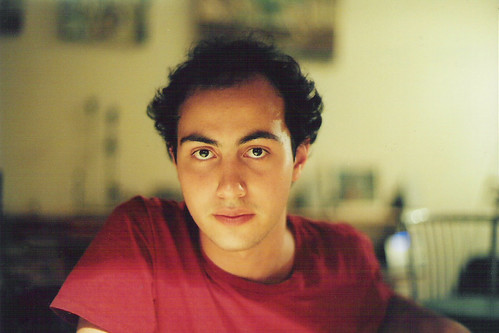
FRAUTSCHI (USA 2008) Director Oleg Timofeyev and Producer Sabine Gölz

GLOBIANS DOC FEST BERLIN
August 12 - 17, 2009
Kino Toni, Antonplatz

Unglaubliche Geschichten aus Russland (3):
Lieder aus der Tundra

Film-Nr.: 561
Vorführungstermin: Sonntag, 16. August 2009, 19 Uhr (Vorfilm) [VN56]
Themenschwerpunkt: Unglaubliche Geschichten aus Russland (3)

Englischer Titel: Songs from the Tundra
Originaltitel: Songs from the Tundra
Deutscher Titel: Lieder aus der Tundra
Herkunft: USA 2009
Laufzeit: 24 min.
Sprachfassung: Russische Originalfassung mit englischen Untertiteln

Regie: Alexander Berman, Benjamin Berman
Produzent: Elena Barengolts, Lucien Castaing-Taylor, Robb Moss
Schnitt: Alexander Berman, Ernst Karel (sound)
Kamera: Alexander Berman
Produktion: Harvard University, Cambridge (Massachusetts)


Premierenstatus: Internationale Festival-Premiere

Kurzinhalt: Eine lyrische Reise zum äußersten Zipfel der Grenzen Russlands, zu den Even auf der Kamchatka Halbinsel.

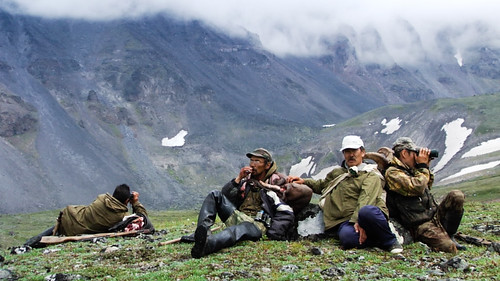
Songs from the Tundra (USA 2009)

Englische Synopsis: 'Songs from the Tundra' is a lyric journey through modernity of the Even people of the Kamchatka Peninsula, Russia's most remote frontier.

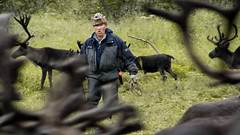
Songs from the Tundra (USA 2009)

Englische Werkbeschreibung: 'Songs from the Tundra' is a lyric journey through the unsparing adventure and awkward modernity of the Even people of the Kamchatka Peninsula, Russia's most remote frontier. The film unfolds in a series of native Even songs belonging to a forgotten generation. As they sing of hunters and herders, the Evens attempt to recreate their mythic past in a reindeer camp at the foot of the Alney volcano. But hearth alone cannot be home. The Evens must leave their reindeer on a truly fearsome beast.

Songs from the Tundra (USA 2009) Director Alexander Berman

GLOBIANS DOC FEST BERLIN
August 12 - 17, 2009
Kino Toni, Antonplatz

Unglaubliche Geschichten aus [Russland] Lettland (4):
Der ehemals russische Marinehafen Karosta bei Riga (Lettland)

Film-Nr.: 562
Vorführungstermin: Sonntag, 16. August 2009, 19 Uhr (Hauptfilm) [VN56]
Themenschwerpunkt: Unglaubliche Geschichten aus [Russland] Lettland (4)

Englischer Titel: Karosta
Originaltitel: Karosta
Deutscher Titel: Karosta
Herkunft: UK 2008
Laufzeit: 50 min.
Sprachfassung: Englisch-Lettisch-Russische Originalfassung mit englischen Untertiteln

Regie: Peter King
Produzent: Rowland Kimber
Schnitt: Peter King
Kamera: David Procter
Musik: Richard Canavan
Produktion: Ivory Tower Pictures, London

URL Film-Homepage: http://www.ivorytowerpictures.com/
Premierenstatus: Deutsche Erstaufführung
Bisherige Aufführungen: Raindance Film Festival London, UK; London International Documentary Film Festival, London, UK;


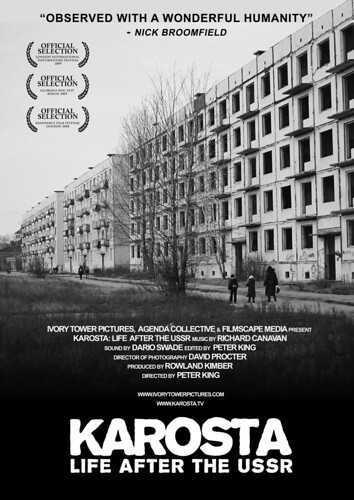
Karosta (UK 2008) poster

Kurzinhalt: Ein Porträt des Untergangs und des Verfalls der Überbleibsel des Sowjet-Imperiums am Beispiel des ehemaligen Marinehafens Karosta in Lettland, gesehen mit den Augen von Denjenigen, die dies miterleben mussten.

Trailervideo: http://blip.tv/file/2253024 + http://www.youtube.com/watch?v=QTOrStwQkzY
Teaservideo: http://blip.tv/file/2253018 + http://www.youtube.com/watch?v=Nt14QQYNHUQ

Englische Synopsis: Karosta is a portrait of the demise and fall of the Soviet Empire as seen through the eyes of the people who endured it.

Karosta (UK 200) poster

Englische Werkbeschreibung: With the re-emergence of the Russian Federation as a super power, and notably their invasion of Georgia and friendship with both Iran and Venezuela, the abandoned Latvian military port of ‘Karosta’ is a very important reminder of recent history and a vital lesson about the future. Built in the early 1900’s as a purpose made war port, Karosta has seen some of the most influential and disturbing eras of modern times, from Tsarist origins, to NAZI and then Soviet occupation. When the Russian army left Latvia in 1994 after Latvian independence, Karosta became largely uninhabited and most structures fell to ruin. Its population is made up of the people who moved into the empty military apartment blocks, and the Russians who stayed behind after the soviet withdrawal. In late 1990s, the area was troubled by high unemployment, street crime and drug problems, with some remaining residents considered neither Latvian nor Russian and holding 'alien passports.' The remaining townspeople share their lives with mass holocaustic graves and derelict military bunkers, their lives very slowly regaining some kind of normality.

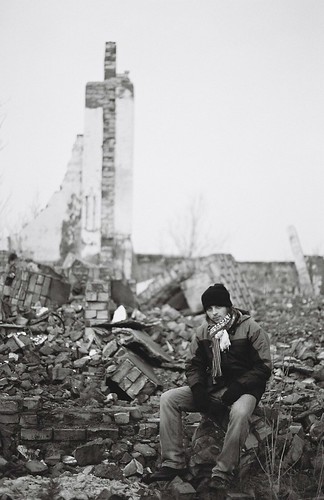
Karosta (UK 2008) Director Peter King

The eclectic architecture in Karosta ranges from underground tunnel networks to Orthodox temples and from Soviet concrete barracks to Tsarist palaces, all of which are in decay. The town has ‘cyberpunk’ dystopic characteristics mixed with an unprecedented amount of individual freedom. The end of authoritarian legacy has released the town into an anarchic autonomy, with the town’s population reducing from 30,000 people to only 7,000. Surrounded by the mise-en-scene of a totalitarian regime, the Karostan people lead a life free from governmental laws and regulations. People in western civilisation only see this vision as something of fiction, but in reality this exists, and the truth is much more intriguing. This documentary explores how society copes without infrastructure and order, and how respect for one another goes a long way in allowing people living harmoniously within such a chaotic existence. Added to the mix are a group of artists, known as K@2, who took it upon themselves to attempt to restore order to the town through creativity and opportunity by organising events that bring the inhabitants together, and leading regeneration projects within the town. They also use the free reign they have within the town to explore their creative freedom, expressing themselves visually throughout the abandoned concrete housing blocks. Karosta is somewhere that has been long forgotten, and at such a pivotal moment in the modern world’s development, now is the most vital time to unearth such an important part of history, as our power driven world is soon heading back to the state it was in when Karosta was conceived.

GLOBIANS DOC FEST BERLIN
August 12 - 17, 2009
Kino Toni, Antonplatz

Unglaubliche Geschichten aus Russland (5) | Der 211. auf dem Gebiet der ehemaligen SU ermordete Journalist hieß: Anna Politkovskaya (1958 - 2006)

Film-Nr.: 571
Vorführungstermin: Sonntag, 16. August 2009, 20.30 Uhr [VN57]
Themenschwerpunkt: Unglaubliche Geschichten aus Russland (5) | Würdigungen (5)

Englischer Titel: 211: Anna
Originaltitel: 211: Anna
Deutscher Titel: 211: Anna
Herkunft: Italien 2009
Laufzeit: 90 min.
Sprachfassung: Russische Originalfassung mit englischen Untertiteln

Regie: Paolo Serbandini, Giovanna Massimetti
Produzent: Alessandro Papini, Stefano Alpini
Drehbuch: Paolo Serbandini, Giovanna Massimetti
Schnitt: Gabriele Spinelli, Vittorio De Felice
Kamera: Vladimir Ivanov
Musik:
Produktion: POLIS SRL., Pisa (Toskana)

URL Film-Homepage: http://www.211anna.it/
Premierenstatus: Deutsche Erstaufführung
Bisherige Aufführungen: Sundance Film Festival, Utah (USA)


Kurzinhalt: Die Lebensgeschichte der Anna Politkovskaya, zugleich die Überlebensgeschichte ihrer Familie. Anna war die 211. nach dem Zusammenbruch der Sowjetunion ermordetete Journalistin auf dem Gebiet der ehemaligen SU, daher der Filmtitel.

Englische Synopsis: The story of Anna Politkovskaya (30 August 1958 – 7 October 2006), a Russian journalist and human rights activist well known for her opposition to the Chechen conflict and Russian president Putin. Politkovskaya made her name reporting from lawless Chechnya, where many journalists and humanitarian workers have been kidnapped or killed. She was arrested and subjected to mock execution by Russian military forces there, and she was poisoned on the way to Beslan, but survived and continued her reporting. She authored several books about Chechen wars and Putin's Russia and received numerous prestigious international awards for her work. She was shot dead in the elevator of her apartment building on October 7, 2006.

Englische Werkbeschreibung: Anna Stepanovna Politkovskaya (Russian: 30 August 1958 – 7 October 2006) was a Russian journalist and human rights activist well known for her opposition to the Chechen conflict and Russian president Putin. Politkovskaya made her name reporting from lawless Chechnya, where many journalists and humanitarian workers have been kidnapped or killed. She was arrested and subjected to mock execution by Russian military forces there, and she was poisoned on the way to Beslan, but survived and continued her reporting. She authored several books about Chechen wars and Putin's Russia and received numerous prestigious international awards for her work. She was shot dead in the elevator of her apartment building on October 7, 2006, the birthday of Vladimir Putin, who was publicly accused by Alexander Litvinenko of ordering her murder. Litvinenko subsequently died from poisoning by radioactive polonium. By now over 10 people have been arrested within the scope of the official investigation; however, no organiser's name has yet been officially announced. Politkovskaya was born Anna Mazepa in New York City in 1958 to Soviet Ukrainian parents, both of whom served as diplomats to the United Nations. She grew up in Moscow and graduated from the Moscow State University Department of Journalism in 1980. Politkovskaya was a citizen of both the United States of America and the Russian Federation. From June 1999 to 2006, she wrote columns for the biweekly Novaya Gazeta. She published several award-winning books about Chechnya, life in Russia,and President Putin's regime, most recently the book Putin's Russia. Outside Russia, Politkovskaya received wide acclaim for her work in Chechnya,where she frequently visited hospitals and refugee camps to interview the victims. She said about herself that she was not an investigating magistrate but somebody who describes the life of the citizens for those who cannot see it for themselves, because what is shown on television and written about in the overwhelming majority of newspapers is emasculated and doused with ideology. Her numerous articles critical of the war in Chechnya described abuses committed by Russian military forces, by Chechen rebels, and by the Russian-backed Chechen administration led by Akhmad Kadyrov and his son Ramzan Kadyrov. Politkovskaya chronicled human rights abuses and policy failures in Chechnya and elsewhere in Russia's North Caucasus in several books on the subject, including 'A Dirty War: A Russian Reporter in Chechnya' and 'A Small Corner of Hell: Dispatches from Chechnya', which painted a picture of brutal war in which thousands of innocent citizens have been tortured, abducted or killed at the hands of Chechen or federal authorities. One of her most recent investigations was about alleged mass poisoning of hundreds of Chechen school children by an unknown chemical substance of strong and prolonged action, which made them completely incapable for many months. 'People often tell me that I am a pessimist, that I don't believe in the strength of the Russian people, that I am obsessive in my opposition to Putin and see nothing beyond that,' she opens an essay titled Am I Afraid?, finishing it - and the book - with the words: 'If anybody thinks they can take comfort from the 'optimistic' forecast, let them do so. It is certainly the easier way, but it is the death sentence for our grandchildren.'
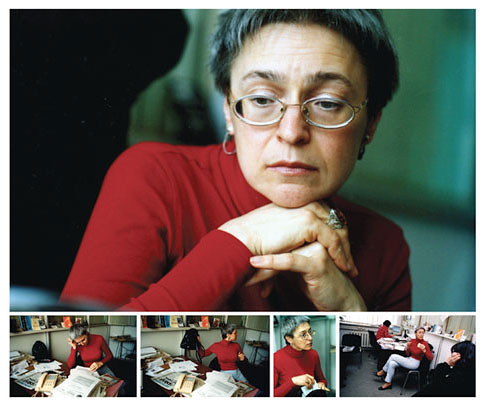
211: Anna (ITALY 2008)

This documentary speaks about 30 years of Soviet Union/Russia history saw through the family of Anna, the husband, a fomous journalist in perestroika period, and the sons, some interview to the Anna's friends and about the history of a separate investigation of Politkovskaya's murder,carried out the staff journalists of Novaya Gazeta, during which they closely cooperated with the General Prosecutor's Office. On August 30, 2007, Novaya Gazeta journalists and Anna's son Ilya Politkovsky issued a statement about the ongoing investigation. In it they claimed that not all the people involved had been arrested, the Prosecutor's Office had yet to do lots of routine work to prove the guilt of those arrested, but also that Novaya Gazeta's own investigation shows that 'the arrested people were really involved in this crime in this or that degree'. The major issue addressed by the Novaya Gazeta journalists was the leak organized in the media, which has seriously complicated the work of investigators and could have let other people involved get off. According to the journalists, 'It seems that someone wanted to make the current list of suspects final and, in addition, to prevent the solving of other crimes that might possibly have been committed by the people arrested.' Details of the investigation were kept secret for almost ten months, being controlled by the chief of the official investigative group and Novaya Gazeta journalists. On August 27, the Prosecutor General and special service officers held press conferences. Although this was not a major breach in the secrecy of the case (besides one of the arrested, FSB Lieutenant Colonel Pavel Ryaguzov, being named), it triggered a snowball of publications, as well as public appearances by minor officials. Two things had worsened the deal: first, as Sergey Sokolov has mentioned in his September 2 interview, 'each office had people who had obtained a bit of information — and they started to sell it to journalists', and second, the seeming involvement of some people in these structures, due to 'interpenetration of crime and law enforcement bodies', internal intrigues and fear that if investigators 'unraveled this tangle, then the details of many celebrated unsolved cases would be disclosed'. With regard to whoever ordered the murder of Politkovskaya, the Novaya Gazeta journalists have noted: 'We do not exclude possible involvement by 'runaway oligarchs' and other characters. There are several versions of who was the client in Politkovskaya’s murder. We believe that the client hasn't left Russia. None of the versions have been proved with evidence up to now and so all speculation must end for the moment.'
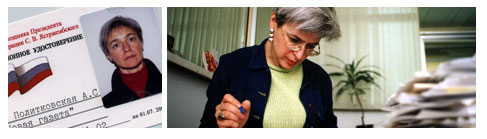
211: Anna (ITALY 2008)

Kurzbio Regie in Englisch: Giovanna Massimetti is a television and screenplay writer, as well as director. Since 1991 she has worked for RAI (Italian State Television) on various programs, entertainment shows and news. But it was always her dream to make movies. She has directed several short films, shown in international festivals such as Valencia Cinema Jove and the Torino Film Festival. With Paolo Serbandini, she has written a script set in the Moscow of 1930s, at the beginning of the Stalinist terror. Paolo Serbandini is journalist and television and screenplay writer. He studied Philology at the University of Moscow, and has long been associated with the Russian world. Among others things, he has worked with Russian directors like Bondarciuk and Konchalovsky and as assistant director on I girasoli (‘Sunflowers’) by De Sica. He is the author of the script and screenplay of Giuliano Montaldo’s latest film, based on the life of Dostoyevsky. For Italian television, he has made two documentaries about attempted coups d’etat in Russia (1991 and 1993). He was personally acquainted with Anna Politkovskaya in Moscow.

Hintergrund-Info zur Entstehung des Films: A friend rang us, on the evening of 7 October 2006, to break the news of Anna’s murder. We were driving in the south of France, on a trip for work. We turned on the radio and began to search frantically for a radio station broadcasting the news. We refused to believe it, even though we were well aware of the risks Anna was running and despite the fact that she herself had said to us: “I’m amazed they haven’t killed me yet”. We had first met her in Moscow in December 2003. But we had been familiar with her indomitable journalistic force for some time, and had read her books and articles. We saw her again the following year, in early September. Shehad just been discharged from a clinic after they had tried to poison her in order to stop her reaching Beslan. She was pale and fragile, but no less determined for that. The idea of writing a film about Anna came to us a few months later. We started gathering material, reading and rereading her books and articles, doing research on internet. We wrote a script. Some director friends read it. “Great, but too expensive”, they said, “the Italian film industry doesn’t have the funds for a film like that”. We picked the script up again some time later. There was one thing we didn’t know before, and found out only as we were researching the subject. Anna had a husband, Sasha Politkovsky, leading journalist and host on a Soviet television program that had first shown the country for what it really was and not veiled by regime propaganda. Sasha had become so famous that he had even been elected member of parliament. Then following the collapse of the Soviet Union, his fame had faded and he had returned to the shadows. It was at that point that his wife Anna was to take center stage for a few years, achieving worldwide acclaim for her reportage from Chechnya and denunciations of the Putin regime. We realized that we had two long interviews with Anna and a great deal of footage shot in Russia over the years. This was the starting point for filming our documentary about the pair of journalists. Husband and wife. Both famous, but in totally different times. Telling their story was like chronicling twenty years of Russian history. And so it was that thanks to friend who “reinvented himself” as a producer in order to provide us with the means to make the film, that 211: Anna saw light.

Dieser Film aus dem Programm des Globians Doc Fest wird wiederholt und zwar am 11. November 2009 um 18.30 Uhr im Eiffelturm-Kino Berlin (im Centre Français de Berlin), Müllerstr. 74, U-Bahnhof Rehberge/Afrikanische Straße

GLOBIANS DOC FEST BERLIN
August 12 - 17, 2009
Kino Toni, Antonplatz

Unglaubliche Geschichten aus Russland (6) | MusikMusik! (3):
Die Ska/Punk-Band "Leningrad" und ihr Frontmann, der singt

Film-Nr.: 581
Vorführungstermin: Sonntag, 16. August 2009, 22.15 Uhr [VN58]
Themenschwerpunkt: Unglaubliche Geschichten aus Russland (6) | MusikMusik! (3)

Englischer Titel: Leningrad - The Man Who Sings
Originaltitel: Мужчина, который поет
Deutscher Titel: Leningrad - Der Mann, der singt
Herkunft: Deutschland 2008
Laufzeit: 98 min.
Sprachfassung: Russische Originalfassung mit englischen Untertiteln

Regie: Peter Rippl
Produzent: Peter Rippl
Schnitt: Peter Rippl, Anatoli Skatchkov
Kamera: Roland Bertram, Sergey Jermolenko
Musik: Leningrad, Sergey 'Shnur' Shnurov
Produktion: studio petruschka, Frankfurt am Main

Premierenstatus: Spätvorstellung
Bisherige Aufführungen: 49th Krakow Film Festival, Krakow, Polen; ZagrebDox, Zagreb, (Kroatien); MOFFOM Music on Film Festival, in Competition, Prague, Tschechische Republik, u.a.


Kurzinhalt: ‚Leningrad’ heißt die Band, die in Russland jeder kennt. Einst waren die Russen der Geheimtipp der Petersburger Intellektuellen und Club-Szene, heute sind sie die erfolgreichste Band des Landes; Ende 2008 hat sich die Band aufgelöst, aber wer weiss...

Trailervideo: http://blip.tv/file/2253169 + http://www.youtube.com/watch?v=BicXdlvTL68

Englische Synopsis: Exuberant portrait of notorious Russian ska/punk band Leningrad and its charismatic frontman, Sergey 'Shnur' Shnurov. Packed with rollicking live footage, The Man Who Sings documents Shnurov and his band's uncompromising approach to music, stardom and life in today's Russia.

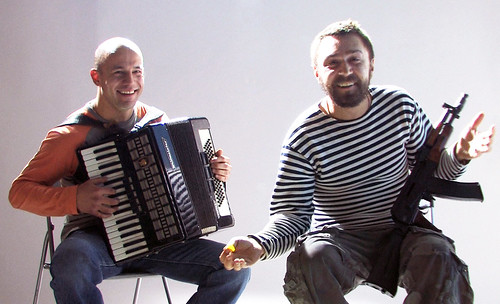
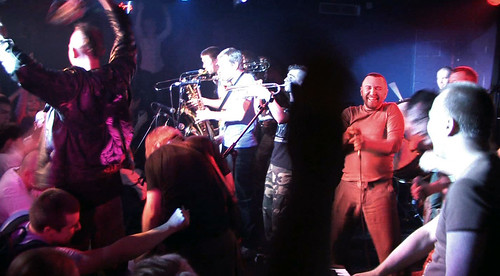
Leningrad – The man who sings (Germany 2008)

Englische Werkbeschreibung: The Story of a Boy-Band ‘Made in Russia’ First feature documentary on Russian underground superstars Leningrad is now out to be seen at Festivals across Europe. SYNOPSIS Packed with rollicking live footage ‘The Man who sings’ is a feature film documentary on Russian Polkapunkband Leningrad. Playing a weird mix of Polka, Ska, Tango, Punk and traditional popular music these 15 conservatory educated ‘punks’ obtained cult status at the end of the nineties in Russia. If you think Gogol Bordello is unique - Leningrad should be a surprise. There is a lot of music in the film, great music, and exciting onstage performances. But the film is more than just songs. It gives you an insight into how people perceived the massive changes in Russia over the past years, the dynamics of a fast, colourful and difficult decade. You’ll meet many people, in many different roles: Shnurov as a rock star and a diligent worker, Leningrad fans and opponents, music business representatives, artists… with all but unanimous opinions on music, friendship, money, politics, language, and business. When I started I didn’t know anything, but after hanging around with these guys, being in Russia, talking to the people I understood it. (Peter Rippl) Leningrad was the antithesis to what happened in Russia. And it’s synthesis.

Leningrad – The man who sings (Germany 2008)

‚Leningrad’ heißt die Band, die in Russland jeder kennt. Einst waren die Russen der Geheimtipp der Petersburger Intellektuellen und Club-Szene, heute sind sie die erfolgreichste Band des Landes. Live sind sie vielleicht das Beste, was es gibt. Rau und kraftvoll. Randvoll gepackt mit Lebensmut und Energie. Tierisch viel Energie, sagen die Fans, und: Die Musik gibt Dir Kraft, auch schwierige Zeiten zu überstehen. Wenn Sergej ‚Shnur’ Shnurov im verschwitzten T-Shirt auf der Bühne steht und seine Texte herausbrüllt, dann brüllen alle mit. ‚Freiheit ist das, was in dir drin ist!’ Rock’n Roll-Berserker Shnur flucht, kotzt sich aus, verausgabt sich. Die authentische Geste als Provokation. Moskaus Bürgermeister Luschkov hat alle öffentlichen Auftritte der Band in der Hauptstadt kurzerhand verboten. Trotz aller Anfeindung und offiziellen Ablehnung: Shnurs Alben schaffen es mühelos in die Top 10, obwohl oder gerade weil er sich dem Mainstream verweigert hat. Seine Texte sind immer lustig, immer zotig, ironisch, böse, und - manchmal auch kritisch. Shnur liebt die einfachen Leute, die Außenseiter, die Junkies, die Prols, die Säufer, die Wahrheit der Straße. ‘Leningrad – das ist wie ein Pornofilm‘ sagt er über seine Band,’ mit kleinsten Mitteln größtmögliche Emotionen hervorrufen.‘ – und das gelingt ihm ohne Frage. Doch bei aller Provokation will Shnur kein Dissident sein. Er ist ein Seismograf, der die schnelle Veränderung Russlands, mit all ihren Widersprüchen, in massen-taugliche Popkultur verwandelt hat. Das Lebensgefühl der Generation Putin.

Leningrad – The man who sings (Germany 2008) Director Peter Rippl

Dieser Film aus dem Programm des Globians Doc Fest wird wiederholt und zwar am 11. November 2009 um 21.00 Uhr im Eiffelturm-Kino Berlin (im Centre Français de Berlin), Müllerstr. 74, U-Bahnhof Rehberge/Afrikanische Straße.

GLOBIANS DOC FEST BERLIN
August 12 - 17, 2009
Kino Toni, Antonplatz