Posts mit dem Label Europäische Erstaufführung werden angezeigt. Alle Posts anzeigen

Samstag, 13. Juni 2009

Festival-Eröffnung: Der Kampf um's letzte Paradies: Seychellen — ein Mann und seine Insel: Brendon Grimshaw und Moyenne Island

Film-Nr.: 112
Vorführungstermin: Festival-Eröffnung | Mittwoch, 12. August 2009, 18 Uhr (Hauptfilm) — [VN 11]
Themenschwerpunkt: Der Kampf um's letzte Paradies: Seychellen

Englischer Titel: A Grain of Sand
Originaltitel: A Grain of Sand
Deutscher Titel: Ein Sandkorn
Herkunft: Spanien/Kanada/USA 2009
Laufzeit: 83 min.
Sprachfassung: Englische Originalfassung

Regie: Joseph Johnson Cami
Produzent: Ayelen Liberona, Joseph Johnson Cami, Ron Johnson
Schnitt: Ayelen Liberona, Joseph Johnson Cami
Kamera: Jaume Avizanda, Manel Capdevila
Musik: Nick Murr
Produktion: Wandering Eye Productions. Barcelona & Toronto

URL Film-Homepage: http://www.agrainofsandthefilm.com + http://www.wanderingeyeproductions.com
Premierenstatus: Europäische Erstaufführung
Bisherige Aufführungen: Reel Earth - Aotearoa Environmental Film Festival, Palmerston North, Neuseeland (WP)
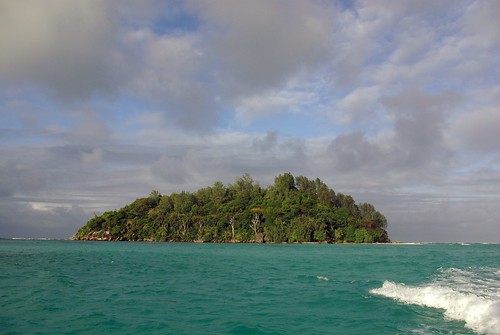

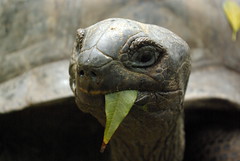
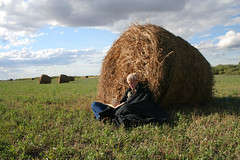
A Grain of Sand (USA 2009) Moyenne Island Seychelles

Kurzinhalt: 1972 kaufte der britische Zeitungsmann Brendon Grimshaw die kleine Seychellen-Insel "Moyenne Island" für damals 10.000 englische Pfund. Ihm war damals so, als brauchte er einfach eine einsame Insel zum d'rauf Leben. Konsequent gab Grimshaw seine Tätigkeiten als Chefredakteur englischsprachiger Zeitungen in Afrika auf und zog ganz auf seine Insel, ein Lebenstraum. Im Verlauf der nächsten 36 Jahre pflanzte er mit einem Freund 16.000 Bäume, legte 4,8 Kilometer Naturpfade an und züchtete 109 Riesenschildkröten. Damit ist in knapp 40 Jahren eine Insel voll unbeschreiblicher Schönheit als Kulturleistung entstanden, die heute nach zudringlichen Angeboten von Immobilien-Haien nun 34 Millionen EURO wert ist. Der Film ist eine Reise zu diesem Mann und seiner einsamen Insel (die sich mit bescheidenen Eintrittsgeldern von kleinen Besuchergruppen trägt). Zugleich ist "Das Sandkorn" eine intensive Begegnung mit dem heute 82-jährigen, der ohne Erben dafür kämpft, dass sein Lebenswerk nicht zum Spielball von "Immobilien-Entwicklern" wird, die am liebsten Ressourcen-verschleudernde Hotelanlagen mit Swimmingpools auf "Moyenne Island" errichten möchten. Der klassische Konflikt also zwischen Natur, Kultur und Kapital, zwischen der Lebenszeit eines Individuums und ökonomischen Strukturen, die mit Zerstörung eine vermeintliche Sicherheit von Stabilität und Dauer geben wollen. Sollen also die letzten kultivierten Naturparadise bald nur noch für die oberen 10.000 Einkommensmilliardäre der Welt zugänglich sein, die sich 2.000 EURO Zutrittspauschale pro Tag leisten können? Der Film stellt Fragen an die politischen Verantwortungsträger auf den Seychellen.
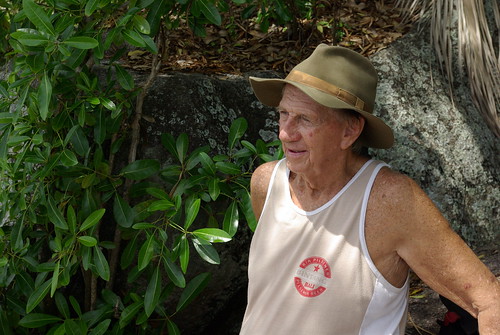
A Grain of Sand (USA 2009) Brendon Grimshaw

Trailervideo: http://blip.tv/file/2245594 + http://www.youtube.com/watch?v=MP_arV9s60k

Englische Synopsis: A mythical journey to one of the last remaining battlegrounds where the future of one man and an island stand against the ever-expanding reach of our insatiable desires. Brendon Grimshaw, a British national, was editor to some of the most important newspapers in Africa. But in 1972, he gave it all up to go and live on Moyenne Island, which he purchased for ten thousand pounds. In the thirty-six-years that he has lived on the island, Brendon and his friend, Rene Lafortune, planted sixteen-thousand trees, built 4,8 kilometres of nature paths, and brought and bred 109 giant land tortoises, creating an island of incredible beauty now worth 34 million Euros. Come with us on this journey and discover why an 82-year-old man fears his island will one day be destroyed.

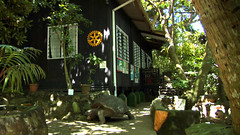
A Grain of Sand (USA 2009)A Grain of Sand (USA 2009) Brendon's HouseA Grain of Sand (USA 2009)

Englische Werkbeschreibung: A Grain of Sand was filmed in the summer of 2007 and is an 83 minute documentary that tells the love story that came to be between Brendon Grimshaw and Moyenne Island. Brendon Grimshaw, a British national, was editor to some of the most important newspapers in Africa. But in 1972, he gave it all up to go and live on Moyenne Island, which he purchased for ten thousand pounds. In the thirty-six-years that he has lived on the island, Brendon and his friend, Rene Lafortune, planted sixteen-thousand trees, built 4,8 kilometers of nature paths, and brought and bred 109 giant land tortoises, creating an island of incredible beauty now worth 34 million Euros. But pristine tropical islands with beautiful eco-systems have become a rare commodity in a world that seems to measure everything in economic terms. And there is a voracious global appetite for places like Moyenne Island, which will be passed on to unknown hands when Brendon dies, as he does not have any children. And what does capitalism want to do with his island, you might ask? Well, it wants to apply its newly popular 5-star “eco-tourism” resort formula, which would effectively privatize Moyenne Island and offer it as a tourist destination to those rich enough to afford the up to 2000 euro per night price tag. With this accomplished, the developers, environmentalists and politicians involved would claim another success story. In their mind, they took a profitless piece of land and conserved the majority of its beauty. Who cares if the only people who will ever get to see that island again will have to be rich and on vacation? Who cares if you transform a temple of 16,000 trees with nature paths for all to visit into a private resort with 5-star bungalows? No, this is the new world we live in, where the speculation and privatization of the last beautiful natural habitats in our devastated world is seen as a Darwinian solution to our problems. Brendon’s story on Moyenne Island gives us a perfect view of many of the problems and ideas that we are confronted with in this Brave New World, where organizations like the IMF and World Bank force small countries like the Seychelles to completely liberalize their economy in exchange for any future loans. So what trend can you really expect from a country where 81% of the jobs are related to the tourism industry? How can you ask these people to sacrifice the opportunity of more wealth and prosperity in exchange for environmental protectionism when the United States and Europe have not done the same? There is no one side to this argument and a solution does not seem around the corner. But Brendon remains hopeful and continues to get up every morning and dedicate his time, love and energy to an island that seems to deserve more than an uncertain future.

Dieser Film aus dem Programm des Globians Doc Fest wird wiederholt und zwar am 14. Oktober 2009 um 21.00 Uhr im Eiffelturm-Kino Berlin (im Centre Français de Berlin), Müllerstr. 74, U-Bahnhof Rehberge/Afrikanische Straße.

Dieser Film aus dem Programm des Globians Doc Fest wird wiederholt und zwar am 18. November 2009 um 22.30 Uhr im Berliner Kino "Eva Lichtspiele", Blissestraße 18, Berlin-Wilmersdorf, U-Bahnhof Blissestraße.


GLOBIANS DOC FEST BERLIN
August 12 - 17, 2009
Kino Toni, Antonplatz

Heilung als kultureller und sozialer Prozess (1): "La Curación" als Tiefenschicht-Erfahrung in der dampfenden, vulkanischen Landschaft von Ecuador

Film-Nr.: 121
Vorführungstermin: Mittwoch, 12. August 2009, 20 Uhr — [VN 12]
Themenschwerpunkt: Heilung als kultureller und sozialer Prozess (1) | Archäologie - Anthropologie - Ethnologie (1)

Englischer Titel: The Healing
Originaltitel: La Curación
Deutscher Titel: Die Heilung
Herkunft: Ecuador/USA 2008
Laufzeit: 55 min.
Sprachfassung: Spanische Originalfassung (tw. Quichua), englische Untertitel

Regie: Meredith Zielke, Yoni Goldstein
Mitarbeitende Regie: Andrea Moreno-Beals, Anica Madeo, Alex Belhaj, Dana Kuhn, Gonzalo Escobar, Kyle Fish, Micah Middaugh, Meredith Zielke, Sergio Huarcaya, Susan Fawcett
Produzent: Meredith Zielke, Patrick Schaller, Sergio Huarcaya, Yoni Goldstein
Schnitt: Andy Sabin
Musik: Andrea Moreno-Beals, Micah Middaugh, Susan Fawcett
Produktion: School of the Art Institute of Chicago

La Curación (Ecuador/USA 2008) still

Premierenstatus: Europäische Erstaufführung
Bisherige Aufführungen: Ann Arbor Film Festival, Ann Arbor, USA;


Kurzinhalt: Filmischer Versuch zur Ethnographie in der dampfenden und vulkanischen Landschaft von Ecuador, bei dem Erzählungen eines epileptischen Revolutionärs, eines feuerschluckendern Schamanen, eines Arztes und eines „Campesino“-Visionärs ein Teifenverständnis von Heilung, Transparenz und Körpermythologie ermöglichen.

Englische Synopsis: 'La Curación' is an experiment in ethnography located in the breathing, volcanic geography of Ecuador. Told through a prism of narratives (an epileptic revolutionary, a fire-breathing shaman, a poet-physician, a 'campesino' visionary), the film reveals deeply layered understandings of healing, permeability, and body mythology.

Dieser Film aus dem Programm des Globians Doc Fest wird wiederholt und zwar am 02. Dezember 2009 um 22.15 Uhr im Berliner Kino "Eva Lichtspiele", Blissestraße 18, Berlin-Wilmersdorf, U-Bahnhof Blissestraße.

GLOBIANS DOC FEST BERLIN
August 12 - 17, 2009
Kino Toni, Antonplatz
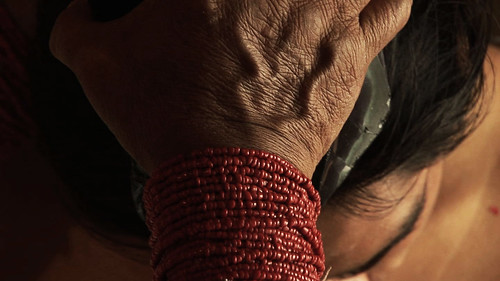
Papier als Kunst, Papier als Kriegswaffe (2): Bomben auf Flügeln aus Papier; im Zweiten Weltkrieg: die Angriffswelle Japans auf die Westküste der USA

Film-Nr.: 132
Vorführungstermin: Mittwoch, 12. August 2009, 21 Uhr (Hauptfilm) — [VN13]
Themenschwerpunkt: Heilung als kultureller und sozialer Prozess (2) | Japan-USA (2) | Papier als Kunst, Papier als Kriegswaffe (2)

Englischer Titel: On Paper Wings
Originaltitel: On Paper Wings
Deutscher Titel: Auf Flügeln aus Papier
Herkunft: USA 2008
Laufzeit: 67 min
Sprachfassung: Englisch-Japanische Originalfassung mit englischen Untertiteln

Regie: Ilana Sol
Produzent: Ilana Sol
Schnitt: Kate Schoninger, Michael Gandsey (sound)
Kamera:
Musik: Eric Schopmeyer, Peter Broderick, Tara Jane O'Neil
Produktion:

URL Film-Homepage: http://www.onpaperwingsthemovie.com
Premierenstatus: Europäische Erstaufführung
Bisherige Aufführungen: Salem Film Festival, WINNER: NW Emerging Artst Award, Best Feature, Salem, Oregon, USA; Kent Film Festival, WINNER: Best Documentary Film, Kent, Connecticut, USA, North America PREMIERE; Northwest Film and Video Festival, WINNER: Audience Award for Best Feature, Portland, Oregon, USA; Red Rock Film Festival, Springdale, Utah, USA; Girlfest Hawaii, Honolulu, Hawaii, USA; Tacoma Film Festival, WINNER: Best Documentary Film, Tacoma, Washington, USA; Astoria International Film Festival, WINNER: Best Regional Film, Astoria, Oregon, USA; Port Townsend Film Festival, Port Townsend, Washington, USA; New York Peace Film Festival, New York City, USA; Washougal International Film Festival, Winner of Spirit Award, Washougal, Washington, USA.

Kurzinhalt: In der Spätphase des Zweiten Weltkriegs startete Japan eine Angriffswelle mit Flugbomben, die durch Papierballons mit dem Luftstrom an die Westküste der USA getragen wurden. Der Film berichtet von den Hintergründen und Wirkungen dieses kaum bekannten Kriegseinsatzes.

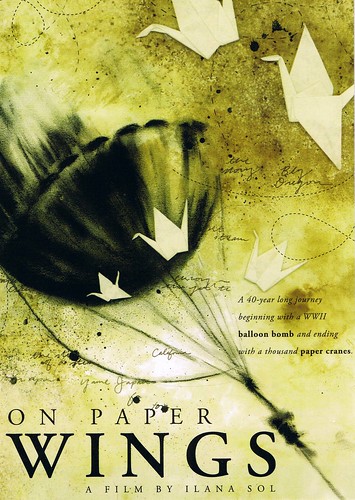
On Paper Wings (USA 2008) poster motief

Englische Synopsis: In 1945, a Japanese balloon bomb claimed the lives of the only people killed on the continental U.S. as the result of enemy action during WWII. Forty years later, the decision to fold a thousand paper cranes would unite the Japanese and American civilians affected by this incident.

Englische Werkbeschreibung: During WWII, the Japanese military developed a new weapon intended to strike directly at the American continent – the balloon bomb. High school girls across Japan were conscripted into factories where they built thousands of balloons made of paper. These balloons were then attached to bombs and launched into the jet stream to drift toward North America. On May 5th, 1945, a pastor, his pregnant wife, and five children departed on a picnic in Southern Oregon. When they found an un-detonated balloon bomb, the device exploded, killing the pastor’s wife and all five children. They became the only people killed on the continental U.S. as the result of enemy action during WWII. Forty years later, a Japanese American man who had spent his wartime years in an internment camp found out about these deaths. He knew several women in Japan who as young girls had been forced to work on the balloon bombs, and the news of these deaths shocked and saddened them. These women decided to fold a thousand paper cranes to offer to the families of those killed in Oregon, and the groups eventually all met face to face. The friendships formed since have helped citizens on both sides of the Pacific cope with the tragedies they experienced during WWII. This is the story of four Japanese women who worked on balloon bombs, the families of those killed in Oregon, and the man whose actions brought them all together forty years after WWII, and the balloon bomb project.

Director's Bio: Ilana Sol is a filmmaker who lives and works in Portland, Oregon (USA). She has worked in the film industry for twelve years on a variety of independent, educational and commercial projects. When her hobby of historical research led her to find out about the Japanese balloon bombs, she soon found herself spending hundreds of hours researching these bizarre weapons, and traveling thousands of miles to meet with those affected by them. Truth is often stranger than fiction, and this has solidified her love of documentary filmmaking. She is the recipient of grants from the Oregon Council for the Humanities, the Regional Arts and Culture Council, and the Oregon Heritage Commission. “On Paper Wings” is her first film.

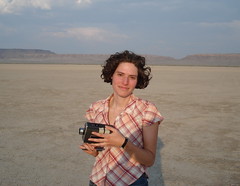
On Paper Wings (USA 2008) director Ilana Sol

GLOBIANS DOC FEST BERLIN
August 12 - 17, 2009
Kino Toni, Antonplatz

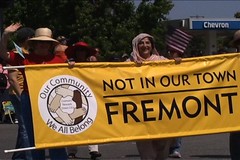
Yes we can! — Obamas Amerika (1): Im Buchtgebiet San Franciscos liegt Fremont; der dortige Umgang mit ethnischem, religiösem, kulturellem Pluralismus

Film-Nr.: 211
Vorführungstermin: Donnerstag, 13. August 2009, 14 Uhr [VN21]
Themenschwerpunkt: Yes we can! — Obamas Amerika (1)

Englischer Titel: Fremont, U.S.A.
Originaltitel: Fremont, U.S.A.
Deutscher Titel: Fremont, U.S.A.
Herkunft: USA 2008
Laufzeit: 57 min.
Sprachfassung: Englische Originalfassung

Regie: Ellie Pierce, Rachel Antell, Erika Trautman
Produzent: Ellie Pierce, Rachel Antell (The Pluralism Project)
Schnitt: Erika Trautman, Rachel Antell, Steve Bissinger (sound)
Kamera: Steve Bissinger
Sprecher: Diana Eck
Produktion: Harvard University, Cambridge (Massachusetts)

URL Film-Homepage:
Premierenstatus: Europäische Erstaufführung
Bisherige Aufführungen: Hearts and Minds Film Festival, Delaware, USA; Harvard University, Cambridge, Massachusetts, USA; Fremont Alliance for a Hate Free Community, Fremont, California, USA; American Academy of Religion Annual Meeting, Chicago, USA.


Kurzinhalt: Im Buchtgebiet San Franciscos liegt Fremont; der dortige Umgang mit ethnischem, religiösem, kulturellem Pluralismus in direkter Nähe zum Silicon Valley.

Trailervideo:

Englische Synopsis: 'Fremont, U.S.A.' explores conflict and cooperation in a religiously diverse California city.

Fremont, USA (USA 2008) still

Englische Werkbeschreibung: Fremont, U.S.A. offers a glimpse of religious diversity on the local level. Fremont, California is a city transformed by new immigration; here, the majority ethnic group is now Asian. A rajagopuram rises in a tidy suburban neighborhood, announcing the vital presence of the Hindu community. The diversity of the global Buddhist community is also in evidence, as Thai, Chinese, and Burmese temples – and a women’s monastic retreat center – dot the landscape. Fremont is home to Peace Terrace, where Muslims and Christians have built side by side, and Gurdwara Road, where a large Sikh community engages in creative forms of outreach. Through civic engagement and interfaith action, strangers have become neighbors in this American city. Yet Fremont has faced real challenges, especially after 9/11. When Alia Ansari, a Muslim woman, is murdered, some wonder if it was a hate crime. Was she killed because of her headscarf? How will the wider community respond? The film has six sections: Introduction: The mayor, city council members, and police chief offer a brief introduction to the City of Fremont, California as it celebrates its 50th anniversary. New Religious Landscape: As Fremont’s religious landscape has been transformed, new relationships are being forged in this multireligious city. Civic Engagement: The City of Fremont responds to its growing diversity, creating an innovative program for the elderly and responding to hate violence. New Challenges: After 9/11, Fremont faces new challenges and develops unprecedented outreach and bridge-building efforts. Alia Ansari: When a Muslim woman is brutally murdered while walking to school with her young daughter, the Fremont community is called upon to respond. Fremont Moves Forward: Amidst challenge and change, citizens in Fremont look to the future. The Pluralism Project at Harvard University developed Fremont, USA. For more than a decade, the Pluralism Project has studied and documented the new religious landscape of the United States. Dr. Diana L. Eck, Director of the Pluralism Project, narrates the film; it was produced and directed by Rachel Antell and Elinor Pierce.

GLOBIANS DOC FEST BERLIN
August 12 - 17, 2009
Kino Toni, Antonplatz

Yes we can! — Obamas Amerika (6) | Essayfilme (2): Sidney, Ohio (USA) — der Strom der Ereignisse in einer amerikanischen Kleinstadt

Film-Nr.: 251
Vorführungstermin: Donnerstag, 13. August 2009, 20.30 Uhr [VN25]
Themenschwerpunkt: Yes we can! — Obamas Amerika (6) | Essayfilme (2)

Englischer Titel: 45365
Originaltitel: 45365
Deutscher Titel: Postleitzahl 45365, USA
Herkunft: USA 2009
Laufzeit: 90 min.
Sprachfassung: Englische Originalfassung

Regie: Bill Ross, Turner Ross
Produzent: Bill Ross, Turner Ross
Schnitt: Bill Ross
Kamera: Bill Ross, Turner Ross
Musik:
Produktion: Ross Bros. Productions, Los Angeles
Kinoverleih: 7th Art Releasing (USA)
Weltvertrieb: 7th Art Releasing (USA)

URL Film-Homepage: http://www.45365movie.com
Premierenstatus: Europäische Erstaufführung
Bisherige Aufführungen: SXSW Film Festival, Austin (Texas), USA (Grand Jury Award Winner); Full Frame Documentary Film Festival, Durham (North Carolina), USA (HBO Emerging Filmmaker Award); Athens International Film and Video Festival, Athens (Ohio), USA (Third Prize Documentary Feature & Best Sound Design); Filmdayton Film Festival, Dayton (Ohio), USA; Newport Internation Film Festival, Newport (Rhode Island), USA; Rooftop Films, New York City (NY), USA; Wexner Center, Columbus (Ohio), USA; Cleveland Museum of Art, Cleveland (Ohio), USA.


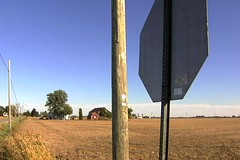
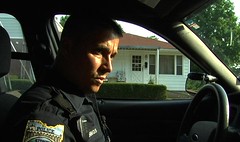
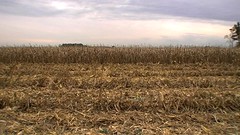
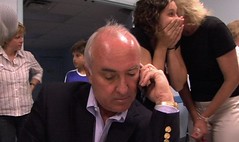
45365 (USA 2009) still45365 (USA 2009) still45365 (USA 2009) still

Kurzinhalt: Der Strom an Ereignissen in der US-amerikanischen Kleinstadt Sidney (Ohio) wird zu einem collagierten Mosaik des Alltagslebens. Dieses Filmessay liefert dadurch einen assoziativen Einblick als Beantwortung der Frage: "Wie funktioniert Amerika?" '45365" steht in bester Tradition von Städteporträt-Filmen wie "Menschen am Sonntag" oder "Die Sinfonie einer Großstadt" und aktualisiert dabei den filmischen Formenkanon für unsere Gegenwart: die Perspektive entfernt sich von Metropolen als Maß aller Dinge urbanen Lebens und zielt bewußt auf die Provinz als Lebensraum der Zukunft.

Trailervideo: http://blip.tv/file/2249133 + http://www.youtube.com/watch?v=s_ozhxv8IwQ&feature=channel_page

Englische Synopsis: ‘45365’ (pronounced: four, five, three, six, five) follows the lives and stories of a small town as they coalesce into a mosaic of faces, places, and events. The County Fair, a Barber Shop, the retirement home, a football team, a Judge’s race for re-election, a father and son, young love lost, arrest and sentencing are all explored in this sweeping survey of life in Sidney, Ohio.

45365 (USA 2009) still45365 (USA 2009) still45365 (USA 2009) still

Englische Werkbeschreibung: 45365’ (pronounced: four, five, three, six, five) explores the congruities of daily life in an American town – Sidney, Ohio. Through a patient and inquisitive look at the lives and landscapes that make up this community of 20,000 people, it captures the complexities and ambiguities of their shared experience. Conclusions are left to the audience as the component characters speak and act for themselves, as themselves. These storylines eventually coalesce into a mosaic of faces, places, and events. It is an inquiring look at everyday life in middle America. Set against the quaint and familiar backdrop of a small town in western Ohio, this is a film about the inner workings of a community and the ways in which its people interact and socialize. From the patrol car to the courtroom, the playground to the nursing home, the parade to the prayer service, it explores their relationships and interactions – with eachother and their environment. Father and son, boyfriends and girlfriend, cop and criminal, officials and the electorate, patrons and providers - it is a portrait of the city and its people. - people somehow not unfamiliar in a landscape that becomes increasingly understood. Void of direct interviews or staging, this film presents the residents of the town as they are in their daily lives. Using a series of long kinetic shots, the viewer is enabled to exist in real time with those being documented. The camera closes in on the mechanics of the moment with spontaneity and sincerity, acting as a clairvoyant conduit to a time now past. Focus is on the full and fluid scene - adrift in the situation as curious and patient observers. Through the people we see the town. Sidney is the small town experience. It is a community - of schools and sports and factories and neighborhoods and familiarity. Sidney is not devoid of social hierarchy or crime or any of the other concerns that are more often associated with more populated urban areas. They are just played out on a smaller stage. It is a microcosm of American life. Filmed over the course of nine months by two men raised in that town – natives with an intrinsic knowledge of their community and a feel for the tides of the town – ‘45365’ encapsulates the magnitude of small town America. Sidney and it’s people offer themes that we can all relate to – no matter how geographically different our experiences.

45365 (USA 2009) still45365 (USA 2009) still45365 (USA 2009) still

Dieser Film aus dem Programm des Globians Doc Fest wird wiederholt und zwar am 28. Oktober 2009 um 18.30 Uhr im Eiffelturm-Kino Berlin (im Centre Français de Berlin), Müllerstr. 74, U-Bahnhof Rehberge/Afrikanische Straße.

45365 (USA 2009) Directors Bill & Turner Ross

GLOBIANS DOC FEST BERLIN
August 12 - 17, 2009
Kino Toni, Antonplatz

Freitag, 12. Juni 2009

Die Frische der kanadischen Provinz (1): 40 Jahre lang "One Night Stands" — die ersten 40 Jahre der Royal Winnipeg Ballet Company

Film-Nr.: 311
Vorführungstermin: Freitag, 14. August 2009, 14 Uhr [VN31]
Themenschwerpunkt: Die Frische der kanadischen Provinz (1) Manitoba

Englischer Titel: 40 Years of One Night Stands
Originaltitel: 40 Years of One Night Stands
Deutscher Titel: 40 Jahre lang "One Night Stands" — Die Gründungsgeschichte des Royal Winnipeg Ballet.
Herkunft: Kanada 2008
Laufzeit: 72 Min.
Sprachfassung: Englische Originalfassung

Regie: Jeff McKay
Produzent: Merit Jensen Carr (Executive Producer), Patti Ross Milne (Executive Producer/Producer)
Drehbuch: Robert Lower
Schnitt: Jeff McKay, Robert Lower
Kamera: Jeff McKay
Musik: Shawn Pierce
Sprecher: Brent Carver
Produktion: Merit Motion Pictures, Winnipeg, Manitoba; Inside Out Productions, Mississauga, Ontario.

URL Film-Homepage: http://www.meritmotionpictures.com
Premierenstatus: Europäische Erstaufführung
Bisherige Aufführungen: Sudbury Film Festival, Sudbury (Ontario), Kanada; Yorkton Film Festival, Yorkton (Saskatchewan), Kanada.


Kurzinhalt in Deutsch: 1938 ist Winnipeg ein einsamer Fleck inmitten von landwirtschaftlich genutzten Flächen, ein Umsteigeort, um schnellstmöglich irgend wohin weiter zu kommen. Das Städtchen erholt sich gerade von der Großen Drepssion. In diesen Nichtort der unmittelbaren Vorkriegszeit verschlägt es zwei Britinnen: die damals 36-jährige Gweneth Lloyd und die 23-jährige Bettty Hey. Was die beiden damals noch nicht wissen, ist, dass die Tanzgruppe die die beiden begründen sich innerhalb von 40 Jahren als erste professionelles Ballett unter dem Namen "The Royal Winnipeg Ballet Company" an die Weltspitze tanzen wird. Die Geschichte dieser ersten 40 Jahre der Winnipeg Ballett-Truppe ist der Gegenstand dieses Tanz-Dokumentarfilms für Ballett-Freunde und solche, die es werden wollen.

Trailervideo: http://blip.tv/file/2247758 + http://www.youtube.com/watch?v=oLsKzSrqOFY&feature=channel_page

Englische Synopsis: 40 Years of One Night Stands: The Story of the Royal Winnipeg Ballet. Daring, passionate, and with an indomitable belief in possibility, one small ballet company from the middle of nowhere leaves its imprint on the international dance scene.

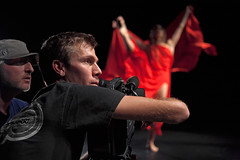
40 Years of One Night Stands (CANADA 2008)

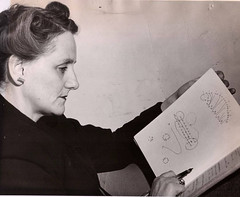
Englische Werkbeschreibung: The year is 1938. Winnipeg is a lonely place set in the middle of the Manitoba farmlands, a stop-off to somewhere else, a city recovering from the devastation of The Great Depression. It is into this remote centre of the Canadian prairies that two English Women arrive - 36 year old Gweneth Lloyd and 23-year-old Betty Hey. What they don't know is that here, in this unlikely setting, they will start a dance group that will one day be known internationally as The Royal Winnipeg Ballet Company - the first professional ballet company in Canada. Born out of nothing in the middle of nowhwere, The Royal Winnipeg Ballet set the ballet world on prairie fire. From Flin Flon to Moscow, it wowed audiences and critics alike with its youth, vitality and innocent excitement.

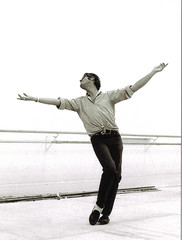
Through the diverse voices of Royal Winnipeg Ballet company members -- past and present -- 40 Years of One Night Stands recounts the saga of the obsessive commitment and vision of those who transformed the lofty art of ballet into dance for the people. Gweneth Lloyd and Betty(Hey) Farrally founded the company. But it was a mercurial and charismatic character named Arnold Spohr, basketball player turned ballet dancer turned artistic director, who over three decades propelled this feisty Canadian ballet company to its place amongst the world's best. The Royal Winnipeg Ballet -- a Canadian treasure which has survived for almost seventy years, and still reflects the spirit of its prairie beginnings: guts, grit and a belief in possibility.

40 Years of One Night Stands (CANADA 2008)40 Years of One Night Stands (CANADA 2008)40 Years of One Night Stands (CANADA 2008)

Director's Bio: Jeff McKay brings a well-developed musical and theatrical aesthetic to his film work. Born in Saskatoon, Saskatchewan, Jeff grew up in Winnipeg Manitoba. He spent his childhood and early adult life in the milieu of professional theatre and spent five years as a drummer in several touring and recording acts. For the last seventeen years Jeff has worked as a director and editor. His work has won awards for both directing and editing including the celebrated Peabody award for his feature documentary Fat Chance. Other films include And So to Bed, a one hour on the contemporary culture of the bed: Crapshoot, a multi-award winning one-hour documentary shot in Italy, India, Sweden, the USA and Canada on the world wide rape of our waters by man made chemical stews of sewage: and Haunts of the Black Masseur- the swimmer as Hero, one hour on the cult of open water swimmers based on the landmark book on the history of swimming by British author Charles Sprawson’s book of the same title. Jeff continues to work in documentary and experimental short film formats. He is fascinated with the unusual in the commonplace and the everyday.

Dieser Film aus dem Programm des Globians Doc Fest wird wiederholt und zwar am 21. Oktober 2009 um 22.15 Uhr im Berliner Kino "Eva Lichtspiele", Blissestraße 18, Berlin-Wilmersdorf, U-Bahnhof Blissestraße.

GLOBIANS DOC FEST BERLIN
August 12 - 17, 2009
Kino Toni, Antonplatz
Die Frische der kanadischen Provinz (2) | Gay Stories (2):
Die Lebensgeschiche des Doug Wilson aus Saskatchewan der 1970er-Jahre

Film-Nr.: 322
Vorführungstermin: Freitag, 14. August 2009, 15.15 Uhr (Hauptfilm) [VN32]
Themenschwerpunkt: Die Frische der kanadischen Provinz (2) Saskatchewan | Gay Stories (2)

Englischer Titel: Stubblejumper
Originaltitel: Stubblejumper
Deutscher Titel: Stoppelspringer
Herkunft: Kanada 2008
Laufzeit: 48 min.
Sprachfassung: Englische Originalfassung

Regie: David Geiss
Produzent: David Geiss, Jarrett Rusnak
Drehbuch: David Geiss
Schnitt: David Geiss
Kamera: April Hall
Musik: Andrea Carlson
Produktion: da vid films inc., Regina, Saskatchewan
Vertrieb: Canadian Filmmakers Distribution Centre, Toronto, Ontario

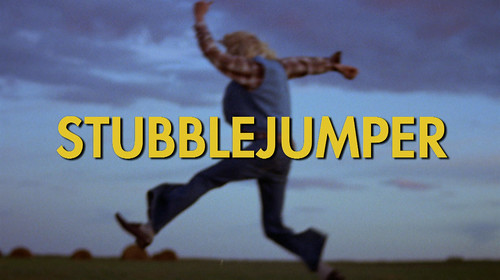
Stubblejumper (CANADA 2008) mail title

URL Film-Homepage: http://www.stubblejumper.ca
Premierenstatus: Europäische Erstaufführung
Bisherige Aufführungen: Honolulu International Film Festival, Hawaii, USA (Aloha Accolade Award); Rhode Island International Film Festival, Rhode Island, USA; Philadelphia GLBT Arts Festival, Philadelphia, USA; Inside Out — Toronto Lesbian & Gay Film & Video Festival, Toronto, Kanada; Fairy Tales — Calgary Gay & Lesbian Film Festival, Calgary, Kanada; Yorkton Film & Video Festival, Yorkton, Kanada (Emerging Filmmaker Award); Pride London Festival, London Ontario, Kanada.


Kurzinhalt: Die Lebensgeschichte des Doug Wilson aus dem Saskatchewan der 1970er-Jahre. Doug Wilson war damals im Umkreis von 1.000 Meilen die wohl sichtbarste Schwule Ikone in der kanadischen Provinz und damit zugleich Begründer einer Politisierung der Schwulenbewegung Kanadas, und zwar von der Peripherie der Provinz her.

Trailervideo: http://blip.tv/file/2247761 + http://www.youtube.com/watch?v=BbQOXz93_LM&feature=channel_page

Englische Synopsis: Stubblejumper is an intimate and inspiring docu-drama biography on the life and work of 1970s Canadian gay activist Doug Wilson.

Stubblejumper (CANADA 2008) stillStubblejumper (CANADA 2008) stillStubblejumper (CANADA 2008) still

Englische Werkbeschreibung: In the fall of 1975, while attending the University of Saskatchewan in Canada, Doug Wilson placed the following ad in the students’ newspaper: “Anyone interested in participating in a campus gay organization, contact Doug Wilson, Box 203, College of Education.” — Four days later, Doug was suspended from his job supervising student teachers. A committee was formed to defend Doug, and an investigation was launched through the Saskatchewan Human Rights Commission. Doug was propelled into a kind of stardom, serving as the poster boy for the gay rights movement not only in Saskatchewan, but all over the country. Though he did not win his case, the event would serve as the catalyst for a fascinating life that would follow, filled with activism, art, performance, politics, and a touching yet tragic love story. Never letting go of his prairie roots, Doug remained a farm boy at heart, and spent much of his time and energy advancing the basic human rights of people in Canada and abroad. Inside this man existed many constant struggles - between fitting in and tanding out; between fame and humility; between acceptance and rejection. tubblejumper is a 48 minute docu-drama based on the life and work of Doug Wilson. Producer / Writer / Director David Geiss blends archival photographs, audio, text, and film with contemporary interviews and dramatic portrayals. The unique storytelling style reflects the varying work and personality of the film’s subject. This inspiring tale will educate and entertain its audience, continuing the legacy of Wilson’s work.

Kurzbio Regie: After growing up on a family farm, David Geiss received a BFA in Film & Video Production from the University of Regina in 2004 and has since been a freelance independent filmmaker and artist living in Saskatchewan, Canada. His 2006 documentary Queen City won the Best Documentary award at the Canadian National Youth Film Festival in Ottawa, and has been broadcast on SCN. His current film Stubblejumper has received an Aloha Accolade Award at the Honolulu International Film Festival, and will broadcast on SCN in 2009. David has also spent time working in the local industry on larger scale projects such as Corner Gas, and Little Mosque on the Prairie. He is currently the Editor of the independent film magazine Splice, and has dedicated much time to volunteering and working with organizations including the Saskatchewan Filmpool Cooperative, the Regal Social Association of Regina, and Queer City Cinema film festival.

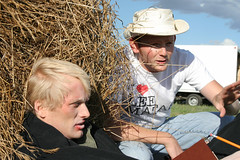
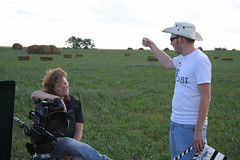
Stubblejumper (CANADA 2008)Stubblejumper (CANADA 2008) DOP April Hall & Director David GeissStubblejumper (CANADA 2008) Director David Geiss

Filmographie Regie:
Stubblejumper: based on the life of Doug Wilson; Director, Producer, Writer, Editor; 48:00 / Docu-Drama / 2008
Queen City; Director, Producer, Director of Photography, Editor; 43:00 / Documentary / 2006
Texas Tea Thirty; Animator; 1:00 / Animation / 2007
Texas Tea Two; Animator; 3:00 / Animation / University of Regina / 2004
Texas Tea; Animator; 1:00 / Animation / University of Regina / 2003
Long Live The Queen; Director, Director of Photography, Editor; 12:00 / Documentary / 2004
Preferred Stock; co-Director, co-Editor; 8:00 / Dark Comedy / 2005

GLOBIANS DOC FEST BERLIN
August 12 - 17, 2009
Kino Toni, Antonplatz
Die Wiederentdeckung einer versunkenen Zivilisation im Hochland von Peru und ihr Konflikt mit den heutigen, lebenden Nachfahren

Film-Nr.: 341
Vorführungstermin: Freitag, 14. August 2009, 18.00 Uhr [VN34]
Themenschwerpunkt: Vom Überleben lokaler Kulturen (2) Peru | Archäologie - Anthropologie - Ethnologie (3)

Englischer Titel: Rapayan
Originaltitel: Rapayan
Deutscher Titel: Rapayan
Herkunft: Kanada 2008
Laufzeit: 52 min.
Sprachfassung: Spanisch-Französische Originalfassung (tw. Quichua), englische Untertitel

Regie: Francis Delfour
Produzent: Sylvie Gagné, Daniel Plante
Schnitt: Nicolas Belpaire
Kamera: Sandra Rodriguez
Musik: Bruno Marcil
Produktion: Arrimage Productions, L'Assomption, Quebec


Premierenstatus: Europäische Erstaufführung
Bisherige Aufführungen: TAC Film Festival, Eugene (Oregon), USA

Kurzinhalt: Ein kanadischer Anthropologe aus Quebec auf den Spuren einer früheren und noch unbekannten Zivilisation im Hochland von Peru, die im Konflikt steht mit ihren heutigen und direkten Nachfahren.

Englische Synopsis: Shot in Peru's highlands, the film follows a Canadian archaeologist from Quebec who has discovered an unknown civilization and the conflict that arises with its direct descendants.

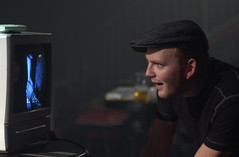
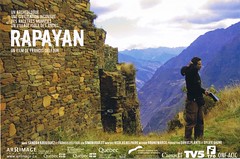
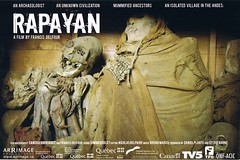
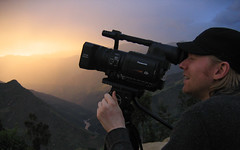
Rapayan (CANADA 2008) postcardRapayan (CANADA 2008) postcardRapayan (CANADA 2008) Director Francis Delfour

Englische Werkbeschreibung: This film is an adventure that whirls together culture shock with elements of the mystical. It focuses on the upheaval that the people of the isolated village of Rapayan are experiencing. Living in Peru’s highlands, they are the direct descendants of a once great civilization. As we follow canadian archaeologist Alexis Mantha and his team searching their ancestors’s ruins, we discover a culture that has forgotten its past. Conflict arrises. The ruins threaten to crumble and Rapayan’s peace is now in jeopardy. The village is going through a turning point. The signs are there. A foreigner is unearthing mummies. A road is being built, linking the village to the rest of the world, openning the path to a different future. Past, present and future are becoming blurred as a paved road advances towards Rapayan and modernity is catching up with it's people. — In Rapayan, the dismembered and mummified remains of the ancestors are lined up on a long wooden counter inside the village school, where they seem to watch over the children. In Rapayan, the villagers have lived in isolation for generations, in a region marked by magnificent highlands, surrounded by spectacular cliffs, terraced crops and numerous streams. In Rapayan, invasions have been numerous; the Incas and Spanish destroyed the old ones’ way of life, but the ancestors’ cult persists. Yet something even more fearful than all of the past’s invaders is slowly advancing toward the village: the highway. In Rapayan, there is also Alexis Mantha, a young Canadian archaeologist who has stumbled on a treasure: 55 ruin sites, including fortresses, murals, multi-story buildings, mausoleums, galleries, warehouses… in short, an entire civilization. This film is an adventure that whirls together culture shock with elements of the mystical. It focuses on the upheaval that the people of Rapayan are experiencing. Perched 4,000 metres high in Peru’s highlands, they have been living according to their traditions for centuries.

Francis Delfour is a director and screenwriter based in Montreal, Canada. In the last eight years he wrote several scripts for both documentary and fictional films which have been broadcasted in Canada, USA, Europe, Asia and South America. Mr. Sabbagh, his first documentary as a director, have been programmed in various festivals. He also was director of photography for The Ennemy Within and is a restaurant critique for the Nightlife Magazine. In a previous life Francis Delfour have completed a master’s degree in anthropology.

Dieser Film aus dem Programm des Globians Doc Fest wird wiederholt und zwar am 14. Oktober 2009 um 18.30 Uhr im Eiffelturm-Kino Berlin (im Centre Français de Berlin), Müllerstr. 74, U-Bahnhof Rehberge/Afrikanische Straße.

GLOBIANS DOC FEST BERLIN
August 12 - 17, 2009
Kino Toni, Antonplatz
Essayfilme (4) | Kinderseelen (2): Der Abdruck von Fernseh-Nachrichten einer furchtvollen Welt auf Kinderseelen

Film-Nr.: 351
Vorführungstermin: Freitag, 14. August 2009, 19 Uhr (Vorfilm) [VN35]
Themenschwerpunkt: Essayfilme (4) | Kinderseelen (2)

Englischer Titel: I Covered My Eyes
Originaltitel: I Covered My Eyes
Deutscher Titel: Ich bedeckte meine Augen
Herkunft: USA 2008
Laufzeit: 29 min.
Sprachfassung: Englische Originalfassung

Regie: Paul Turano
Produzent: Paul Turano
Schnitt: Paul Turano
Musik:
Produktion:

URL Film-Homepage: http://www.paulturano.com
Premierenstatus: Europäische Erstaufführung
Bisherige Aufführungen: Hartford International Film Festival, Art Cinema, Hartford (Connecticut) USA; FLEX FEST, Florida Experimental Film and Video Festival, Gainsville (Florida), USA; MAGA, Macon Film and Video Festival, Macon (Georgia) USA; The End of Television, Ian Page, programmer, Pittsburg (Pennsylvania) USA;


Kurzinhalt: Kompilationsfilm über eine furchtvolle und bedrohliche Welt als Abdruck von Fernsehnachrichten auf Kinderseelen und ihre Auswirkungen auf die Entwicklung einer Unterscheidungsfähigkeit von Gut und Böse.

Trailervideo:

Englische Synopsis: A film essay reconsidering television newscasts I witnessed as a kid in the 1970's and early 1980's with an eye toward understanding their effect on my sense of personal and political identity in an increasingly vulnerable world.

I Covered My Eyes (USA 2008) still>I Covered My Eyes (USA 2008) Director Paul Turano

Englische Werkbeschreibung: I Covered My Eyes investigates childhood notions of threat and safety by juxtaposing TV news broadcasts of tragic world events with home movie footage. The project was first conceived after seeing the televised images broadcast live on September 11 2001, and wondering what children must be feeling upon witnessing this horrific act within our own borders. Soon after, I wrote a list of the tragic events I distinctly remember witnessing on TV as a child in the 1970’s and early 1980’s. By adopting a child’s perspective, the film evokes my experience of learning about the outside world through news broadcasts, and the accompanying sense of threatened safety from forces outside my immediate family and community. As the sense of vulnerability grows throughout the film from abstract threats to more immediate and actual ones, the seemingly innocent and idyllic world of my childhood becomes overshadowed by an increasing awareness of its fragility and precariousness.

Director's Bio in Englisch: Paul Turano has independently produced numerous personal films and videos. His work has been exhibited nationally and abroad and has been shown at festivals throughout North America, including the Black Maria, Ann Arbor, Athens International, Hartford International, and the New England Film and Video festivals. In his hometown of Boston, Massachusetts his films have been screened at the Harvard Film Archive, the Coolidge Corner Theater, the Embassy Theater, and the Museum of Fine Arts. He is the recipient of a Media Fellowship from the Massachusetts Cultural Council and a Moving Image Fund Grant from the LEF Foundation. He has taught film production and film studies at Hampshire College, Massachusetts College of Art, Harvard University, and the School of the Museum of Fine Arts. He is currently an Artist-in-Residence at Emerson College. His recent digital video "I Covered My Eyes," won 3rd place at FLEX FEST, and 3rd place in the experimental category at MAGA Film and Video Festival. He is currently completing a ½ hour 16mm film “Windows onto Montebello Rd.” a meditation on personal space and the pre-millennial American political landscape.

Dieser Film aus dem Programm des Globians Doc Fest wird wiederholt und zwar am 09. Dezember 2009 um 20.00 Uhr im Eiffelturm-Kino Berlin (im Centre Français de Berlin), Müllerstr. 74, U-Bahnhof Rehberge/Afrikanische Straße.

GLOBIANS DOC FEST BERLIN
August 12 - 17, 2009
Kino Toni, Antonplatz

KinoÜberKino (1): Kinorettung als Bürgerbewegung
am Beispiel South Dakota, USA

SONDERVERANSTALTUNG in Zusammenarbeit mit dem Kinomuseum Berlin e.V.
mit einführendem Kurzvortrag (ca. 15 min) zur Berliner Situation;
nach der Filmvorführung Möglichkeit zum Gespräch im Saal (max. 20 min.)
Für die Mitglieder des Kinomuseum Berlin e.V. freier Eintritt;
für Interessenten besteht die Möglichkeit, vor der Veranstaltung Vereinsmitglied beim Kinomuseum Berlin e.V. zu werden.
Sonst freier Verkauf von Einzelkarten; Festivalpässe und Tageskarten haben Gültigkeit.

Film-Nr.: 411
Vorführungstermin: Samstag, 15. August 2009, 13 Uhr [VN41] SONDERVERANSTALTUNG
Themenschwerpunkt: KinoÜberKino (1) | Kinorettung als Bürgerbewegung | Yes we can! — Obama's Amerika (10)

Englischer Titel: Small Town Silver Screen
Originaltitel: Small Town Silver Screen
Deutscher Titel: Kinorettung als Bürgerbewegung: Small Town Silver Screen
Herkunft: USA 2008
Laufzeit: 77 min.
Sprachfassung: Englische Originalfassung

Regie: Bryce Jarrett
Produzent: Bryce Jarrett, Jeannine Jarrett
Schnitt: Bryce Jarrett, Greg Kiesow Knudson
Kamera: Cory Vinz, Creed Spencer, Doug Lee, Jeff Zueger, Melinda Wyum, Stephanie Elsaas
Musik: Craig Hall
Produktion: Fiveman Films, Sioux Falls, South Dakota

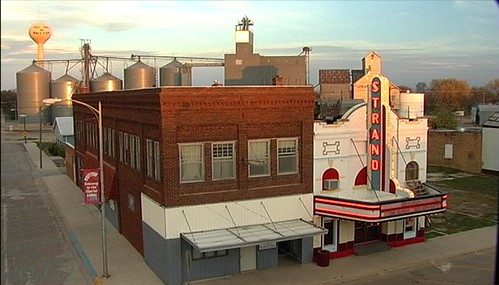
Small Town Silver Screen (USA 2008) still: Strand Theatre

URL Film-Homepage: www.fivemanfilms.com
Premierenstatus: Europäische Erstaufführung
Bisherige Aufführungen: Theatrical debut, Strand Theatre, Britton (South Dakota) USA; US Television Debut on Soth Dakota Public Broadcasting; Oscar Micheaux Film Festival, Gregory (South Dakota) USA; South Dakota Film Festival, Aberdeen (South Dakota) USA; Fargo Film Festival, Fargo, (North Dakota) USA; SkyFest Film Festival USA;

Kurzinhalt: Kinorettung als Bürgerbewegung am Beispiel von Kleinstadtkinos im US-Bundesstaat South Dakota.

Trailervideo: http://globians.blip.tv/file/2245030 + http://www.youtube.com/watch?v=R3VzDIafc1c

Englische Synopsis: This inspiring documentary tells the story of historic, small-town theaters, their owners and their movie-goers in rural South Dakota. It focuses on the theater's origins and closings in the late '70s, early '80s, the theater's revival by community members and the struggle to compete with distant, large-city Stadium Theatres.

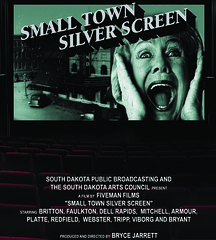
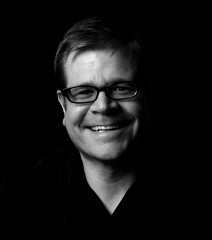
Small Town Silver Screen (USA 2008) poster>Small Town Silver Screen (USA 2008) Director Bryce Jarrett

Englische Werkbeschreibung: The film educates and inspires rural communities lacking the pronounced benefit of a movie theatre in their community, serves as an historical archive, explores the social/economic significance/impact of the institution of cinema, and provides promotional service to/of the communities featured in the film.

GLOBIANS DOC FEST BERLIN
August 12 - 17, 2009
Kino Toni, Antonplatz

Ohne Wasser geht gar nichts; Wasser kommt immer zuerst
Afrikanische Lebenswelten (1) | Malawi

Film-Nr.: 431
Vorführungstermin: Samstag, 15. August 2009, 16.20 Uhr (Erster Film) [VN43]
Themenschwerpunkt: Afrikanische Lebenswelten (1) | Malawi

Englischer Titel: Water First
Originaltitel: Water First
Deutscher Titel: Wasser kommt immer zuerst
Herkunft: USA 2008
Laufzeit: 28 min.
Sprachfassung: Englische Originalfassung (tw. Chechewa)

Regie: Amy Hart
Produzent: Amy Hart
Schnitt:
Kamera:
Musik:
Produktion: Hart Productions, New York

URL Film-Homepage: http://waterfirstfilm.org
Premierenstatus: Europäische Erstaufführung
Bisherige Aufführungen: Mexico City - World Water Forum, Mexiko; Rodos EcoFilm Festival, Griechenland ; UN Environmental Programme Award Film Festival, Istanbul, Türkei; World Water Week, Stockholm, Schweden; Verviers au Film de l’Eau – Water Film Festival, Belgien; Pan African Film Festival, Los Angeles, USA; Starz Pan African Film Festival, Denver (Colorado) USA; Global Peace Film Festival, Orlando (Florida) USA; Africala Film Festival, Mexico City, Mexiko; Voices From the Waters Film Festival, Bangalore, Indien; Maryland Film Festival, Baltimore (Maryland) USA; u.a.m.


Kurzinhalt: Der Zugang zu sauberem Trinkwasser ist das vorrangigste Ziel, um die Milleniums-Ziele der Vereinten Nationen für Entwicklungsländer zu erreichen. Vom Trinkwasser hängt alles ab: Beseitigung von Hunger, Armut, über zufriedenstellende Landwirtschaft und Ernährung, bis hin zu HIV-AIDS, ökologischer Nachhaltigkeit und Geburtenkontrolle. Diese Zusammenhänge erklärt Charles Banda, ein zum Wasser-Aktivisten umgesattelter Feuerwehrmann aus Malawi.

Trailervideo:

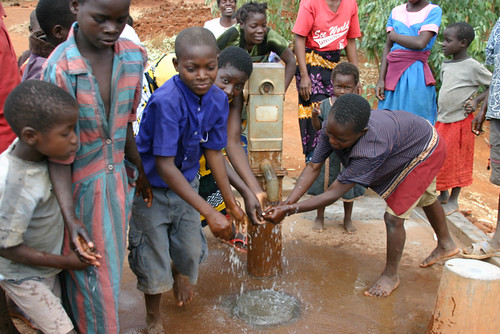
Water First (USA 2008) photo © Amy Hart

Englische Synopsis: 'Water should be first.' That is the motto of Charles Banda, a humble, local Malawian fireman turned water activist. Through his story we see how water is a solution to many of the problems in his impoverished, sub-Saharan country. From hunger and poverty to women's equality and population control, HIV-AIDS to environmental sustainability, Banda makes it clear that the best way to empower people in developing nations, and to achieve the Millennium Development Goals (MDGs), is by putting water first.

Englische Werkbeschreibung: Want to save the world? You'll probably need water. First. In the year 2000 the UN established the Millennium Development Goals (MDGs) - a set of goals designed to address issues of hunger, poverty, women's equality, infant mortality, HIV/AIDS, environmental sustainability and other factors in developing nations. Through the inspiring story of Charles Banda, a humble water activist in Malawi, WATER FIRST conveys the importance of clean water in achieving all of the goals and improving the quality of life for all people.

Water First (USA 2008) Director: Amy Hart

GLOBIANS DOC FEST BERLIN
August 12 - 17, 2009
Kino Toni, Antonplatz