Freitag, 12. Juni 2009

Unglaubliche Geschichten aus [Russland] Lettland (4):
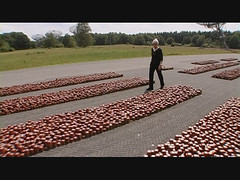
Der ehemals russische Marinehafen Karosta bei Riga (Lettland)

Film-Nr.: 562
Vorführungstermin: Sonntag, 16. August 2009, 19 Uhr (Hauptfilm) [VN56]
Themenschwerpunkt: Unglaubliche Geschichten aus [Russland] Lettland (4)

Englischer Titel: Karosta
Originaltitel: Karosta
Deutscher Titel: Karosta
Herkunft: UK 2008
Laufzeit: 50 min.
Sprachfassung: Englisch-Lettisch-Russische Originalfassung mit englischen Untertiteln

Regie: Peter King
Produzent: Rowland Kimber
Schnitt: Peter King
Kamera: David Procter
Musik: Richard Canavan
Produktion: Ivory Tower Pictures, London

URL Film-Homepage: http://www.ivorytowerpictures.com/
Premierenstatus: Deutsche Erstaufführung
Bisherige Aufführungen: Raindance Film Festival London, UK; London International Documentary Film Festival, London, UK;


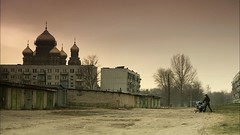
Karosta (UK 2008) poster

Kurzinhalt: Ein Porträt des Untergangs und des Verfalls der Überbleibsel des Sowjet-Imperiums am Beispiel des ehemaligen Marinehafens Karosta in Lettland, gesehen mit den Augen von Denjenigen, die dies miterleben mussten.

Trailervideo: http://blip.tv/file/2253024 + http://www.youtube.com/watch?v=QTOrStwQkzY
Teaservideo: http://blip.tv/file/2253018 + http://www.youtube.com/watch?v=Nt14QQYNHUQ

Englische Synopsis: Karosta is a portrait of the demise and fall of the Soviet Empire as seen through the eyes of the people who endured it.

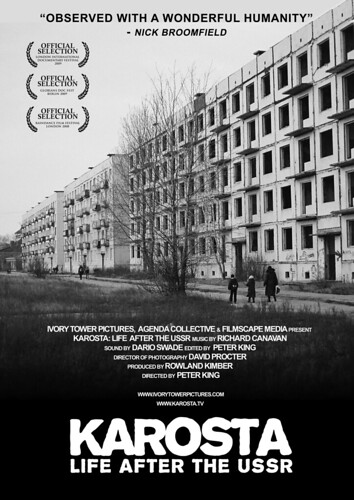
Karosta (UK 200) poster

Englische Werkbeschreibung: With the re-emergence of the Russian Federation as a super power, and notably their invasion of Georgia and friendship with both Iran and Venezuela, the abandoned Latvian military port of ‘Karosta’ is a very important reminder of recent history and a vital lesson about the future. Built in the early 1900’s as a purpose made war port, Karosta has seen some of the most influential and disturbing eras of modern times, from Tsarist origins, to NAZI and then Soviet occupation. When the Russian army left Latvia in 1994 after Latvian independence, Karosta became largely uninhabited and most structures fell to ruin. Its population is made up of the people who moved into the empty military apartment blocks, and the Russians who stayed behind after the soviet withdrawal. In late 1990s, the area was troubled by high unemployment, street crime and drug problems, with some remaining residents considered neither Latvian nor Russian and holding 'alien passports.' The remaining townspeople share their lives with mass holocaustic graves and derelict military bunkers, their lives very slowly regaining some kind of normality.

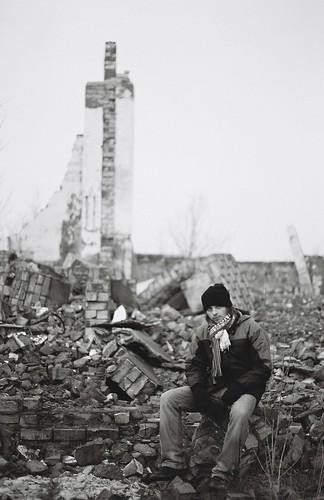
Karosta (UK 2008) Director Peter King

The eclectic architecture in Karosta ranges from underground tunnel networks to Orthodox temples and from Soviet concrete barracks to Tsarist palaces, all of which are in decay. The town has ‘cyberpunk’ dystopic characteristics mixed with an unprecedented amount of individual freedom. The end of authoritarian legacy has released the town into an anarchic autonomy, with the town’s population reducing from 30,000 people to only 7,000. Surrounded by the mise-en-scene of a totalitarian regime, the Karostan people lead a life free from governmental laws and regulations. People in western civilisation only see this vision as something of fiction, but in reality this exists, and the truth is much more intriguing. This documentary explores how society copes without infrastructure and order, and how respect for one another goes a long way in allowing people living harmoniously within such a chaotic existence. Added to the mix are a group of artists, known as K@2, who took it upon themselves to attempt to restore order to the town through creativity and opportunity by organising events that bring the inhabitants together, and leading regeneration projects within the town. They also use the free reign they have within the town to explore their creative freedom, expressing themselves visually throughout the abandoned concrete housing blocks. Karosta is somewhere that has been long forgotten, and at such a pivotal moment in the modern world’s development, now is the most vital time to unearth such an important part of history, as our power driven world is soon heading back to the state it was in when Karosta was conceived.

GLOBIANS DOC FEST BERLIN
August 12 - 17, 2009
Kino Toni, Antonplatz

Unglaubliche Geschichten aus Russland (5) | Der 211. auf dem Gebiet der ehemaligen SU ermordete Journalist hieß: Anna Politkovskaya (1958 - 2006)

Film-Nr.: 571
Vorführungstermin: Sonntag, 16. August 2009, 20.30 Uhr [VN57]
Themenschwerpunkt: Unglaubliche Geschichten aus Russland (5) | Würdigungen (5)

Englischer Titel: 211: Anna
Originaltitel: 211: Anna
Deutscher Titel: 211: Anna
Herkunft: Italien 2009
Laufzeit: 90 min.
Sprachfassung: Russische Originalfassung mit englischen Untertiteln

Regie: Paolo Serbandini, Giovanna Massimetti
Produzent: Alessandro Papini, Stefano Alpini
Drehbuch: Paolo Serbandini, Giovanna Massimetti
Schnitt: Gabriele Spinelli, Vittorio De Felice
Kamera: Vladimir Ivanov
Musik:
Produktion: POLIS SRL., Pisa (Toskana)

URL Film-Homepage: http://www.211anna.it/
Premierenstatus: Deutsche Erstaufführung
Bisherige Aufführungen: Sundance Film Festival, Utah (USA)


Kurzinhalt: Die Lebensgeschichte der Anna Politkovskaya, zugleich die Überlebensgeschichte ihrer Familie. Anna war die 211. nach dem Zusammenbruch der Sowjetunion ermordetete Journalistin auf dem Gebiet der ehemaligen SU, daher der Filmtitel.

Englische Synopsis: The story of Anna Politkovskaya (30 August 1958 – 7 October 2006), a Russian journalist and human rights activist well known for her opposition to the Chechen conflict and Russian president Putin. Politkovskaya made her name reporting from lawless Chechnya, where many journalists and humanitarian workers have been kidnapped or killed. She was arrested and subjected to mock execution by Russian military forces there, and she was poisoned on the way to Beslan, but survived and continued her reporting. She authored several books about Chechen wars and Putin's Russia and received numerous prestigious international awards for her work. She was shot dead in the elevator of her apartment building on October 7, 2006.

Englische Werkbeschreibung: Anna Stepanovna Politkovskaya (Russian: 30 August 1958 – 7 October 2006) was a Russian journalist and human rights activist well known for her opposition to the Chechen conflict and Russian president Putin. Politkovskaya made her name reporting from lawless Chechnya, where many journalists and humanitarian workers have been kidnapped or killed. She was arrested and subjected to mock execution by Russian military forces there, and she was poisoned on the way to Beslan, but survived and continued her reporting. She authored several books about Chechen wars and Putin's Russia and received numerous prestigious international awards for her work. She was shot dead in the elevator of her apartment building on October 7, 2006, the birthday of Vladimir Putin, who was publicly accused by Alexander Litvinenko of ordering her murder. Litvinenko subsequently died from poisoning by radioactive polonium. By now over 10 people have been arrested within the scope of the official investigation; however, no organiser's name has yet been officially announced. Politkovskaya was born Anna Mazepa in New York City in 1958 to Soviet Ukrainian parents, both of whom served as diplomats to the United Nations. She grew up in Moscow and graduated from the Moscow State University Department of Journalism in 1980. Politkovskaya was a citizen of both the United States of America and the Russian Federation. From June 1999 to 2006, she wrote columns for the biweekly Novaya Gazeta. She published several award-winning books about Chechnya, life in Russia,and President Putin's regime, most recently the book Putin's Russia. Outside Russia, Politkovskaya received wide acclaim for her work in Chechnya,where she frequently visited hospitals and refugee camps to interview the victims. She said about herself that she was not an investigating magistrate but somebody who describes the life of the citizens for those who cannot see it for themselves, because what is shown on television and written about in the overwhelming majority of newspapers is emasculated and doused with ideology. Her numerous articles critical of the war in Chechnya described abuses committed by Russian military forces, by Chechen rebels, and by the Russian-backed Chechen administration led by Akhmad Kadyrov and his son Ramzan Kadyrov. Politkovskaya chronicled human rights abuses and policy failures in Chechnya and elsewhere in Russia's North Caucasus in several books on the subject, including 'A Dirty War: A Russian Reporter in Chechnya' and 'A Small Corner of Hell: Dispatches from Chechnya', which painted a picture of brutal war in which thousands of innocent citizens have been tortured, abducted or killed at the hands of Chechen or federal authorities. One of her most recent investigations was about alleged mass poisoning of hundreds of Chechen school children by an unknown chemical substance of strong and prolonged action, which made them completely incapable for many months. 'People often tell me that I am a pessimist, that I don't believe in the strength of the Russian people, that I am obsessive in my opposition to Putin and see nothing beyond that,' she opens an essay titled Am I Afraid?, finishing it - and the book - with the words: 'If anybody thinks they can take comfort from the 'optimistic' forecast, let them do so. It is certainly the easier way, but it is the death sentence for our grandchildren.'
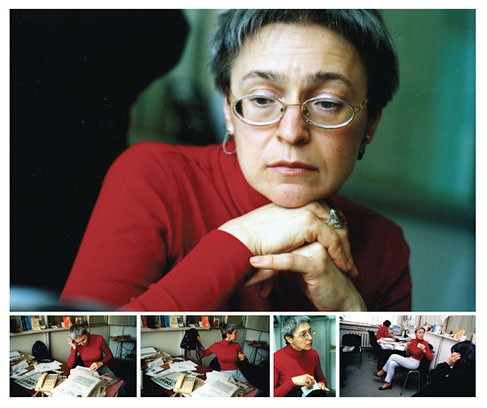
211: Anna (ITALY 2008)

This documentary speaks about 30 years of Soviet Union/Russia history saw through the family of Anna, the husband, a fomous journalist in perestroika period, and the sons, some interview to the Anna's friends and about the history of a separate investigation of Politkovskaya's murder,carried out the staff journalists of Novaya Gazeta, during which they closely cooperated with the General Prosecutor's Office. On August 30, 2007, Novaya Gazeta journalists and Anna's son Ilya Politkovsky issued a statement about the ongoing investigation. In it they claimed that not all the people involved had been arrested, the Prosecutor's Office had yet to do lots of routine work to prove the guilt of those arrested, but also that Novaya Gazeta's own investigation shows that 'the arrested people were really involved in this crime in this or that degree'. The major issue addressed by the Novaya Gazeta journalists was the leak organized in the media, which has seriously complicated the work of investigators and could have let other people involved get off. According to the journalists, 'It seems that someone wanted to make the current list of suspects final and, in addition, to prevent the solving of other crimes that might possibly have been committed by the people arrested.' Details of the investigation were kept secret for almost ten months, being controlled by the chief of the official investigative group and Novaya Gazeta journalists. On August 27, the Prosecutor General and special service officers held press conferences. Although this was not a major breach in the secrecy of the case (besides one of the arrested, FSB Lieutenant Colonel Pavel Ryaguzov, being named), it triggered a snowball of publications, as well as public appearances by minor officials. Two things had worsened the deal: first, as Sergey Sokolov has mentioned in his September 2 interview, 'each office had people who had obtained a bit of information — and they started to sell it to journalists', and second, the seeming involvement of some people in these structures, due to 'interpenetration of crime and law enforcement bodies', internal intrigues and fear that if investigators 'unraveled this tangle, then the details of many celebrated unsolved cases would be disclosed'. With regard to whoever ordered the murder of Politkovskaya, the Novaya Gazeta journalists have noted: 'We do not exclude possible involvement by 'runaway oligarchs' and other characters. There are several versions of who was the client in Politkovskaya’s murder. We believe that the client hasn't left Russia. None of the versions have been proved with evidence up to now and so all speculation must end for the moment.'

211: Anna (ITALY 2008)

Kurzbio Regie in Englisch: Giovanna Massimetti is a television and screenplay writer, as well as director. Since 1991 she has worked for RAI (Italian State Television) on various programs, entertainment shows and news. But it was always her dream to make movies. She has directed several short films, shown in international festivals such as Valencia Cinema Jove and the Torino Film Festival. With Paolo Serbandini, she has written a script set in the Moscow of 1930s, at the beginning of the Stalinist terror. Paolo Serbandini is journalist and television and screenplay writer. He studied Philology at the University of Moscow, and has long been associated with the Russian world. Among others things, he has worked with Russian directors like Bondarciuk and Konchalovsky and as assistant director on I girasoli (‘Sunflowers’) by De Sica. He is the author of the script and screenplay of Giuliano Montaldo’s latest film, based on the life of Dostoyevsky. For Italian television, he has made two documentaries about attempted coups d’etat in Russia (1991 and 1993). He was personally acquainted with Anna Politkovskaya in Moscow.

Hintergrund-Info zur Entstehung des Films: A friend rang us, on the evening of 7 October 2006, to break the news of Anna’s murder. We were driving in the south of France, on a trip for work. We turned on the radio and began to search frantically for a radio station broadcasting the news. We refused to believe it, even though we were well aware of the risks Anna was running and despite the fact that she herself had said to us: “I’m amazed they haven’t killed me yet”. We had first met her in Moscow in December 2003. But we had been familiar with her indomitable journalistic force for some time, and had read her books and articles. We saw her again the following year, in early September. Shehad just been discharged from a clinic after they had tried to poison her in order to stop her reaching Beslan. She was pale and fragile, but no less determined for that. The idea of writing a film about Anna came to us a few months later. We started gathering material, reading and rereading her books and articles, doing research on internet. We wrote a script. Some director friends read it. “Great, but too expensive”, they said, “the Italian film industry doesn’t have the funds for a film like that”. We picked the script up again some time later. There was one thing we didn’t know before, and found out only as we were researching the subject. Anna had a husband, Sasha Politkovsky, leading journalist and host on a Soviet television program that had first shown the country for what it really was and not veiled by regime propaganda. Sasha had become so famous that he had even been elected member of parliament. Then following the collapse of the Soviet Union, his fame had faded and he had returned to the shadows. It was at that point that his wife Anna was to take center stage for a few years, achieving worldwide acclaim for her reportage from Chechnya and denunciations of the Putin regime. We realized that we had two long interviews with Anna and a great deal of footage shot in Russia over the years. This was the starting point for filming our documentary about the pair of journalists. Husband and wife. Both famous, but in totally different times. Telling their story was like chronicling twenty years of Russian history. And so it was that thanks to friend who “reinvented himself” as a producer in order to provide us with the means to make the film, that 211: Anna saw light.

Dieser Film aus dem Programm des Globians Doc Fest wird wiederholt und zwar am 11. November 2009 um 18.30 Uhr im Eiffelturm-Kino Berlin (im Centre Français de Berlin), Müllerstr. 74, U-Bahnhof Rehberge/Afrikanische Straße

GLOBIANS DOC FEST BERLIN
August 12 - 17, 2009
Kino Toni, Antonplatz

Unglaubliche Geschichten aus Russland (6) | MusikMusik! (3):
Die Ska/Punk-Band "Leningrad" und ihr Frontmann, der singt

Film-Nr.: 581
Vorführungstermin: Sonntag, 16. August 2009, 22.15 Uhr [VN58]
Themenschwerpunkt: Unglaubliche Geschichten aus Russland (6) | MusikMusik! (3)

Englischer Titel: Leningrad - The Man Who Sings
Originaltitel: Мужчина, который поет
Deutscher Titel: Leningrad - Der Mann, der singt
Herkunft: Deutschland 2008
Laufzeit: 98 min.
Sprachfassung: Russische Originalfassung mit englischen Untertiteln

Regie: Peter Rippl
Produzent: Peter Rippl
Schnitt: Peter Rippl, Anatoli Skatchkov
Kamera: Roland Bertram, Sergey Jermolenko
Musik: Leningrad, Sergey 'Shnur' Shnurov
Produktion: studio petruschka, Frankfurt am Main

Premierenstatus: Spätvorstellung
Bisherige Aufführungen: 49th Krakow Film Festival, Krakow, Polen; ZagrebDox, Zagreb, (Kroatien); MOFFOM Music on Film Festival, in Competition, Prague, Tschechische Republik, u.a.


Kurzinhalt: ‚Leningrad’ heißt die Band, die in Russland jeder kennt. Einst waren die Russen der Geheimtipp der Petersburger Intellektuellen und Club-Szene, heute sind sie die erfolgreichste Band des Landes; Ende 2008 hat sich die Band aufgelöst, aber wer weiss...

Trailervideo: http://blip.tv/file/2253169 + http://www.youtube.com/watch?v=BicXdlvTL68

Englische Synopsis: Exuberant portrait of notorious Russian ska/punk band Leningrad and its charismatic frontman, Sergey 'Shnur' Shnurov. Packed with rollicking live footage, The Man Who Sings documents Shnurov and his band's uncompromising approach to music, stardom and life in today's Russia.

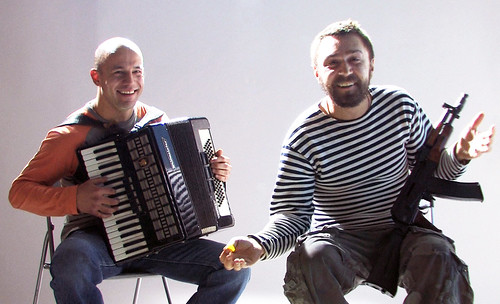
Leningrad – The man who sings (Germany 2008)

Englische Werkbeschreibung: The Story of a Boy-Band ‘Made in Russia’ First feature documentary on Russian underground superstars Leningrad is now out to be seen at Festivals across Europe. SYNOPSIS Packed with rollicking live footage ‘The Man who sings’ is a feature film documentary on Russian Polkapunkband Leningrad. Playing a weird mix of Polka, Ska, Tango, Punk and traditional popular music these 15 conservatory educated ‘punks’ obtained cult status at the end of the nineties in Russia. If you think Gogol Bordello is unique - Leningrad should be a surprise. There is a lot of music in the film, great music, and exciting onstage performances. But the film is more than just songs. It gives you an insight into how people perceived the massive changes in Russia over the past years, the dynamics of a fast, colourful and difficult decade. You’ll meet many people, in many different roles: Shnurov as a rock star and a diligent worker, Leningrad fans and opponents, music business representatives, artists… with all but unanimous opinions on music, friendship, money, politics, language, and business. When I started I didn’t know anything, but after hanging around with these guys, being in Russia, talking to the people I understood it. (Peter Rippl) Leningrad was the antithesis to what happened in Russia. And it’s synthesis.

Leningrad – The man who sings (Germany 2008)

‚Leningrad’ heißt die Band, die in Russland jeder kennt. Einst waren die Russen der Geheimtipp der Petersburger Intellektuellen und Club-Szene, heute sind sie die erfolgreichste Band des Landes. Live sind sie vielleicht das Beste, was es gibt. Rau und kraftvoll. Randvoll gepackt mit Lebensmut und Energie. Tierisch viel Energie, sagen die Fans, und: Die Musik gibt Dir Kraft, auch schwierige Zeiten zu überstehen. Wenn Sergej ‚Shnur’ Shnurov im verschwitzten T-Shirt auf der Bühne steht und seine Texte herausbrüllt, dann brüllen alle mit. ‚Freiheit ist das, was in dir drin ist!’ Rock’n Roll-Berserker Shnur flucht, kotzt sich aus, verausgabt sich. Die authentische Geste als Provokation. Moskaus Bürgermeister Luschkov hat alle öffentlichen Auftritte der Band in der Hauptstadt kurzerhand verboten. Trotz aller Anfeindung und offiziellen Ablehnung: Shnurs Alben schaffen es mühelos in die Top 10, obwohl oder gerade weil er sich dem Mainstream verweigert hat. Seine Texte sind immer lustig, immer zotig, ironisch, böse, und - manchmal auch kritisch. Shnur liebt die einfachen Leute, die Außenseiter, die Junkies, die Prols, die Säufer, die Wahrheit der Straße. ‘Leningrad – das ist wie ein Pornofilm‘ sagt er über seine Band,’ mit kleinsten Mitteln größtmögliche Emotionen hervorrufen.‘ – und das gelingt ihm ohne Frage. Doch bei aller Provokation will Shnur kein Dissident sein. Er ist ein Seismograf, der die schnelle Veränderung Russlands, mit all ihren Widersprüchen, in massen-taugliche Popkultur verwandelt hat. Das Lebensgefühl der Generation Putin.

Leningrad – The man who sings (Germany 2008) Director Peter Rippl

Dieser Film aus dem Programm des Globians Doc Fest wird wiederholt und zwar am 11. November 2009 um 21.00 Uhr im Eiffelturm-Kino Berlin (im Centre Français de Berlin), Müllerstr. 74, U-Bahnhof Rehberge/Afrikanische Straße.

GLOBIANS DOC FEST BERLIN
August 12 - 17, 2009
Kino Toni, Antonplatz

Belonging to Earth versus Ownership of Land:
Wem gehört die Terra Australis?
Australischer Kulturraum (1) | Langzeit-Traumata (1)

Film-Nr.: 611
Vorführungstermin: Montag, 17. August 2009, 13 Uhr (Erster Film) [VN61]
Themenschwerpunkt: Australischer Kulturraum (1) | Langzeit-Traumata (1) | Vom Überleben lokaler Kulturen (4)

Englischer Titel: We Belong To This Country
Originaltitel: Ngali Na Mala Jugun
Deutscher Titel: Wir gehören zu diesem Land
Herkunft: Australien 2007
Laufzeit: 12 min.
Sprachfassung: Englische Originalfassung

Regie: Alison Leonard
Produzent: Alison Leonard
Schnitt: Alison Leonard
Kamera: Alison Leonard, Chris Leonard, David Warth, Richard Todd, Steve Atkin,
Musik: Simon Mullumby
Produktion: Sideways Films, Palm Beach (Queensland)

URL Film-Homepage:
Premierenstatus: Deutsche Erstaufführung
Bisherige Aufführungen: Byron Bay Film Festival, Australien; Planet in Focus, Toronto, Kanada; Focus Film Festival, Australien; Newtown Flicks, Australien;


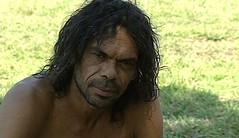
Kurzinhalt: Die Ureinwohner Australien folgen dem Gefühl, dass sie zu ihrem Land gehören; die Zuwanderer hingegen glauben, dass das Land ihnen gehört. Dieser Besitzglaube statt dem Zugehörigkeitsgefühl hat einen zerstörerischen Effekt auf die Mitwelt.

Englische Synopsis: Indigenous Australians inherently feel that they belong to their land. Non-Indigenous Australians inherently feel that the land belongs to them. The actions derived from a sense of ownership rather than belonging are having a devastating effect on our environment.

We Belong to this Country (Australia 2007)

Englische Werkbeschreibung: Ngali Na Mala Jugun is a beautiful cinematic journey exploring the Indigenous Australian's sense of belonging to the earth opposing the sense of owning the earth. Anthony Gordon (Tulebume) and John Roberts (Goongi), from the Bundjalung Tribe of Northern NSW, guide this journey with eloquence and grace. We see the specific to the general, starting with discussions of the spiritual significance of Mt Warning (Wollumbin) then broadening to a larger view that encompasses all of Australia. With footage contributed by Greenpeace and The Wilderness Society amongst other independent filmmakers, Ngali Na Mala Jugun will inspire people to take a closer look at how much they respect the world we are lucky enough to live in.

We Belong to this Country (Australia 2007) Director Alison Leonard

GLOBIANS DOC FEST BERLIN
August 12 - 17, 2009
Kino Toni, Antonplatz

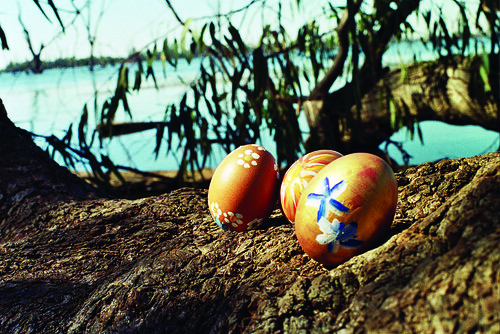
…übrigens: FROHE OSTERN!
Australischer Kulturraum (2) | Deutsche im Ausland (1)

Film-Nr.: 612
Vorführungstermin: Montag, 17. August 2009, 13 Uhr (Zweiter Film) [VN61]
Themenschwerpunkt: Australischer Kulturraum (2) | Deutsche im Ausland (1)

Englischer Titel: Frohe Ostern! (Happy Easter!)
Originaltitel: Frohe Ostern! (Happy Easter!)
Deutscher Titel: Happy Easter! (Frohe Ostern!)
Herkunft: Australien 2009
Laufzeit: 26 min.
Sprachfassung: Deutsch-Englische Sprachfassung mit englischen Untertiteln

Regie: Anna Jeffries
Produzent: Lacey Teh
Schnitt: Andrew Stalph
Kamera: James Teh
Musik:
Produktion: Peace Charger Productions, St. Kilda (Victoria)

Premierenstatus: Internationale Premiere
Bisherige Aufführungen: FilmFest@Falls, Falls Creek, Australien (WP)

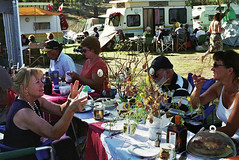
Kurzinhalt: Alljährlich trifft sich eine Gruppe von 50 Familien und Freunden zu einem Oster-Camp am Ufer des australischen Murray River, bei der deutsches Oster-Brauchtum über drei Generationen hinweg als mehrtätiges Fest gefeiert wird.

Frohe Ostern! Happy Easter! (Australia 2008)

Trailervideo: http://blip.tv./file/2386110 + http://www.youtube.com/watch?v=xeMvzBMbDT8

Englische Synopsis: The collaged history of a joyful Easter camping ritual celebrates German migrants becoming three generations of Australians.

Frohe Ostern! Happy Easter! (Australia 2008)>Frohe Ostern! Happy Easter! (Australia 2008)

Englische Werkbeschreibung: A large group of more than fifty family and friends have camped in the same spot on Australia’s Murray River every Easter for the last 40 years. Within the very Australian Easter tradition of camping holidays, their own German and unique rituals have evolved. They effortlessly carry out a fixed routine of activities: nest-making for the Easter Bunny’s Eggs, an enormous Erbsensuppe (Pea Soup), silly Sunday competitions, a decadent formal afternoon tea and a magical lantern walk on Sunday night. Started by fourteen young German migrants in 1969, three generations have keenly kept these habits up and amidst a social climate of dying traditions; the youngest seem likely to maintain them. Time is gently explored and danced with through a goldmine of material that conveys traditions and people growing and a landscape changing over 4 decades. Frohe Ostern! (Happy Easter!) is a high spirited micro-history that celebrates migrants becoming Australians over 40 years and their growing families embracing the German heritage.

Frohe Ostern! Happy Easter! (Australia 2008) Director Anna Jeffries

GLOBIANS DOC FEST BERLIN
August 12 - 17, 2009
Kino Toni, Antonplatz

Australischer Kulturraum (3) Papua Neuguinea |
Deutsche im Ausland (2):
Der Papa der Chimbu aus dem Saarland

Film-Nr.: 613
Vorführungstermin: Montag, 17. August 2009, 13 Uhr (Dritter Film) [VN61]
Themenschwerpunkt: Australischer Kulturraum (3) Papua Neuguinea | Deutsche im Ausland (2) | Archäologie - Anthropologie - Ethnologie (6) | Vom Überleben lokaler Kulturen (5)

Englischer Titel: Papa Bilong Chimbu
Originaltitel: Papa Bilong Chimbu
Deutscher Titel: Papa der Chimbu
Herkunft: Australien 2007
Laufzeit: 54 min.
Sprachfassung: Englische Sprachfassung

Regie: Verena Thomas
Produzent: Verena Thomas
Drehbuch: Martyn Ives, Penny Jope, Verena Thomas
Schnitt: Verena Thomas
Kamera: Bao Waiko
Produktion: Andrew Pike (Distributor)
im Vertrieb der Ronin Film Australien

Premierenstatus: Deutsche Festival-Premiere
Bisherige Aufführungen: Tartu Festival of Visual Culture, Tartu, Estland; Pacific International Documentary Film Festival of Tahiti, Papeete, Französisch Polynesien; RAI Ethnographic Filmfestival, Manchester, UK; Belgrad Ethnographic Filmfestival; Vancouver Ethnographic Filmfestival, Kanada; Days of Ethnographic Film, Slovenien;


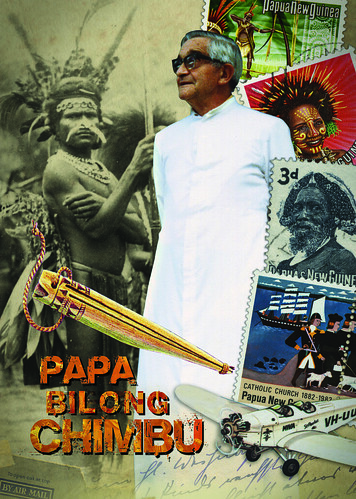
Kurzinhalt: Aus einem saarländischen Dorf stammend kommt im Jahre 1937 Pater Johanes Nilles (1905 - 1993) auf Papua Neuguinea an und versucht für die nächsten 54 Jahre, den Stamm der Chimbu, der erst kurz zuvor dem Kannibalismus abgeschworen hatte, zu missionieren: eine außergewöhnliche Lebensgeschichte im Kontext von Kolonialismus, Weltkrieg, Kulturen, Religion und der Geburt von Papua Neuguinea als Nation und sourveränem Staat.

Papa Bilong Chimbu (AUSTRALIA 2007) poster

Trailervideo: http://blip.tv/file/2253184 + http://www.youtube.com/watch?v=dTClVrRB1WA

Englische Synopsis: Set against a backdrop of colonialism, war, religion and the birth of a nation, Papa Bilong Chimbu offers a personal perspective on cultural exchange and ‘big picture’ history of Papua New Guinea by tracing the story of one man and his legacy.

Englische Werkbeschreibung: In 1937 a young Catholic missionary, Father John Nilles, arrived in the highlands of Papua New Guinea – one of the first whites the local people had ever seen. There he would stay for the next 54 years, living with the people of Chimbu, learning their language and way of life, introducing them to his God and Western culture. More than just a priest, he would become an anthropologist, linguist, politician and clan leader. In Papa Bilong Chimbu, filmmaker Verena Thomas embarks on a journey of her own. Through Nilles’ extraordinary archive of diaries, letters and photos (which have never been seen before) as well as interviews with those who knew him, she pieces together a portrait of this fascinating man – her great-uncle. What she discovers is an unexpected new family, who had made ‘Papa’ Nilles one of their own. More than a decade after his sudden departure, they continue to feel a deep sense of loss and injustice. Set against a backdrop of colonialism, war, religion and the birth of a nation, Papa Bilong Chimbu offers a personal perspective on ‘big picture’ history by tracing the story of one man and his legacy. It’s a story about respect and what it means to belong. A thought-provoking insight into the complexity of cultural exchange, and the beauty, vulnerability and strength of a country and its people.

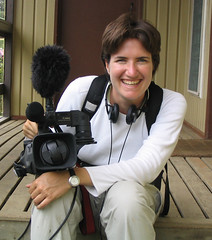
Papa Bilong Chimbu (AUSTRALIA 2007) Director Verena Thomas

Dieser Film aus dem Programm des Globians Doc Fest wird wiederholt und zwar am 04. November 2009 um 22.30 Uhr im Berliner Kino "Eva Lichtspiele", Blissestraße 18, Berlin-Wilmersdorf, U-Bahnhof Blissestraße.

GLOBIANS DOC FEST BERLIN
August 12 - 17, 2009
Kino Toni, Antonplatz

Tierschutz (2):
Letzte Rettung für das Rote Eichhörnchen in UK

Film-Nr.: 621
Vorführungstermin: Montag, 17. August 2009, 14.45 Uhr (Erster Film) [VN62]
Themenschwerpunkt: Tierschutz (2)

Englischer Titel: Nutkin's Last Stand
Originaltitel: Nutkin's Last Stand
Deutscher Titel: Letzte Rettung für das Rote Eichhörnchen
Herkunft: USA 2008
Laufzeit: 19 min.
Sprachfassung: Englische Originalfassung

Regie: Nicholas Berger
Produzent: Nicholas Berger
Schnitt: Kristine Samuelson
Kamera: Kristine Samuelson
Akademische Betreuung: Kristine Samuelson
Produktion: Stanford University, Standford (Kalifornien)

Premierenstatus: Berliner Erstaufführung
Bisherige Aufführungen: International Documentary Festival Amsterdam (IDFA), Amsterdam, Königreich der Niederlande; Austin Film Festival (Texas) USA; Silverdocs, Washington (D.C.) USA; Zagrebdox, Zagreb, Kroatien; River Run Film Festival, Winston-Salem (North Carolina), USA; Sehsüchte, Potsdam, Deutschland; u.a.

Der Film von Nicholas Berger wurde am 5. Mai 2009 in der Kategorie "Dokumentarfilm" nominiert für die "36th Annual Student Academy Awards competition" der "Academy of Motion Picture Arts and Sciences" (Los Angeles, USA).


Kurzinhalt: Die Einfuhr des Grauen Eichhörnchens aus Amerika brachte eine für das in UK heimische Rote Eichhörnchen todbringende Virus-Seuche mit. Über den Versuch, den Bestand der letzten Roten Eichhörnchen in UK zu bewahren.

Englische Synopsis: A film about England's fight to save her beloved red squirrels from an invasion of American grays.

Nutkin's Last Stand (USA 2008)

Englische Werkbeschreibung: The English love their native red squirrels. The red squirrel was immortalized by children's author Beatrix Potter in the character of Squirrel Nutkin and is a ubiquitous figure in English arts, literature and lore. But all is not well for the red squirrel... The North American gray squirrel was introduced to England late in the 19th century and the larger, bolder American import has been spreading a deadly virus and claiming the red squirrel's territory. At present, the red squirrels have been forced into the North and it is estimated that their numbers have dwindled to around 150,000 compared with around 2 million grays. This has triggered outrage among many Britons and a wide range of organizations and individuals have stepped forward to take up the red squirrel's cause. This 'red army' has done everything from writing songs and books about the red squirrel's plight to killing and eating the grays. They include government organizations, activists, writers, lords and priests. Their methods vary wildly but all share a common goal: to halt a foreign invasion and to preserve a beloved creature and a national symbol.

Inseln bieten als geographische Topologie bio-ökologisch enorme Vorzüge für das Entstehen von Artenvielfalt; Inseln besitzen allerdings auch durch ihre Abgeschiedenheit einen gravierenden und entscheidenden Nachteil: Beim Eindringen von fremden, dominanten Tierarten sind heimische Populationen extrem gefährdert. An den beiden Beispielen des Grauen Eichhörnchens und seinem Eindringen aus Amerika auf die britischen Inseln sowie im Falle Tasmaniens beim europäischen Rotfuchs wird dies in den beiden Filmen dieser Vorstellung deutlich. Die Art damit umzugehen unterscheidet sich jedoch drastisch von jener Anvanciertheit, wie in Afrika Tierschutz auf dem Stand des heutigen Wissens betrieben wird. Daher lohnt der filmische Vergleich mit dem dritten zum Programmschwerpunkt Tierschutz beim diesjährigen Globians Doc Fest gezeigten Dokfilm: "Milking The Rhino" (Film Nr. 451, Vorstellung am Sa., 15. August 2009, 19.30 h, [VN45]).

Nutkin's Last Stand (USA 2008) Director Nicholas Berger

GLOBIANS DOC FEST BERLIN
August 12 - 17, 2009
Kino Toni, Antonplatz

Tierschutz (3) | Australischer Kulturraum (4):
Ungezähmte Gefahr durch den Rotfuchs in Tasmanien
— ein Doku-Noir im Stile der 40er-Jahre

Film-Nr.: 622
Vorführungstermin: Montag, 17. August 2009, 14.45 Uhr (Zweiter Film) [VN62]
Themenschwerpunkt: Australischer Kulturraum (4) | Tierschutz (3)

Englischer Titel: Feral Peril
Originaltitel: Feral Peril
Deutscher Titel: Ungezähmte Gefahr
Herkunft: Australien 2008
Laufzeit: 53 min.
Sprachfassung: Englische Originalfassung

Regie: Andrew Sully
Produzent: Gina Twyble, Ian Walker, Penny Robins
Drehbuch: Alex Barry, Andrew Sully, Ian Walker
Schnitt: Henry Dangar, Michael Gissing (sound)
Kamera: John Biggins
Musik: Caitlin Yeo
Sprecher: William McInnes
Produktion: Magic Real Picture Company, Camperdown (North South Wales), Luminous Films Pty Ltd, Bundeena (North South Wales)

URL Film-Homepage: www.magicreal.com.au
Premierenstatus: Europäische Erstaufführung
Bisherige Aufführungen: Reel Earth - Aotearoa Environmental Film Festival, Palmerston North, Neuseeland; International Wildlife Film Festival, Missoula (Montana) USA;


Kurzinhalt: Die Invasion von Vulpes Vulpes, dem europäischen Rotfuchs, bedroht die Tierwelt auf der tasmanischen Insel; eine rätselhafte Krankheit dezimiert auf Tasmanien zusätzlich den einzigen natürlichen Feind des extrem anpassungsfähigen Rotfuches: die des Tasmanischen Teufels. Ein Doku-Noir im Stil der 40er-Jahre.

Trailervideo: http://blip.tv/file/2253197 + http://www.youtube.com/watch?v=PwUJQhYTbmM

Englische Synopsis: Tasmania is one of the world’s last great wildlife havens but its struggling native species are under threat from a feral fox invasion. Or are they? There’s some nasty business going down in Australia’s island state. A feral intruder is on the loose. He's cunning, deadly and a master of stealth, so expert at flying under the radar that some believe he doesn’t even exist. He’s Vulpes Vulpes, the elusive and adaptable European red fox, and the hunt is on to destroy him before he destroys Tasmania’s struggling native fauna. Feral Peril follows the “Fox Squad”, a team employed under the Tasmanian Government's fox eradication program, as they chase down sightings, gather evidence and battle public skepticism in a bid to avert ecological disaster. The squad draws on the latest technology including DNA sampling, satellite mapping and photography, but it's not enough to convince the “super skeptics”, who will be convinced only by the discovery of a fox, dead or alive. But time is running out. While evidence suggests fox numbers are on the rise, Tasmania's top native predator, the Tasmanian Devil, is being decimated by a mysterious disease. And as Devil numbers decline, foxes are on the rise. Feral Peril introduces the stakeholders – the Fox Squad, the skeptics, the hunters, the scientists, the zoo-keepers and the graziers – as each battles to solve a problem that threatens not only Tasmania’s pristine ecology, but its agriculture, its tourism and the strength of its economy.

Feral Peril (Australia 2008)

Englische Werkbeschreibung: Production Story Feral Peril was conceived in late 2007 after executive producer Ian Walker and director Andrew Sully saw media reports about the growing fox problem in Tasmania and the government’s attempt to tackle it with a well-funded eradication branch or “Fox Squad”. “I was intrigued by the idea that there was a lot of money being spent in Tasmania to set up a very high-tech bunch of people who were dedicated to eradicating foxes, but their dilemma was that they couldn’t find one,” Walker says. “My instinct was that this was a very funny and curious kind of problem.” But behind this amusing dillemma lay a serious issue – the real and imminent threat to a struggling iconic Australian species, the Tasmanian devil, by growing numbers of feral foxes. “I’d never heard the link between foxes and devils. More of one means less of the other. The loss of the Tasmanian devil would be an absolute tragedy for Tassie, which is one of the last great pristine wilderness areas on the planet and one of Australia’s most saleable eco destinations.” Walker, along with Sully and producer Gina Twyble set about telling the story, assembling the characters and making a film, which they hoped would deliver a serious educational message in an entertaining way. “We were in luck with our timing,” Walker says. “We were unsure that we would get an unfolding investigation, but we got a very good sighting by grazier Tina Taylor and then a follow-up investigation that found evidence of a fox. It was one of the days when the documentary goddess smiles upon you.” Twyble concurs. “Our schedule didn’t allow us to wait for days for the animals to do what we wanted them to do. Fortunately we did find some Tasmanian devils and we got some extremely good footage of them.” The passion with which the subject has been embraced in Tasmania made it easy to assemble the “cast”, including sceptic Ian Rist, wildlife biologist Nick Mooney, investigator John McConnell, hunter Peter Darke, environmental philosopher Professor Andrew Brennan and shearer Jacko Flood. “There’s no one in Tasmania who doesn’t have an opinion on this, they’re really passionate about it,” Walker says. “Everyone will tell you a story about someone who knows someone, some other part of the conspiracy that you may not have heard.” When first approached to participate in Feral Peril, former Film Australia (now Screen Australia) was looking to increase its collection of science programs under the National Interest Program, says Screen Australia executive producer Penny Robins. Robins was drawn to this contemporary treatment of serious scientific/natural history subject matter, using a hybrid of drama, science and wildlife filmmaking techniques. Here was an opportunity to support a team of filmmakers to break into a new area of filmmaking. “It’s an Australian story about an ecosystem under serious threat,” Robins says. “There aren’t many pristine wilderness areas left in the world and this gave us the chance to study the potential impact of the invasion of an intruder into an ecosystem.” The filmmakers hope their film will make people consider the role that humans play in the environment and to recognise their place in the wider ecosystem. “Feral Peril shows how we’re all connected,” Twyble says. “If you take one piece of the jigsaw away the rest becomes particularly vulnerable.”

Inseln bieten als geographische Topologie bio-ökologisch enorme Vorzüge für das Entstehen von Artenvielfalt; Inseln besitzen allerdings auch durch ihre Abgeschiedenheit einen gravierenden und entscheidenden Nachteil: Beim Eindringen von fremden, dominanten Tierarten sind heimische Populationen extrem gefährdert. An den beiden Beispielen des Grauen Eichhörnchens und seinem Eindringen aus Amerika auf die britischen Inseln sowie im Falle Tasmaniens beim europäischen Rotfuchs wird dies in den beiden Filmen dieser Vorstellung deutlich. Die Art damit umzugehen unterscheidet sich jedoch drastisch von jener Anvanciertheit, wie in Afrika Tierschutz auf dem Stand des heutigen Wissens betrieben wird. Daher lohnt der filmische Vergleich mit dem dritten zum Programmschwerpunkt Tierschutz beim diesjährigen Globians Doc Fest gezeigten Dokfilm : "Milking The Rhino" (Film Nr. 451, Vorstellung am Sa., 15. August 2009, 19.30 h, [VN45]).

Feral Peril (Australia 2008) Director Andrew Sully

Director's Bio: ANDREW SULLY is an award-winning writer and director, working in both drama and documentary. He recently completed Feral Peril for ABC TV, an ecological detective story about the threat of introduced feral carnivores in Tasmania. He first got to know Tasmania in 2005, through work on the acclaimed four-part ABC TV series The Shearers. Andrew’s earlier documentary work includes the Film Australia and ABC TV series East Timor - Birth of a Nation, Once Were Monks (Film Australia/SBS TV) and the theatrically released Hell Bento!!, Uncovering the Japanese Underground (SBS TV). He was also a director on the documentary series Suspicious Minds, Forensic Stories from the Coroner’s Office (Channel Nine) and The Two of Us (SBS TV). Black Dogs, his short drama, won numerous local and international awards. He is currently directing Anatomy of a Massacre, Unearthing the Truth of Santa Cruz. He holds degrees from the University of Sydney and VCA Film and Television School.

ANDREW SULLY - FILMOGRAPHY
DOCUMENTARY
2009 ANATOMY OF A MASSACRE
2008 FERAL PERIL
2006 KEVIN AND ALLAN
2006 SUSPICIOUS MINDS (series)
2005 THE SHEARERS (series)
2003 EAST TIMOR BIRTH OF A NATION, LUOLO’S STORY
1999 ONCE WERE MONKS (series)
HELL BENTO, UNCOVERING THE JAPANESE UNDERGROUND

DRAMA SHORTS
1994 DANCING FOOT AND A PRAYING KNEE
1992 BLACK DOGS

GLOBIANS DOC FEST BERLIN
August 12 - 17, 2009
Kino Toni, Antonplatz

Langzeit-Traumata (2) Indonesien |
Heilung als kultureller und sozialer Prozess (4):
40 Jahre nach dem Massenmord durch das Suharto-Regime

Film-Nr.: 631
Vorführungstermin: Montag, 17. August 2009, 16 Uhr [VN63]
Themenschwerpunkt: Langzeit-Traumata (2) Indonesien | Archäologie - Anthropologie - Ethnologie (7) | Heilung als kultureller und sozialer Prozess (4)

Englischer Titel: 40 Years of Silence: An Indonesian Tragedy
Originaltitel: 40 Years of Silence: An Indonesian Tragedy
Deutscher Titel: 40 Jahre Schweigen: eine indonesische Tragödie
Herkunft: USA 2008
Laufzeit: 96 min.
Sprachfassung: Indonesisch-balinesisch-englische Originalfassung mit englischen Untertiteln

Regie: Robert Lemelson
Produzent: Robert Lemelson
Kamera: Dag Yngvesson
Schnitt: Dag Yngvesson, Emily Ng, Heidi Zimmerman, Kathy Huang, Wing Ko, Richard Henderson (sound)
Musik: Malcolm Cross
Produktion: Elemental Productions, Pacific Palisades (Kalifornien)

URL Film-Homepage: http://www.elementalproductions.org
Premierenstatus: Internationale Premiere
Bisherige Aufführungen: Boston International Film Festival, Boston (Massachusetts) USA;


Kurzinhalt: Es ist einer der größten Massenmorde des 20. Jahrhunderts, kaum bekannt und noch weniger erinnert: Im Machtspiel des Kalten Kriegs lässt General Suharto in Indonesien zwischen 500.000 und 1.000.000 Menschen als angebliche "Kommunisten" ermorden und zwar in einem extrem komplexen Folge von Ereignissen, die im Herbst 1965 beginnen. Das Suharto-Regime kann dadurch seine militärische Herrschaft und letztlich auch die Machtergreifung von Suharto als Staatsoberhauptes von Indonesien durchsetzen und für Jahrzehnte festigen. Wie auch bei der Schreckensherrschaft der Roten Khmer in Kambodscha haben die südost-asiatischen Kulturen erhebliche Schwierigkeiten bei der Aufarbeitung von Leiden, Schuld und Sühne. Die Anthropologe und Psychotherapeut Robert Lemelson versucht in dieser Langzeitstudie Wege der Aufarbeitung und Heilung für die überlebenden Opfer und ihre Familien aufzuzeigen: ein bewegender und erschütternder Film.

Videos:
Teaser: http://blip.tv/file/2236913 + http://www.youtube.com/watch?v=EpppIAv-bV0&feature=channel_page
Trailer: http://blip.tv/file/2237350 + http://www.youtube.com/watch?v=bQAlqcV1QW0&feature=channel_page
Director's Statement: http://blip.tv/file/2237015

Englische Synopsis: In one of the largest unknown mass-killings of the 20th century, an estimated 500,000 to 1,000,000 people were secretly and systematically killed in 1965 when General Suharto launched a bloody purge of suspected “communists” in Indonesia through a complex and highly contested series of events through which he ultimately gained power and the presidency. During Suharto's authoritarian rule, any discussion or memorializing of the killings that differs from the official state narrative has been suppressed. '40 Years of Silence: An Indonesian Tragedy' follows the brave testimonies of four individuals and their families through a multi-generational perspective as they break the silence and reflect upon how the long-term, traumatic effects of the 1965 mass-killings has reverberated painfully in their lives till the present day

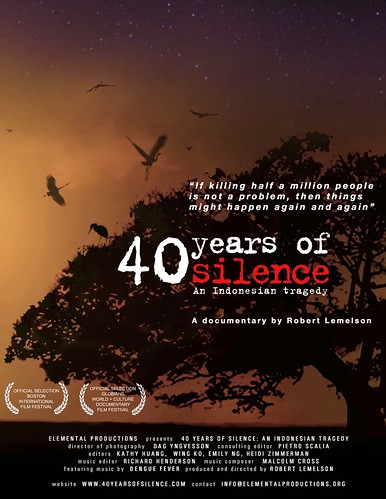
40 Years of Silence: An Indonesian Tragedy (USA 2008) Poster

Englische Werkbeschreibung: Directed by documentary filmmaker and world renowned-psychological anthropologist Robert Lemelson, “40 Years of Silence: An Indonesian Tragedy” is the moving feature length documentary film about one of the most horrific chapters in Indonesia’s history. In one of the largest unknown mass-killings of the 20th century, an estimated 500,000 to 1,000,000 people were secretly and systematically killed in 1965, when General Suharto began a bloody purge of suspected “communists” throughout Indonesia. Wielding his growing influence through a complex and highly contested series of events to install his New Order regime, Suharto ultimately gained power and the presidency of the country. Under his authoritarian rule, any discussion, recognition or memorializing of the mass killings that differed from the Suharto’s official state narrative was quickly suppressed. “40 Years of Silence: An Indonesian Tragedy” follows the compelling testimonies of four individuals and their families from Central Java and Bali, two regions heavily affected by the purge. As they break their silence publicly for the first time, each family provides an intimate and frightening look at what it was like for survivors of the mass-killings. In chilling detail, they describe the events of 1965 through their own experiences, re-living and reflecting upon the stigmatization and brutalization they continue to endure on both the village and state levels. Over time, the survivors and their families attempt to find ways to deal with a tragedy that was, and is still not, openly recognized by their neighbors, government or the world. Through their stories, the audience will come to understand modern-day Indonesia’s potential for retribution, rehabilitation and reconciliation within this troubled historical context. “40 Years of Silence: An Indonesian Tragedy” was produced by Lemelson’s Elemental Productions. Based in Los Angeles, Elemental Productions is dedicated to the production of ethnographic documentaries focusing on the relationship between culture, psychology and personal experience in Indonesia and the United States. For more information on “40 Years of Silence: An Indonesian Tragedy,” Elemental Productions and other films from the company, please visit www.elementalproductions.org.

40 Years of Silence: An Indonesian Tragedy (USA 2008) Director Robert Lemelson

Dieser Film aus dem Programm des Globians Doc Fest wird wiederholt und zwar am 25.November 2009 um 18.30 Uhr im Eiffelturm-Kino Berlin (im Centre Français de Berlin), Müllerstr. 74, U-Bahnhof Rehberge/Afrikanische Straße.

GLOBIANS DOC FEST BERLIN
August 12 - 17, 2009
Kino Toni, Antonplatz

Langzeit-Traumata (3) Holocaust |
Heilung als kultureller und sozialer Prozess (5):
Die Klassenkameraden von Anne Frank

Film-Nr.: 641
Vorführungstermin: Montag, 17. August 2009, 17.45 Uhr [VN64]
Themenschwerpunkt: Langzeit-Traumata (3) Holocaust | Heilung als kultureller und sozialer Prozessw (5)

Englischer Titel: Classmates of Anne Frank
Originaltitel: Classmates of Anne Frank
Deutscher Titel: Die Klassenkameraden von Anne Frank
Herkunft: Israel 2008
Laufzeit: 58 min.
Sprachfassung: Niederländisch-hebräisch-englische Originalfassung mit englischen Untertiteln

Regie: Eyal Boers
Produzenten: Eyal Boers, Ora Coster, Theo Coster
Drehbuch: Eyal Boers, Ora Coster
Schnitt: Hilla Haramatti, Michael Goorevich (sound)
Kamera: Uri Ackerman
Produktion: Theora Design, Tel-Aviv
Weltvertrieb: JMT Films Distribution and Worldwide Sales, Tel-Aviv, Israel
Vertriebsbeauftragte: Michael Treves, Aliza Coster

URL Film-Homepage: http://www.jmtfilms.com/document.htm#annefrank
Premierenstatus: Deutsche Erstaufführung
Bisherige Aufführungen: Palm Beach International Film Festival, Palm Beach (Florida) USA; Los Angeles Jewish Film Festival, Los Angeles (Kalifornien) USA; Las Vegas International Film Festival, Las Vegas (Nevada) USA; European Independent Film Festival, Paris, Frankreich; Jerusalem Jewish Film Festival, Jerusalem, Israel, DaKINO International Film Festival, Bukarest, Rumänien;


Kurzinhalt: Ein Erfinder von Gesellschaftsspielen aus Israel kehrt in die Nachbarschaft seiner Kindheit in den Niederlanden zurück, um ein Wiedersehen mit fünf seiner und Anne Franks Klassenkameraden zu ermöglichen. Dabei entdeckt er eine überraschende Wahrheit über das Dorf, in dem er sich während des Zweiten Weltkriegs versteckt hielt.

Trailervideo: http://blip.tv/file/2267932 + http://www.youtube.com/watch?v=QNHxvgOzJsc&feature=PlayList&p=4B4FE5E49176D406&index=29
Film intro excerpt: http://blip.tv/file/2267947 + http://www.youtube.com/watch?v=1VZP2TlOSnM&feature=PlayList&p=4B4FE5E49176D406&index=30


Englische Synopsis: A game inventor from Israel returns to his childhood neighbourhood in Holland to reunite with five of his and Anne Frank's former classmates, only to discover a surprising truth about the village where he was hiding during World War Two.

Englische Werkbeschreibung: To comprehend fully the events in the life of Anne Frank, one must listen to the voices of the children who were there with her, of those who remember her. Theo (Maurice) Coster, a famous games' creator from Israel, renews contact with six of his and Anne Frank's former classmates, only to discover an astonishing and confusing truth about the village where he was hiding during World War Two. Set against their childhood locations in Amsterdam, Westerbork Transit Camp and their current homes in Holland and Israel, these former classmates discuss their relationships with Anne and how they survived the war. Through these discussions, the film takes a bold and illuminating look at the different Dutch attitudes towards the war years in The Netherlands and towards the Holocaust. Anna Frank's Diary confirms the tragedy of the Holocaust and continues to debunk Holocaust deniers. The documentation of Anna's classmates, now in their eighties, strengthens the impact the Diary has on the world. The story of Anna's classmates is not only illustrated through interviews and discussions between the classmates themselves, but also through photographs, archival footage, personal scrapbooks and letters and other new resources.

Classmates of Anne Frank (Israel 2008)>Classmates of Anne Frank (Israel 2008)

Director's Bio: Eyal Boers is a creative film professional with experience in writing, directing, producing, research and camera. Eyal has a B.A. Degree from Tel Aviv University in Philosophy and Political Science and an M.F.A. degree from Tel Aviv University in Film and Television Studies. As part of his film studies, Eyal produced, directed and wrote two short dramas: "Chayal Boded"[A Lone Soldier], which won the award for best cinemtography at the 2007 Ashdod International Film Festival; and "What Matters", which won the bronze bear award at the 2005 Festival of Nations in Austria. Eyal has also worked as a cameraman for the Israeli and Dutch Television and as a Cinema teacher and lecturer at various Israeli colleges. He is a member of the Israeli Documentary Filmmakers Forum.

Classmates of Anne Frank (Israel 2008) Director Eyal Boers

Anne Frank wäre heute, am 12. Juni 2009, 80 Jahre alt geworden. Es ist uns eine Ehre, diesen Film von Eyal Boers am heutigen Tag als Teil des Festival-Programms des Globians Doc Fest Berlin ankündigen zu können. Die Website des Anne-Frank-Zentrums in Berlin für weitere Informationen: http://www.annefrank.de/

Dieser Film aus dem Programm des Globians Doc Fest wird wiederholt und zwar am 25. November 2009 um 21.00 Uhr im Eiffelturm-Kino Berlin (im Centre Français de Berlin), Müllerstr. 74, U-Bahnhof Rehberge/Afrikanische Straße.

GLOBIANS DOC FEST BERLIN
August 12 - 17, 2009
Kino Toni, Antonplatz

ISRAEL | Deutsche im Ausland (3) | Langzeit-Traumata (4):
Meine Liebe Dein Land

Film-Nr.: 651
Vorführungstermin: Montag, 17. August 2009, 19 Uhr [VN65]
Themenschwerpunkt: Deutsche im Ausland (3) | Langzeit-Traumata (4) Israel | Heilung als kultureller und sozialer Prozess (6)

Englischer Titel: My Love Your Land
Originaltitel: Meine Liebe Dein Land
Deutscher Titel: Meine Liebe Dein Land
Herkunft: Deutschland 2009
Laufzeit: 60 min.
Sprachfassung: Deutsch-hebräisch-englische Originalfassung mit englischen Untertiteln

Regie: Gerhard Schick
Produzent: Gerhard Schick
Drehbuch: Miriam Jakobs
Schnitt: Heinz Kraft, Gerhard Schick
Kamera: Gerhard Schick
Produktion: Schick Films, Köln (Cologne)

Website: http://gerhardschick.de
Premierenstatus: Weltpremiere


Kurzinhalt: Als Sven aus Deutschland Orly aus Israel traf, war er 19 und sie 33. Obwohl Orly schon zwei Kinder hatte, waren die beiden als Paar unzertrennlich. Orlys Eltern waren über diese neue Beziehung ihrer Tochter gar nicht glücklich, viele Familienmitglieder wurden im Holocaust umgebracht. Aber bald zog Sven nach Tel Aviv um und das ungleiche Paar heiratete. Ihre Geschichte reflektiert das gesamte Spektrum sozialer und politischer Probleme von Israel im kleinen Universum einer Familie.

Trailervideo: http://blip.tv/file/2358706 + http://www.youtube.com/watch?v=N7GaQBQHSfI

Englische Synopsis: When Sven from Germany was 19, he met Orly from Israel, who was 33. Although she already had two children, they became inseparable. Orly’s parents were not happy about their daughter’s new relationship – many family members were murdered during the holocaust. But soon Sven moved to Tel Aviv and the unequal couple got married. Their story is never just a private love affaire — it reflects all critical social and political Israeli issues in the small universe of a family.

Meine Liebe Dein Land (Germany 2009) still>Meine Liebe Dein Land (Germany 2009) still>Meine Liebe Dein Land (Germany 2009) still

Englische Werkbeschreibung: I met my best friend Sven on a plane to Israel. We were both in the twelfth grade and on our way to a student exchange with Tel Aviv. We immediately fell in love with this strange and peculiar country, and for two naive pacifists we coped surprisingly quickly with the ever-present military. Then Sven met Orly. Although Orly had two children from her first marriage, and although she was 14 years older than Sven, they became inseparable. All the facts spoke against them: the German boy and the Israeli woman, the down-to-earth physicist and the emotional musician, the boy from provincial Cologne in the turbulences of the Middle East. Moreover, Orly’s parents were not happy about their daughter’s new relationship. Many family members were murdered during the holocaust. A German son-in-law was unthinkable for them. But the unequal couple seemed to defy the odds. A year after they had first met, Sven moved to Tel Aviv. Orly’s son Amos and her daughter Anat live partly with their natural father and partly with Orly and Sven. When Sven entered their life, they were only five and six years old. For them it became normal to have a German as a second father. On some days, especially on the Holocaust Memorial Day, this normality is challenged, though. Besides, the ongoing crisis makes a normal life in Israel look like a far away dream. On one evening a suicide attack occurs only a few hundred meters from Sven and Orly’s house. So their story is never just a private love affaire – it reflects all critical social and political issues in the small universe of a family.

Meine Liebe Dein Land (Germany 2009)>Meine Liebe Dein Land (Germany 2009)>Meine Liebe Dein Land (Germany 2009)

Von Gerhard Schick zeigte das Globians Doc Fest 2008 bereits im August 2008 die Produktion "Tanz und Tabu in Sao Paulo" über die Choreographin Gerda König.

Meine Liebe Dein Land (Germany 2009) director Gerhard Schick

Director‘s Bio: Gerhard Schick. Geboren 1970. Studium der Theater-, Film- und Fernsehwissenschaft, Deutschen Philologie und Geschichte in Köln und Tel Aviv. Seit 1999 Autor von Dokumentarfilmen. Arbeiten unter anderem für die 3sat-Redaktion des WDR Köln, ZDF/arte, NDR/arte und das Goethe-Institut. Lehraufträge an der Hochschule für Fernsehen und Film (HFF) München und der Universität Regensburg.

Filmographie (Auszüge)
2009: Aus der Waagerechten in die Senkrechte.
Montage der Skulptur Standortmitte, 60’
Raus aus dem Zauberwald, 45’
2008: Der Klang der Worte, 74’
Meine Liebe Dein Land, 60’
2007: Der andere Körper. Tanz und Tabu in Sao Paulo 60‘
Requiem für einen Punk, 80’
2006: Einladung zum Tanz, 90’
2005: Das Monster in uns, 60’
Zwischen Himmel und Erde, 5x30’
1999: Pirambu - Wege aus der Armut, 45’
1996: Shalom Alaaf – Erinnerungen Kölner Juden, 45’

Dieser Film aus dem Programm des Globians Doc Fest wird wiederholt und zwar am 25. November 2009 um 21.00 Uhr im Eiffelturm-Kino Berlin (im Centre Français de Berlin), Müllerstr. 74, U-Bahnhof Rehberge/Afrikanische Straße.

GLOBIANS DOC FEST BERLIN
August 12 - 17, 2009
Kino Toni, Antonplatz

Festival-Finale: MusikMusik! (4) | The Jazz Baroness —
die Muse und der Engel von Thelonious Monk

Film-Nr.: 661
Vorführungstermin: Festival-Finale, Montag, 17. August 2009, 20.15 Uhr [VN66]
Themenschwerpunkt: MusikMusik! (4)

Englischer Titel: The Jazz Baroness
Originaltitel: The Jazz Baroness
Deutscher Titel: Die Jazz-Baronin
Herkunft: UK 2008
Laufzeit: 83 min.
Sprachfassung: Englische Originalfassung

Regie: Hannah Rothschild
Produzent: Hannah Rothschild, Nick Fraser (BBC)
Schnitt: Guy Crossman
Kamera: Hannah Rothschild
Musik: Thelonious Monk, Horace Silver, Barry Harris u.a.
Sprecher: Helen Mirren
Produktion: Clandestine Films, London; BBC Storyline

URL Film-Homepage: http://www.hannahrothschild.com
Premierenstatus: Deutsche Erstaufführung

Der Film wurde nach der Programmauswahl durch das Globians Doc Fest Berlin von HBO zur Fernsehausstrahlung in den USA und von ARTE zur Fernsehausstrahlung in Frankreich und Deutschland angekauft.
Ein Sendetermin steht derzeit noch nicht fest.

Kurzinhalt: Die wahre Liebesgeschichte der Ponnonica Rothschild als weißer, jüdische Bankierserbin und dem Jazz-Genie Thelonious Monk im damaligen Zeitkontext von Rassenhass, Antisemitismus und der wilden Musik in New York City.

Film Excerpt | film intro: http://blip.tv/file/2284635/ + http://www.youtube.com/watch?v=jZRSqtidu3Q

Englische Synopsis: The true story of a love affair between a white jewish heiress and the great Jazz genius Thelonious Monk set against the backdrop of racial hatred, anti semetism and wild music in New York. Helen Mirren is the voice of the Baroness, Quincy Jones, Sonny Rollins, TS Monk Junior, Clint Eastwood, The Duchess of Devonshire and other luminaries appear as themselves.

The Jazz Baroness (UK 2008) still | screen shot

Englische Werkbeschreibung: New York, 1956. Thelonious Monk sits at the piano in a secret smoke filled basement club, premiering a new tune. He starts, and then stops. Everyone waits. He clears his throat and starts again. To everyone’s astonishment, Monk, a man of few words, turns to the audience. “This one’s for the Baroness… Pannonica, a very dear friend of mine, a very special lady.” Pannonica, sitting at her usual corner table, smiles enigmatically as the new tune floats across the keys. But who was the Baroness? How did two people separated by colour, creed, culture and continent meet and fall in-love? Thelonious Monk was the son of cotton pickers from the deep South. Along with Charlie Parker and Dizzy Gillespie he was an architect of Beebop, the music that would empower a generation of young musicians and change harmony forever. Pannonica Rothschild, an heiress by birth, a baroness by marriage was born in 1913. Her grandfather was the first Jewish MP. The Balfour declaration, leading to the creation of the state of Israel, was written to her uncle. On her family estate in Tring exotic creatures including emus and giant tortoises populated the park. Her uncle Walter drove a trap pulled by four zebras. But Nica’s childhood was not quite the idyll it might sound. There was a propensity for depression in the family and the lives of Nica and her three siblings were blighted when their father committed suicide. As a young woman Nica attended a finishing school in Paris and studied art and aviation; she met her husband, Baron de Koenigswarter, through their mutual love of flying. The couple had five children. Her life should have been set, but the war broke out. News reached the family that their relations were being interned in camps. Nica and her husband joined the Free French in Africa determined to fight for the Resistance. There, she flew Lancaster bombers and drove ambulances. It was there she heard her first Charlie Parker record. Normal life would never be resumed. After the war, Nica left her family for New York in search of a new life. When Charlie Parker died in Nica's hotel suite in March 1955, it caused such a scandal that she was vilified in the tabloid press and stoned in the streets by racists. She had become an embarrassment to her estranged husband who won custody of their children. Nica took on jazz musicians in place of family. She used her inheritance as well as her dedication and energy to support them. Inherent in this passionate loyalty was a powerful indignation about the racism these black musicians encountered on a daily basis. And her response to this perhaps owed something to her own experiences of anti-Semitism, to the loss of family members during the Holocaust and to her involvement in the War. Nica was the inspiration for some of the most critically acclaimed bebop tunes – Art Blakey’s and Horace Silver’s Nica’s Dream, Nica’s Tempo by the Jazz Messengers, and Monk’s Bolivar Blues to name but a few – and up until her death in 1988, Nica would be sitting at the best table in any number of clubs, pouring whisky out of a flask disguised as a Bible. She died alone in a hospital room in 1988. All that remains are the songs and rare footage. Nica’s life spanned much of the twentieth century, her experiences of passion, motherhood, freedom and loss directly reflecting the great issues of the times: anti-Semitism; the Holocaust; desegregation in America; the women's movement. Nica's story takes place in the context of the biggest artistic movement of the century: Modernism; the settings range from the English countryside to old Europe to Africa to New York. How extraordinary that the money earned on the battlefields of Waterloo should, a century later, fund a generation of poor African American musicians. This ninety-minute documentary will explore one of the greatest love stories of the last century. Interviews with elusive musicians such as Sonny Rollins, Chico Hamilton and Roy Haynes will be intercut with extraordinary archive footage and family films. The soundtrack will feature twenty one songs written and recorded for Nica by including Thelonious Monk, Horace Silver and Barry Harris

The Jazz Baroness (UK 2008)

Director's Statement: I found her in my family tree, an unknown great-aunt, the Baroness Pannonica Rothschild. Who is she, I asked my father Jacob Rothschild? “She lives in New York,” but didn’t know anymore. Then there were the whispers, -she liked black men- -she flew Lancaster bombers in the war- junkie Charlie Parker died in her apartment- she abandoned her five children but lives with 306 cats- twenty great songs were written for her- she raced Miles Davis down Fifth Avenue. Everyone agreed on one thing: her great love, the man with whom she lived for ten years, for whom she went to prison was the resolutely individual high priest of bebop, Thelonious Monk. This 90-minute film follows my ten-year search to solve the puzzle of Pannonica told by those members of my family that will talk and the surviving musicians, many who don’t normally talk such as Sonny Rollins, Miriam Rothschild, Quincy Jones and Thelonious Monk’s son Toot. Helen Mirren plays the voice of the Baroness. The settings range from stately homes where she was born to the tiny house in New Jersey where she died, via the streets of Harlem, the battlefields of Africa and the gas chambers of Auschwitz, the prison in Delaware and the smartest hotels on Fifth Avenue. Threading contemporary footage with private and period archive and unreleased recordings, it tells the story of a century via a portrait of a heiress trained only for marriage who became a pioneering freedom fighter, feminist and social activist.

The Jazz Baroness (UK 2008)

Dieser Film aus dem Programm des Globians Doc Fest wird wiederholt und zwar am 23. September 2009 um 21.00 Uhr im Eiffelturm-Kino Berlin (im Centre Français de Berlin), Müllerstr. 74, U-Bahnhof Rehberge/Afrikanische Straße.

The Jazz Baroness (UK 2008) Director Hannah Rothschild

GLOBIANS DOC FEST BERLIN
August 12 - 17, 2009
Kino Toni, Antonplatz

Festival-Finale: MusikMusik! (5) | LAYA PROJECT
die Weltmusik des Indischen Ozeans

Film-Nr.: 671
Vorführungstermin: Festival-Finale | Montag, 17. August 2009, 22 Uhr [VN67]
Themenschwerpunkt: MusikMusik! (5) | Indien (2)

Englischer Titel: LAYA PROJECT
Originaltitel: LAYA PROJECT
Deutscher Titel: Das Laya-Projekt
Herkunft: Indien 2007
Laufzeit: 67 min.
Sprachfassung: Englische Originalfassung


Regie: Harold Monills
Produzent: Yotam Agam, Sonya Mazumdar, Patrick Sebag, Sastry Karra, Joanne de Rosario
Schnitt: Arturo Calvete, Henrik Silkstrom, Jose Garrido
Kamera: Cheong Yuk Hoy
Traditionelle Musik aus: Indien, Indonesien, Malediven, Myanmar (Birma), Sri Lanka, Thailand
Produktion: EarthSync, Chennai, Indien

URL Film-Homepage: http://www.earthsync.com
Premierenstatus: Berliner Erstaufführung
Bisherige Aufführungen: Tel Aviv bannana Film fest, Tel Aviv, Israel; NY Independent film festival, NYC (N.Y.) USA; Ashdod Film fest, Ashdod, Israel; Bollywood & Beyond, Stuttgart, Deutschland;


Kurzinhalt: Weltmusik aus der Region des Indischen Ozeans, gefilmt auf Sri Lanka, den Malediven, in Thailand, Indonesien, Indien und Myanmar (Birma). Gefilmt in Musik-Sessions vor Ort, stammen die Musiker zumeist aus Küstendörfern und Küstenstädten, die vom Tsunami vom 26. Dezember 2004 betroffen waren.

Trailervideos:
Trailer 1: http://globians.blip.tv/file/2329931 + http://www.youtube.com/watch?v=IYwbyDB5kU8
Trailer 2: http://globians.blip.tv/file/2329977 + http://www.youtube.com/watch?v=V9SBUW5KNm0


Englische Synopsis: Laya Project is a musical visual journey documenting folk music recorded and filmed on location in Sri Lanka, Thailand, Indonesia, Maldives, India and Myanmar. Some of these performances are rare, and documented for the first time. The musicians are primarily from coastal communities, towns and villages affected by the tsunami of December 26, 2004. For the international team who came together for this production, Laya Project is a celebration of life, a personal and collective tribute to the resilience of the human spirit, and is dedicated to the survivors. The essence is an artistic purity and simplicity, a non-judgmental point of view.

Laya Project (INDIA 2007)

Englische Werkbeschreibung: Laya Project’s musicians are the people of coastal and surrounding communities in the 2004 tsunami affected regions of Sri Lanka, Thailand, Indonesia, Maldives, Myanmar and India. The production is based on regional folk music, recorded and brought back to the studio to create a composition that embarks on a visual and musical journey crossing borders, while preserving the music. Some of these performances are rare, and are documented for the first time in this production. For the international team who came together for this production, Laya Project is a personal and collective tribute to the resilience of the human spirit, and is dedicated to the survivors of the 2004 Asian tsunami.

Laya Project (INDIA 2007) Director: Harold Monfils

Dieser Film aus dem Programm des Globians Doc Fest wird wiederholt und zwar am 23. September 2009 um 18.30 Uhr im Eiffelturm-Kino Berlin (im Centre Français de Berlin), Müllerstr. 74, U-Bahnhof Rehberge/Afrikanische Straße.

GLOBIANS DOC FEST BERLIN
August 12 - 17, 2009
Kino Toni, Antonplatz

NESTOR Abschlussveranstaltung in Berlin

Die Nachrichten-Redaktion des Heise-Verlags berichtet über die Abschlussveranstaltung des NESTOR-Projektes vom 10. Juni 2009 in Berlin zu Fragen des Langzeiterhalts in der digitalen Kultur und ihrer Langzeitarchivierung.

ATRIUM

Mittwoch, 10. Juni 2009

Durchhalteparolen vom MBBB aus Babelsberg

Zu der gestrigen Verleihung der Kinoprogrammpreise 2009 durch das Medienboard Berlin-Brandenburg wären viele Anmerkungen zu machen, vor allen Dingen zu Laudatien, die keine sind, sondern Schmähschriften. Hier zeigt sich wiederholt der Unsinn von Wirtschaftsförderung als verkappte Kultureinrichtungsförderung. Wenn etwa Kinos nicht wegen ihres Programms, sondern ob ihrer wirtschaftlichen Schwierigkeiten und Insolvenzgefährdung gefördert werden oder weil sie besonders hübsch umbauen wollen, dann entsteht sofort der Verdacht des Nepotismus unter dem Banner der ach so hohen kulturellen Anbieterqualität. Für das Festivalkino des diesjährigen Globians Doc Fest Berlin, Kino Toni & Tonini, wird sogar eine Durchhalteparole ausgegeben, so als stünde dieser Wirtschaftsbetrieb kurz vor dem Aus: "Nicht immer hat das Publikum das zu schätzen gewußt." Woher will denn der Verantwortliche beim MBBB das wissen? Na vielen Dank für solche Bärendienste! Solche Vermischungen von Wirtschaftsförderung, Kulturförderung und Freundschaftsdiensten sollte man besser unterlassen und das verfügbare Geld lieber mit der Gießkanne ausschütten.

ATRIUM

Montag, 8. Juni 2009

Breitbild-Computermonitore mit Formfaktor

Während sich heute der Email-Newsletter zum Thema "70mm und Cinerama" von Bill Lawrence darüber lustig macht, dass der Studio Daily Blog von Bryant Frazer mit Datum vom 4. Juni den angekündigten Breibild-Monitor von NEC mit der Typenbezeichnung NEC CRV43 im konkaven Cinerma-Formfaktor zeigt, rezensiert das heute neue CT-Magazin (Ausgabe 13/2009) des Heise-Verlags in seiner Druckausgabe den neuen 56"-Breitbildfernseher von Philips mit der Verkaufsbezeichnung "Philips Cinema 21:9", der sich des Formfaktors von CinemaScope annimmt, Zitat: "auch wenn die ursprüngliche Technik inzwischen nicht mehr in Gebrauch ist", gemeint ist ein Anamorphot. Von wegen....

ATRIUM

Mittwoch, 3. Juni 2009

Die unmittelbare Antwort auf den Ausfall des Internet
dürfte RITTY oder RTTY sein

Bei der — natürlich rein theoretischen und hypothetischen — Suche nach Fallbacks für ein nicht mehr funktionsfähiges Internet bin ich durch die Meldungen zu ACARS bei AF447 (hä ?) auf RITTY oder besser: RTTY gestoßen. 45 bis 300 baud dürften für die wichtigsten Emails im Rundversand mehr als reichen. Mehr dazu bei de.wiki. Da auch der Hellschreiber eine Fax-Variante des RTTY ist bzw. war, traf es mich heute in der Duplizität der Fälle gleich doppelt. Denn heute traf auch das Belegexemplar von DAS ARCHIV bei mir ein, in dessen jüngster Sommerausgabe unser Zeitschichten-Autor Friedrich Engel seinen Extraxt zu Pfleumer veröffentlichte — und in der Frank Gnegel zudem einen Beitrag über Rudolf Hell beisteuerte, dem Hell, der nicht nur das Fax-RTTY zum Hellschreiber machte.
Inwieweit Winlink zu dicht schon am IP dran ist, muss ich erst noch rausfinden.

ATRIUM

Dienstag, 2. Juni 2009

1860: Erste Tonaufzeichnung mit dem Phonautograph
durch Édouard-Léon Scott de Martinville

Die von mir immer wieder gern gehörte werktägliche Sendereihe "All Things Considered" von National Public Radio (NPR) USA hatte am 29. Mai über die wissenschaftliche Vorstellung der frühesten überlieferten Audio-Aufzeichnungen aus dem Jahr 1860 berichtet.

Hier die dazugehörigen Links:

http://www.npr.org/templates/story/story.php?storyId=104797243
http://firstsounds.org/
http://www.sciencenews.org/view/generic/id/44267/title/Earliest_known_sound_recordings_revealed

Einfach nur hörenswert und staunenswert...

ATRIUM

Demnächst in diesem Theater

Bedingt durch die nun zunehmende Intensität der Meldungen, Ankündigungen, die Dokumentation zum und Berichterstattung vom 5. Globians Doc Fest Berlin bei den Berliner Kino-Perspektiven verschiebt sich die bereits vorgemerkte Veröffentlichung der Transkription des gründlichen Gesprächs mit Detlef Mähl aus Stuttgart unter dem Titel "ATRIUM über Atrium" auf das 4. Quartal 2009.

ATRIUM

New Imax

In der New York Times vom 1. Juni ein längerer Beitrag von Brooks Barnes über den Zickzack-Kurs der Imax-Corporation, nach gut 40 Jahren den eingeschlagenen Erfolgsweg zu halten, ohne die Marke durch neue, zu kleine Imax-Bildwände als An- und Einbauten in Multiplex-Anlagen zu vergraulen, zumal dort die Tage des horizontal durch den Projektor laufenden 70-mm-Filmstreifens zugunsten von Ceap-Digital bald endgültig vorbei sein dürften (und dies auch der tiefere Grund für die kleineren Bildwände wohl ist). Robert Ebert wird in dem Beitrag ebenfalls zitiert, der ja schon mit seinen kritischen Kommentaren zu 3-D gepunktet hatte.

ATRIUM

Die Zukunft der Fotografie als Druckkunst
Die Zukunft der Kinematografie als Druckkunst

Die Fotografen-Freelancer bei "Freelens" sind derzeit in ihrer Mailingliste, wie mir heute ASTORE bei einem Kurzbesuch aus Istanbuli persönlich zeigte, ganz aus dem Häuschen, ob dieses Berichts von Hilmar Schmundt bei SPIEGEL ONLINE über die Skiagraphie von Dieter Kirchner. O.R.T. ist mir im Westberlin der ersten Hälfte der 1980er-Jahre bei der Anzeigen- und Druckvorlagen-Produktion als beste (und teuerste) "Graphische Kunstanstalt" der Halbstadt für Prestige-Druckprojekte bekannt geworden. O.R.T. war für mich also als "Lithoanstalt" der vordigitalen Zeit abgebucht. Es ist nun ganz besonders putzig, der übrig gebliebenen Mannschaft von O.R.T. um Dieter Kirchner nun plötzlich beim SPIEGEL als die Vorhut der Zukunft von Fotografie durch die Errettung als Druckkunst wieder zu begegnen.

Für die Kinematographie kann das nur bedeuten, den gefundenen Ansatz eines Langzeiterhalts durch das filmische Silberbild, um das technologische Wissen des Technicolor-Druckverfahrens in Manufakturgröße zu erweitern.

ATRIUM

Montag, 1. Juni 2009

Einreichschluss für das
5. Globians Doc Fest Berlin

"Nichts geht mehr!" heißt es ab sofort für Einreicher zum 5. Globians Doc Fest Berlin, das vom 12. bis 17. August im Kino Toni am Antonplatz stattfinden wird. Der letzte und finale Späteinreichtermin war am gestrigen 31. Mai 2009. Insgesamt 423 Einreichungen waren und sind noch für diesen Festivaldurchgang zu sichten. Die Programmvorstellung des 5. Globians Doc Fest Berlin wird für Mitte Juni erwartet. Filmemacher, die zum Globians Doc Fest Berlin einreichen wollen, müssen sich nun bis September gedulden, denn dann startet der neue "Call for Submissions" für das Globians Doc Fest 2010. Weitere Nachrichten folgen.

ATRIUM